- Animals
- ›Arthropods
- ›Chelicerates
- ›Arachnids
- ›Spiders
- ›Typical Spiders
- ›Haplogyne Spiders
- ›Synspermiatid Spiders
- ›Lost Tracheae Clade
- ›Cellar Spiders
- ›Smeringopinae
- ›Smeringopus
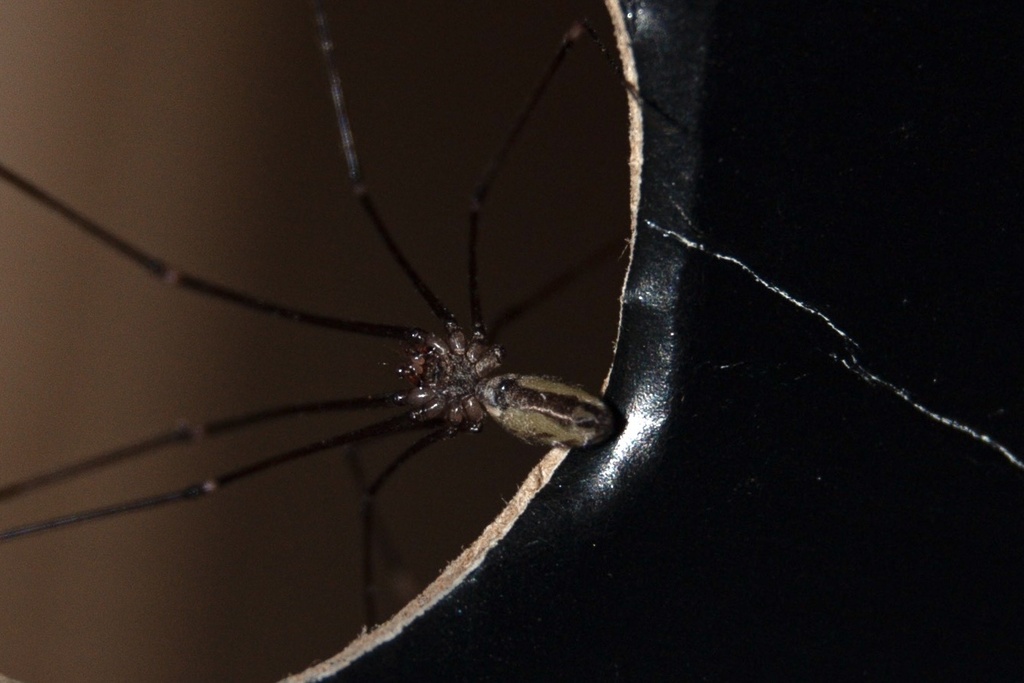
Pale Cellar Spider
Smeringopus pallidus
Smeringopus pallidus, known as the pale daddy-long-leg, is a species of spider of the genus Smeringopus, family Pholcidae. It is a cosmopolitan species found in many countries.
From the article Smeringopus pallidus on Wikipedia (CC BY-SA), quoted section by section
Description
This species has a body length up to 7 mm, with males being smaller than females. It has a cylindrical and elongate abdomen. The purple spots along the dorsal surface of the abdomen are a characteristic feature. There is a dark stripe on the ventral surface of the sternum. A synanthropic spider, it builds irregular cobwebs in sheltered areas to capture small insects and other spiders for food. The legs lack spines and have a few vertical hairs. The female has a simple epigynum without pockets.
Range & habitat
Smeringopus pallidus can be found in dusty and dark corners of the house. They also build their webs under covered drains and on mud walls in gardens and the countryside. When disturbed, they hang upside down in the web and vibrate themselves vigorously to confuse the intruder.
Wikipedia: “Habitat”
Where it lives
Recorded sightings
—
geo-referenced records in GBIF, from museums, herbaria and field observers.
Drag the globe to turn it. Dots are where records exist, not a range map; darker means more records.
In the stacks
Searching the stacks…
Every page naming Smeringopus pallidus in the Biodiversity Heritage Library →
This page is assembled live from iNaturalist, GBIF, Wikipedia, the Source Library and the Internet Archive. It is not yet part of the hand-edited codex. iNaturalist taxon 524798.