 NL·0751
Herbarium of the Nature Library
- Name
- Platalea leucorodia
- Family
- Threskiornithidae
- Native to
- Breeds patchily from the Netherlands, Spain and the Danube across the Middle East and Central Asia to China and India; also on the Banc d'Arguin and Red Sea; winters in West Africa, the Mediterranean, Middle East and South Asia
- Habitat
- Wetland, Estuaries, Lakes
On eBird ↗
Eurasian Spoonbill
Live sightings near you, the range map, bar charts of when it is seen, and Macaulay Library photos and recordings.
Eurasian spoonbill
Platalea leucorodia
Also calledAbu mil'aqa (Arabic) · Kafcheh-nok (Persian) · Kaşıkçı (Turkish) · Lepelaar (Dutch) · Löffler (German) · Spatule blanche (French) · Espátula (Spanish)
A white wader with a long, flat bill that widens into a spoon at the tip. It feeds by sweeping the bill from side to side through shallow water, snapping it shut on anything it touches.
The Eurasian spoonbill, or common spoonbill, is a wading bird of the ibis and spoonbill family Threskiornithidae, native to Europe, Africa and Asia. The species is partially migratory with the more northerly breeding populations mostly migrating south for the winter. Wikipedia
What it can do
- iDetects prey by touch with sensory receptors in its spatulate bill
- iiFeeds day and night by sweeping through water and mud
- iiiChicks hatch with straight, short bills that develop the spoon as they grow
- ivHas recolonised Britain, breeding at Holkham, Norfolk, since 2010
In the field
Field marks
- aAll-white plumage
- bLong black bill with a yellow spoon-shaped tip
- cBreeding adults have a bushy crest and yellow-ochre breast patch
- dFlies with neck outstretched, unlike egrets
- Voice
- Mostly silent; low grunting at colonies.
- Not to be confused with
- Little egret and great white egret have pointed bills and fly with necks folded. African spoonbill (Africa) has a red face and red legs.
- Where to see it
- Texel and the Wadden Sea (Netherlands), Doñana (Spain), the Danube Delta, Lake Kerkini (Greece), Banc d'Arguin (Mauritania), Holkham (England).
- When
- Summer visitor in northern Europe; resident or winter visitor in the south and Middle East
Listen
Looking for field recordings…
Life & habits
- Diet
- Small fish, shrimps, aquatic insects, tadpoles and molluscs
- Habitat
- Shallow marshes, lagoons, reedbeds and estuaries
- Size
- 80–93 cm; wingspan 115–135 cm; 1.1–2 kg
- Lifespan
- Often 10+ years
Feeding birds wade in lines, swinging their heads side to side in a sweeping arc.
Where it lives
Recorded sightings
—
geo-referenced records in GBIF, from museums, herbaria and field observers.
Native range
Breeds patchily from the Netherlands, Spain and the Danube across the Middle East and Central Asia to China and India; also on the Banc d'Arguin and Red Sea; winters in West Africa, the Mediterranean, Middle East and South Asia
Drag the globe to turn it. Dots are where records exist, not a range map; darker means more records.
In the old herbals & bestiaries
Woodcuts and engravings matched from the Source Library’s scanned books by name. Plates marked “relative” show a close kin rather than this exact species. Click a plate to read the page it came from, with translation.

In the stacks
Searching the stacks…
Every page naming Platalea leucorodia in the Biodiversity Heritage Library →
Marginalia
Spoonbills bred in England until the 17th century and are recorded in medieval accounts as 'shovelars' served at feasts; their return in the 21st century followed recovery in the Netherlands.
Curiosity
The Dutch population fell to roughly 150 pairs in the late 1960s and has since grown to several thousand pairs.
Kinship
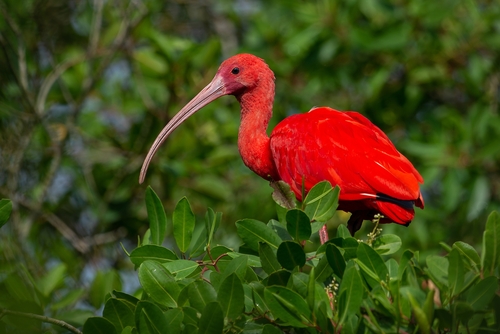
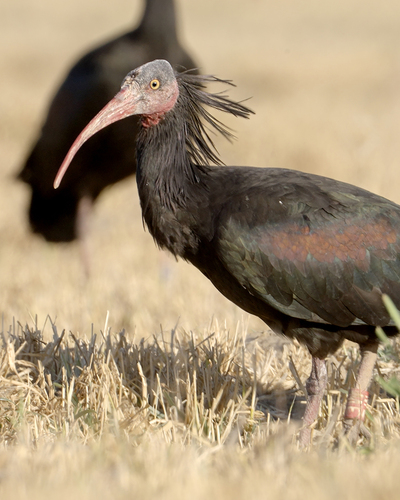
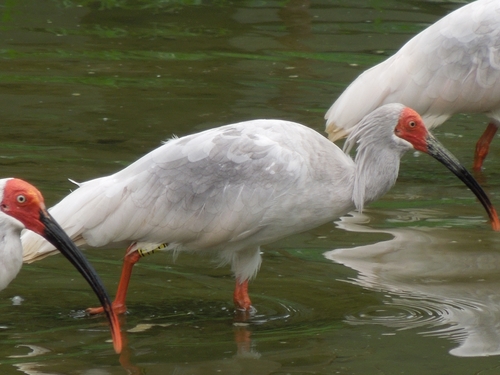



Photographs: iNaturalist contributors under the licences shown. Records: GBIF.org. Historical plates: Source Library (CC BY-SA 4.0; originals public domain). Summary text: Nature Library editors and Wikipedia (CC BY-SA). Medicinal and edibility notes are historical and educational, not advice. iNaturalist taxon 3731.