 NL·0750
Herbarium of the Nature Library
- Name
- Platalea ajaja
- Family
- Threskiornithidae
- Native to
- Gulf coasts of the US (Florida, Louisiana, Texas), the Caribbean, and Central and South America to Argentina
- Habitat
- Mangrove, Coastal lagoons, Freshwater marsh, Tropical wetlands
On eBird ↗
Roseate Spoonbill
Live sightings near you, the range map, bar charts of when it is seen, and Macaulay Library photos and recordings.
Roseate spoonbill
Platalea ajaja
Also calledEspátula rosada (Spanish) · Colhereiro (Portuguese) · Ajajá (Tupi / Guaraní) · Spatule rosée (French)
A bright pink wader with a flat, spoon-shaped bill that it sweeps side to side through shallow water to feel for prey. Its colour comes from carotenoid pigments in the crustaceans it eats.
The roseate spoonbill is a social wading bird of the ibis and spoonbill family, Threskiornithidae. It is a resident breeder in both South and North America. The roseate spoonbill's pink color is diet-derived, consisting of the carotenoid pigment canthaxanthin, like the American flamingo. Wikipedia
What it can do
- iCatches prey by touch: nerve endings in the bill snap it shut on contact
- iiTurns pink from canthaxanthin and other carotenoids in shrimp and crabs
- iiiNests colonially in mangroves and trees with herons and ibises
In the field
Field marks
- aPink body, deeper red on the shoulders and rump
- bLong, flat bill widening into a spatulate 'spoon'
- cBare greenish head in adults
- dOrange tail and red legs; flies with neck outstretched
- Voice
- Mostly silent; low grunts and croaks at nesting colonies.
- Not to be confused with
- American Flamingo has a very long neck and a bent, downturned bill. Scarlet Ibis is uniformly scarlet with a decurved bill.
- Where to see it
- J. N. 'Ding' Darling NWR (Sanibel, Florida), the Everglades, the Texas coast, the Pantanal and the Venezuelan Llanos.
- When
- Resident in Florida and the tropics; post-breeding wanderers move north in summer
Listen
Looking for field recordings…
Life & habits
- Diet
- Small fish, shrimp, crayfish, aquatic insects
- Habitat
- Shallow coastal and freshwater wetlands, mangroves and mudflats
- Size
- 71–86 cm; wingspan 120–133 cm; 1.2–1.8 kg
Feeding groups wade in lines, sweeping their bills in unison.
Where it lives
Recorded sightings
—
geo-referenced records in GBIF, from museums, herbaria and field observers.
Native range
Gulf coasts of the US (Florida, Louisiana, Texas), the Caribbean, and Central and South America to Argentina
Drag the globe to turn it. Dots are where records exist, not a range map; darker means more records.
In the old herbals & bestiaries
Woodcuts and engravings matched from the Source Library’s scanned books by name. Plates marked “relative” show a close kin rather than this exact species. Click a plate to read the page it came from, with translation.

In the stacks
Searching the stacks…
Every page naming Platalea ajaja in the Biodiversity Heritage Library →
Marginalia
In the 19th century spoonbill wings were sold in Florida as fans, and plume hunting nearly wiped out the US population before protections such as the 1918 Migratory Bird Treaty Act.
Curiosity
The name ajaja is from a Tupi–Guaraní name for the bird, recorded by early naturalists in Brazil.
Kinship
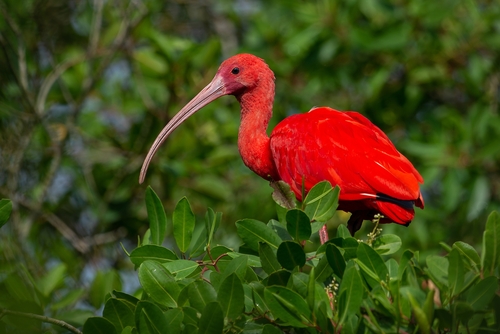
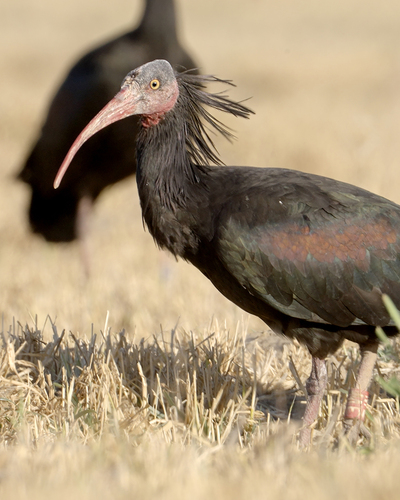
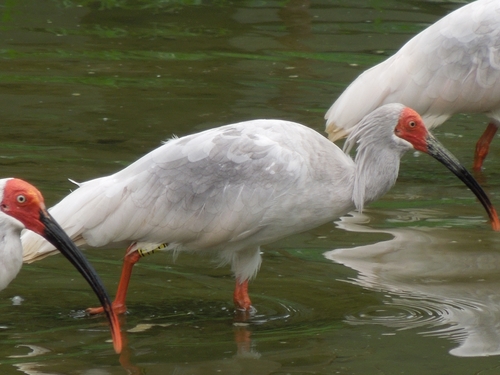
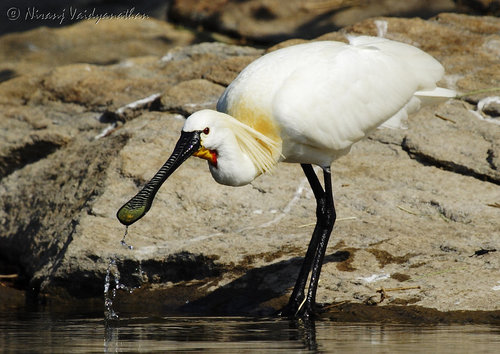

Photographs: iNaturalist contributors under the licences shown. Records: GBIF.org. Historical plates: Source Library (CC BY-SA 4.0; originals public domain). Summary text: Nature Library editors and Wikipedia (CC BY-SA). Medicinal and edibility notes are historical and educational, not advice. iNaturalist taxon 62529.