 NL·0229
Herbarium of the Nature Library
- Name
- Milvus milvus
- Family
- Accipitridae
- Native to
- Europe, chiefly Germany, France and Spain, plus Britain, Switzerland and Sweden; now only a rare winter visitor to North Africa, where it formerly bred
- Habitat
- Farmland, Woodland, Temperate grassland
On eBird ↗
Red Kite
Live sightings near you, the range map, bar charts of when it is seen, and Macaulay Library photos and recordings.
Red kite
Milvus milvus
Also calledKızıl çaylak (Turkish) · Rotmilan (German) · Milan royal (French) · Milano real (Spanish) · Barcud (Welsh) · Glede (archaic English)
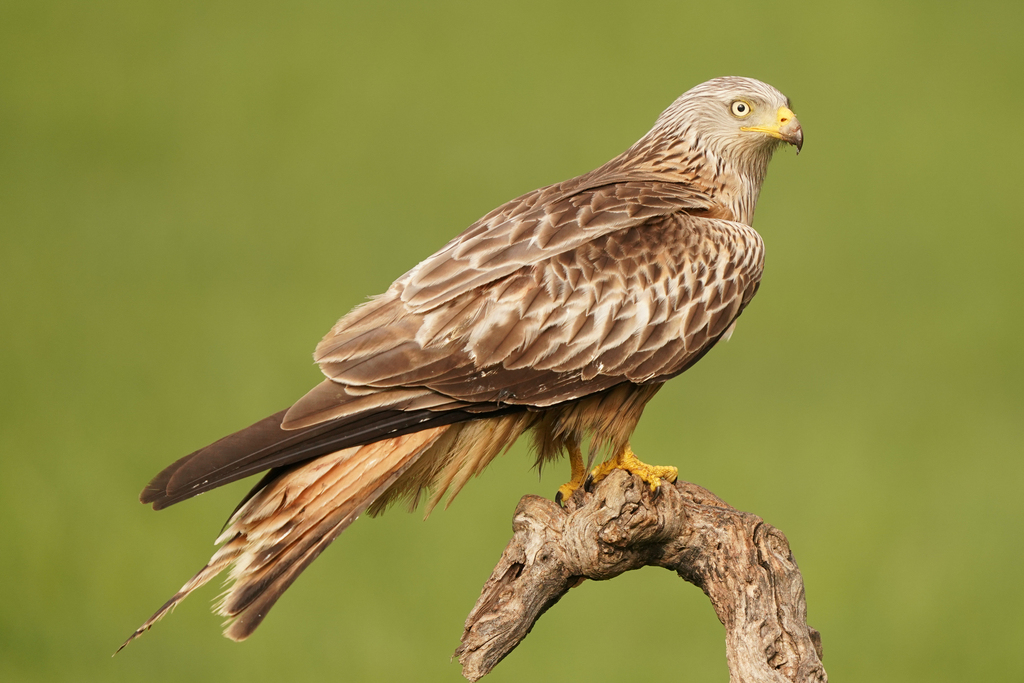
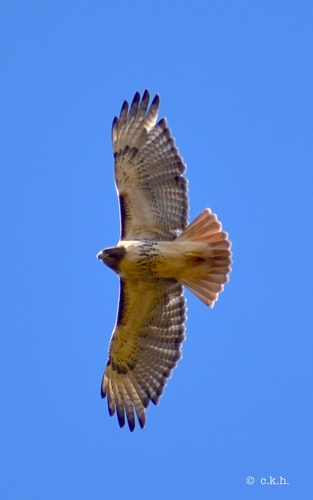
An elegant rufous raptor with a deeply forked tail that twists constantly as it steers. Almost lost from Britain by the 20th century, it has become a celebrated reintroduction success over English and Scottish farmland.
The red kite is a bird of prey in the family Accipitridae, which also includes many other diurnal raptors such as eagles, buzzards, and harriers. The species currently breeds only in Europe, though it formerly also bred in West Asia and Northwest Africa. Historically, it was only resident in the milder parts of its range in Western Europe and Northwestern Africa, whereas all or most red kites in Northern mainland Europe wintered to the south and west, some also reaching western Asia, but an increasing number of northern birds now remain in that region year-round. Vagrants have reached north to Finland and south to Israel, Libya and the Gambia. Wikipedia
What it can do
- iCan stay aloft for hours with little flapping, steering with its long, forked tail
- iiA scavenger that cleaned medieval city streets of waste
- iiiDecorates its nest with rags, plastic and other debris
- ivGathers in communal winter roosts of hundreds of birds
In the field
Field marks
- aRufous body and long, deeply forked orange-red tail
- bPale grey head
- cLong, angled wings with white patches at the base of black primaries
- dConstantly twisting tail in flight
- Voice
- A high, wavering, buzzard-like whistle, 'weeoo-weeoo-weeoo'.
- Not to be confused with
- Black kite is darker brown with a shallower fork that looks straight-edged when spread. Common buzzard has a short, rounded tail. Marsh harrier glides on raised wings and has no forked tail.
- Where to see it
- The Chilterns of England, Gigrin Farm in mid-Wales, Argaty in Scotland; Germany, Spain and the Swiss lowlands.
- When
- Resident in Britain and western Europe; central and northern European birds winter in Iberia
Listen
Looking for field recordings…
Life & habits
- Diet
- Carrion, small mammals, earthworms, birds, waste food
- Habitat
- Farmland and open hills with woodland for nesting
- Size
- 60–70 cm; wingspan 175–195 cm; 0.8–1.3 kg
- Lifespan
- Often 10+ years; record over 25
Drifts low over fields and roads searching for carrion, often in loose groups around feeding stations.
Where it lives
Recorded sightings
—
geo-referenced records in GBIF, from museums, herbaria and field observers.
Native range
Europe, chiefly Germany, France and Spain, plus Britain, Switzerland and Sweden; now only a rare winter visitor to North Africa, where it formerly bred
Drag the globe to turn it. Dots are where records exist, not a range map; darker means more records.
In the old herbals & bestiaries
Woodcuts and engravings matched from the Source Library’s scanned books by name. Plates marked “relative” show a close kin rather than this exact species. Click a plate to read the page it came from, with translation.


In the stacks
Searching the stacks…
Every page naming Milvus milvus in the Biodiversity Heritage Library →
Marginalia
Medieval London protected kites as street scavengers; in Shakespeare's 'The Winter's Tale' Autolycus warns 'when the kite builds, look to lesser linen', because kites stole washing for their nests.
Curiosity
English reintroduction began in 1989 in the Chilterns, using birds mainly from Spain; the region now holds thousands.
Kinship


Fact-checked: 4 corrections made to this sheet. Photographs: iNaturalist contributors under the licences shown. Records: GBIF.org. Historical plates: Source Library (CC BY-SA 4.0; originals public domain). Summary text: Nature Library editors and Wikipedia (CC BY-SA). Medicinal and edibility notes are historical and educational, not advice. iNaturalist taxon 5267.