 NL·0120
Herbarium of the Nature Library
- Name
- Cedrus libani
- Family
- Pinaceae
- Native to
- Mountains of Lebanon, western Syria and southern Turkey (Taurus), 1,300–3,000 m
- Habitat
- Mediterranean montane forest
Cedar of Lebanon
Cedrus libani
Also calledArz (Arabic) · Erez (Hebrew) · Lübnan sediri (Turkish) · Sedr (Persian) · Cèdre du Liban (French) · Cedro del Líbano (Spanish)
A tree that built empires. Its fragrant, rot-resistant wood went into Phoenician ships, Egyptian tombs and, the Bible says, Solomon's Temple. Ancient demand stripped the Lebanon mountains, so only scattered groves now survive, and the tree stands on the Lebanese flag.
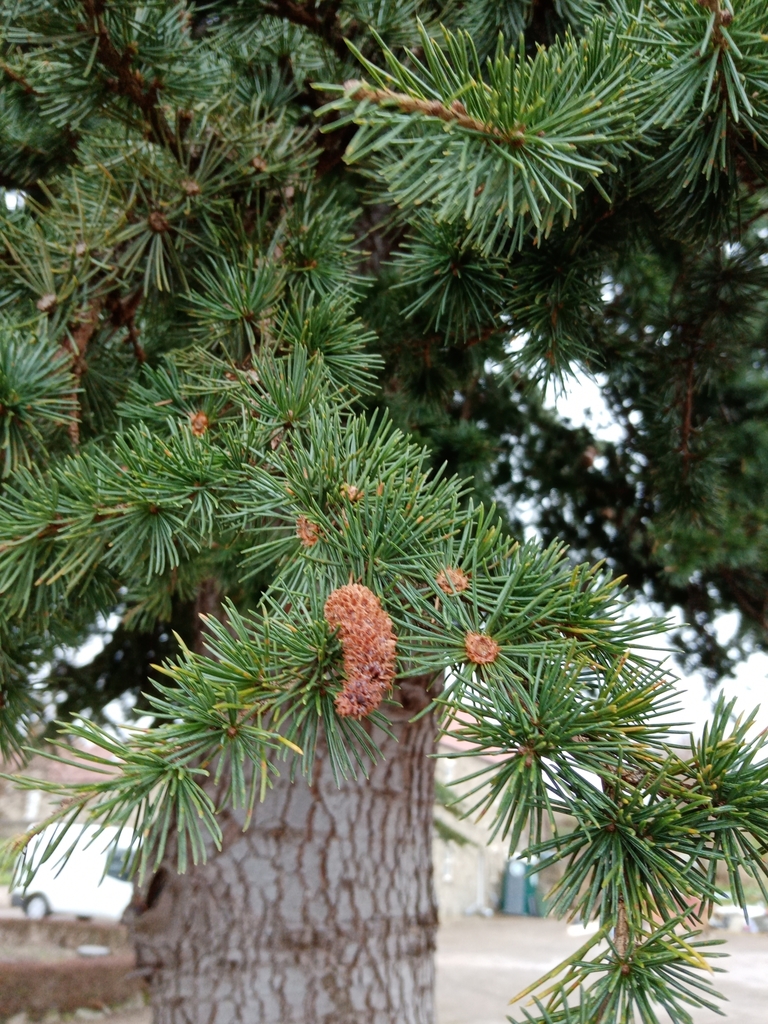
Cedrus libani, commonly known as cedar of Lebanon, Lebanon cedar, or Lebanese cedar, is a species of large conifer in the pine family, Pinaceae, and is native to the mountains of the Eastern Mediterranean basin. Known for its longevity, height, and durable wood, it has held profound significance for millennia. The tree features in ancient Mesopotamian literature. It is the national emblem of Lebanon and is widely used as an ornamental tree in parks and gardens. Historically, the ancient Phoenicians used Cedar wood for shipbuilding and traded Cedar trees with Ancient Egypt, Ancient Greece, Anatolians, Iberians, Punics, Sicilians, Romans and Ancient Iraq. Wikipedia
What it can do
- iGrows broad, tiered horizontal branches in old age
- iiProduces aromatic wood rich in sesquiterpenes that resists insects and decay
- iiiLives for well over 1,000 years in favourable sites
- ivWithstands cold, snowy mountain winters and dry Mediterranean summers
At the table
Not eaten. Essential oil is not for internal use.
In the medicine cabinet
| Tradition | Use |
|---|---|
| Ancient Egyptian practice | Cedar oil and resin used in embalming (the botanical source of some 'cedar' oils is debated) |
| Levantine folk medicine | Resin and oil applied to skin infections and as an insect repellent |
Weight of evidence
Traditional. Long historical use; little or no modern clinical evidence.
Active compounds
himachalenes, atlantones, cedrol-type sesquiterpenes
Fruit & seed

Fruit
Upright woody cone
Ripens: Matures over 2 years
Barrel-shaped cones 8–12 cm that break apart on the tree to release seeds.
Seed
~1 cm (wing ~2.5 cm)
Resinous seeds with a large wing
- Dispersal
- Wind
- Germination
- Short cold stratification (2–4 weeks); sow in spring
Photographs from Wikimedia Commons under open licences; hover for the photographer, click for the file.
How to grow it
Hardiness (USDA zones)
USDA 5–9. Survives winters down to about -29 °C.
- Light
- Full sun
- Water
- Low–moderate once established
- Soil
- Well-drained; tolerates lime
- Propagation
- Seed
- To harvest
- Cones after 25–40 years
- Climates
- Mediterranean, Temperate
- 1Soak seed overnight and stratify briefly
- 2Sow in deep pots in spring
- 3Plant out young (it dislikes root disturbance) in a spacious, sunny spot
- 4Water through the first summers; after that it is drought-tolerant
Can it grow where you are?
Where it lives
Recorded sightings
—
geo-referenced records in GBIF, from museums, herbaria and field observers.
Native range
Mountains of Lebanon, western Syria and southern Turkey (Taurus), 1,300–3,000 m
Drag the globe to turn it. Dots are where records exist, not a range map; darker means more records.
In the old herbals & bestiaries
Woodcuts and engravings matched from the Source Library’s scanned books by name. Plates marked “relative” show a close kin rather than this exact species. Click a plate to read the page it came from, with translation.

Christoph Jakob Trew — Uitgezochte planten (1771)
Christoph Jakob Trew · 1771 · p.208

Commentaries on the Six Books of Pedanius Dioscorides on Medical Matter
Pietro Andrea Mattioli · 1565 · p.302

Ortus sanitatis
1491 · p.103

Garden of Health
Jacob Meydenbach · 1491 · p.103

The Dialogue of Creatures
Anonymous · 1509 · p.48

Commentaries on the Six Books of Dioscorides
Pietro Andrea Mattioli · 1560 · p.198

Commentaries on the Six Books of Dioscorides on Medical Matter
Pietro Andrea Mattioli · 1563 · p.198

Commentaries on the Six Books of Dioscorides on Medical Matter
Pietro Andrea Mattioli · 1563 · p.198

Discourses on the Six Books of Dioscorides
Dioscorides; Pietro Andrea Mattioli (comm.) · 1568 · p.322

Stirpium adversaria nova
Matthias de Lobel · 1571 · p.472
In the stacks
Searching the stacks…
Every page naming Cedrus libani in the Biodiversity Heritage Library →
Marginalia
In the Epic of Gilgamesh the hero kills Humbaba, guardian of the Cedar Forest, to take its trees. The Cedars of God grove at Bsharri, Lebanon, was inscribed by UNESCO in 1998 with the Qadisha Valley.
Curiosity
The Palermo Stone records pharaoh Sneferu (c. 2600 BCE) bringing 40 ships filled with cedar wood, usually read as a shipment from Byblos on the Lebanese coast.
Kinship



Fact-checked: 1 correction made to this sheet. Photographs: iNaturalist contributors under the licences shown. Records: GBIF.org. Historical plates: Source Library (CC BY-SA 4.0; originals public domain). Summary text: Nature Library editors and Wikipedia (CC BY-SA). Medicinal and edibility notes are historical and educational, not advice. iNaturalist taxon 136150.