 NL·0006
Herbarium of the Nature Library
- Name
- Mangifera indica
- Family
- Anacardiaceae
- Native to
- Indo-Burma region: north-east India, Bangladesh, Myanmar; cultivated throughout the tropics and subtropics
- Habitat
- Tropical monsoon forest, Tropical orchards, Subtropical lowlands
Mango
Mangifera indica
Also calledAam (Hindi/Urdu) · Āmra (Sanskrit) · Mangga (Malay/Indonesian) · Mángguǒ (Chinese) · Embe (Swahili) · Manga (Portuguese/Spanish) · Mamuang (Thai)
Domesticated in South Asia over 4,000 years ago, the mango is the national fruit of India, Pakistan and the Philippines. A long-lived evergreen that can exceed 30 m, it bears hundreds of fruit a year and some trees are known to fruit for over 300 years.
Mangifera indica, commonly known as the mango tree after its fruit, is an evergreen species of flowering plant in the family Anacardiaceae. It is a large fruit tree, capable of growing to a height and width of 30 m (100 ft). There are two distinct genetic populations in modern mangoes – the "Indian type" and the "Southeast Asian type". Wikipedia
What it can do
- iPolyembryonic varieties produce several seedlings from one seed, most of them genetic clones of the mother tree
- iiFlowers in huge panicles of up to several thousand tiny blossoms, pollinated mainly by flies
- iiiDeep taproot lets mature trees survive long dry seasons
- ivSap contains urushiol-like resorcinols, related to the irritant in poison ivy
At the table
Eatenripe fruit · unripe fruit (pickles, chutney, amchur powder) · young leaves (cooked, in parts of Southeast Asia) · seed kernel (processed, famine food)
Ripe flesh is safe. Skin and sap contain urushiol-related compounds that cause contact dermatitis around the mouth in sensitive people, especially those allergic to poison ivy or cashew. Burning mango wood releases irritant smoke.
In the medicine cabinet
| Tradition | Use |
|---|---|
| Ayurveda | Bark, leaves and seed kernel used as astringents for diarrhoea and bleeding; unripe fruit drink (aam panna) against heatstroke |
| Cuban medicine | Stem-bark extract (Vimang) developed as an antioxidant supplement |
Weight of evidence
Traditional. Long historical use; little or no modern clinical evidence.
Active compounds
mangiferin, gallotannins, β-carotene, 5-alkylresorcinols
Fruit & seed


Fruit
Drupe
Ripens: Spring to summer (March–August in South Asia)
Oval to kidney-shaped drupe 5–25 cm long, green ripening to yellow, orange or red-blushed; juicy, fragrant orange flesh around a large fibrous stone.


Seed
Stone 6–10 cm; kernel 4–7 cm
Single large flattened oval seed enclosed in a hard, fibrous, hairy whitish husk (the stone); the kernel inside is kidney-shaped, cream to pale brown, 4–7 cm long
- Dispersal
- Large mammals (bats, monkeys, elephants) and humans; seeds are recalcitrant and die if dried
- Germination
- Sow fresh within days of eating; remove husk and plant kernel 2–3 cm deep, hump up; sprouts in 2–4 weeks at 25–30 °C
Photographs from Wikimedia Commons under open licences; hover for the photographer, click for the file.
How to grow it
Hardiness (USDA zones)
USDA 10–12 (young trees killed at about −1 °C). Survives winters down to about -1 °C.
- Light
- Full sun
- Water
- Moderate; a dry season before flowering improves fruit set
- Soil
- Deep, well-drained; tolerates sandy and lateritic soils, pH 5.5–7.5
- Propagation
- Veneer or cleft grafting onto seedling rootstock; polyembryonic seed comes true
- To harvest
- 3–5 years from graft; 6–10 years from seed; fruit ripens 100–150 days after flowering
- Climates
- Tropical, Subtropical, Monsoon
- 1Choose a grafted tree of a variety suited to your climate (e.g. 'Kent' or 'Nam Doc Mai' for humid areas resistant to anthracnose).
- 2Plant in the warmest, sunniest spot available, at least 8 m from buildings; do not amend the planting hole heavily.
- 3Water regularly for the first two years, then reduce watering in the 2–3 months before flowering to induce bloom.
- 4Prune after harvest to keep the canopy open and low (3–4 m) for easier picking and less fungal disease.
- 5Pick when the shoulders fill out and the flesh near the stem yields slightly; ripen at room temperature.
Can it grow where you are?
Where it lives
Recorded sightings
—
geo-referenced records in GBIF, from museums, herbaria and field observers.
Native range
Indo-Burma region: north-east India, Bangladesh, Myanmar; cultivated throughout the tropics and subtropics
Drag the globe to turn it. Dots are where records exist, not a range map; darker means more records.
In the old herbals & bestiaries
Woodcuts and engravings matched from the Source Library’s scanned books by name. Plates marked “relative” show a close kin rather than this exact species. Click a plate to read the page it came from, with translation.

Berthe Hoola van Nooten — Fleurs, fruits et feuillages choisis de la flore et de la pomone de Java (1863)
Berthe Hoola van Nooten · 1863 · p.131

Tractado de las Drogas y Medicinas de las Indias Orientales
Cristóvão da Costa · 1578 · p.347

Compendium of Materia Medica
李時珍 · 1596 · p.30

Compendium of Materia Medica
李時珍 · 1596 · p.57

Illustrated Compendium of Materia Medica (Vol. 28)
吳其濬 · 1848 · p.76

Illustrated Compendium of Materia Medica (Vol. 28)
吳其濬 · 1848 · p.14
In the stacks
Searching the stacks…
Every page naming Mangifera indica in the Biodiversity Heritage Library →
Marginalia
Mughal emperor Akbar planted the Lakhi Bagh, an orchard of 100,000 mango trees near Darbhanga, and the Buddha is said to have rested in a mango grove gifted by the courtesan Amrapali. In Hindu tradition mango leaves are strung over doorways (toran) at festivals and weddings.
Curiosity
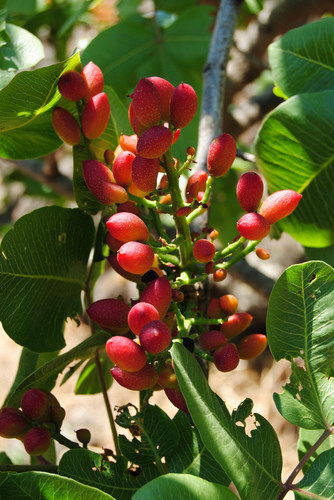
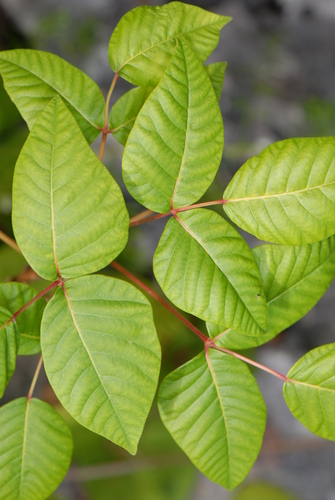
Mango, cashew and pistachio are botanical cousins — and all three are relatives of poison ivy.
Kinship


Photographs: iNaturalist contributors under the licences shown. Records: GBIF.org. Historical plates: Source Library (CC BY-SA 4.0; originals public domain). Summary text: Nature Library editors and Wikipedia (CC BY-SA). Medicinal and edibility notes are historical and educational, not advice. iNaturalist taxon 48872.