 NL·0092
Herbarium of the Nature Library
- Name
- Adansonia digitata
- Family
- Malvaceae
- Native to
- Sub-Saharan Africa from Senegal to Sudan, Ethiopia and south to South Africa; also the Arabian Peninsula; introduced in India, Madagascar and the Caribbean
- Habitat
- Dry savanna, Arid woodland, Coastal scrub
African baobab
Adansonia digitata
Also calledMbuyu (Swahili) · Kuka (Hausa) · Ose (Yoruba) · Sira (Bambara) · Bū ḥibāb / Tabaldi (Sudanese Arabic) · Gorakh imli (Hindi) · Upside-down tree (English)
A colossal, swollen-trunked tree of the African savanna that stores thousands of litres of water in its spongy wood and lives for over 2,000 years. Its velvety pods hold a dry, tangy, vitamin-C-rich powdery pulp eaten across the continent.
Adansonia digitata, the African baobab, is the most widespread tree species of the genus Adansonia, the baobabs, and is native to the African continent and the southern Arabian Peninsula. These are long-lived pachycauls; radiocarbon dating has shown at least one individual to be 1,275 years old. They are typically found in dry, hot savannas of sub-Saharan Africa, where they dominate the landscape and reveal the presence of a watercourse from afar. They have traditionally been valued as sources of food, water, health remedies or places of shelter and are a key food source for many animals. They are steeped in legend and superstition. In recent years, many of the largest, oldest trees have died, for unknown reasons. Other common names for the baobab include monkey-bread tree, upside-down tree, and cream of tartar tree. Wikipedia
What it can do
- iTrunks store water and swell in the wet season; elephants gouge them for moisture
- iiThe oldest dated individual, Panke in Zimbabwe, was about 2,500 years old when it died in 2011
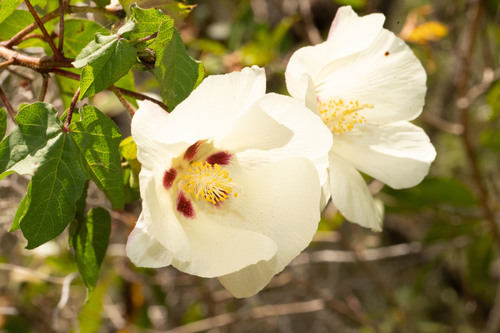
- iiiLarge white flowers open at night and are pollinated by fruit bats
- ivBark regrows after stripping, so it can be harvested for fibre repeatedly
At the table
Eatenfruit pulp (powder, drinks) · young leaves (fresh or dried as 'lalo' or 'kuka' soup thickener) · seeds (roasted, oil) · flowers · young roots
Pulp, leaves and roasted seeds are widely eaten. Raw seeds contain antinutrients and are usually roasted or fermented.
In the medicine cabinet
| Tradition | Use |
|---|---|
| West African traditional medicine | Fruit pulp mixed with water for diarrhoea and fever; leaves for kidney and bladder ailments |
| East African traditional medicine | Bark decoction used as a substitute for quinine against fever |
Weight of evidence
Traditional. Long historical use; little or no modern clinical evidence.
Active compounds
vitamin C, pectin, calcium, polyphenols, cyclopropenoid fatty acids (seed oil)
Fruit & seed


Fruit
Capsule (indehiscent, woody)
Ripens: Dry season (pods ripen months after the wet-season flowering)
Hanging, oval to oblong pod 15–25 cm with a hard, velvety greenish-grey to brown shell; inside, chalky cream-white pulp in dry chunks around seeds and reddish fibres.


Seed
1–1.5 cm
Hard, kidney-shaped, dark brown to black seeds about 1–1.5 cm, embedded in powdery white pulp
- Dispersal
- Baboons, elephants and other mammals; also water
- Germination
- Very hard coat: soak in hot water or nick, then soak 24 hours; sow at 25–30 °C; 1–4 weeks
Photographs from Wikimedia Commons under open licences; hover for the photographer, click for the file.
How to grow it
Hardiness (USDA zones)
USDA 10–12. Survives winters down to about -1 °C.
- Light
- Full sun
- Water
- Low; intolerant of waterlogging
- Soil
- Sandy or rocky, very well-drained, pH 6–8
- Propagation
- Seed; grafting for earlier fruiting
- To harvest
- 8–23 years from seed; grafted trees in as little as 4–5 years
- Climates
- Semi-arid tropical, Savanna, Hot arid
- 1Scarify seeds, soak, and sow in deep pots to accommodate the taproot.
- 2Plant out in full sun in deep, free-draining soil, with lots of space — trunks can reach 10 m across.
- 3Water young trees only in the dry season; protect from goats and cattle.
- 4Harvest young leaves for cooking regularly without harming the tree; in bonsai or pots, keep dry in winter.
- 5Gather fallen ripe pods, crack the shell and sieve the dry pulp to separate seeds and fibres.
Can it grow where you are?
Where it lives
Recorded sightings
—
geo-referenced records in GBIF, from museums, herbaria and field observers.
Native range
Sub-Saharan Africa from Senegal to Sudan, Ethiopia and south to South Africa; also the Arabian Peninsula; introduced in India, Madagascar and the Caribbean
Drag the globe to turn it. Dots are where records exist, not a range map; darker means more records.
In the old herbals & bestiaries
Woodcuts and engravings matched from the Source Library’s scanned books by name. Plates marked “relative” show a close kin rather than this exact species. Click a plate to read the page it came from, with translation.

In the stacks
Searching the stacks…
Every page naming Adansonia digitata in the Biodiversity Heritage Library →
Marginalia
In many African traditions the baobab was planted upside down by a god, its roots in the air, and in Senegal griots were once buried inside hollow baobab trunks. Hollow baobabs have served as stores, shelters and even a prison near Derby in Western Australia (the related boab).
Curiosity
Between 2005 and 2017, nine of the 13 oldest known African baobabs died or lost their oldest parts, a collapse scientists suspect is linked to climate change.
Kinship



Photographs: iNaturalist contributors under the licences shown. Records: GBIF.org. Historical plates: Source Library (CC BY-SA 4.0; originals public domain). Summary text: Nature Library editors and Wikipedia (CC BY-SA). Medicinal and edibility notes are historical and educational, not advice. iNaturalist taxon 81500.