 NL·0360
Herbarium of the Nature Library
- Name
- Clupea harengus
- Family
- Clupeidae
- Native to
- North Atlantic from the Bay of Biscay to Svalbard and from Cape Hatteras to Greenland; Baltic Sea
- Habitat
- Continental shelf, Coastal waters, Open ocean (pelagic)
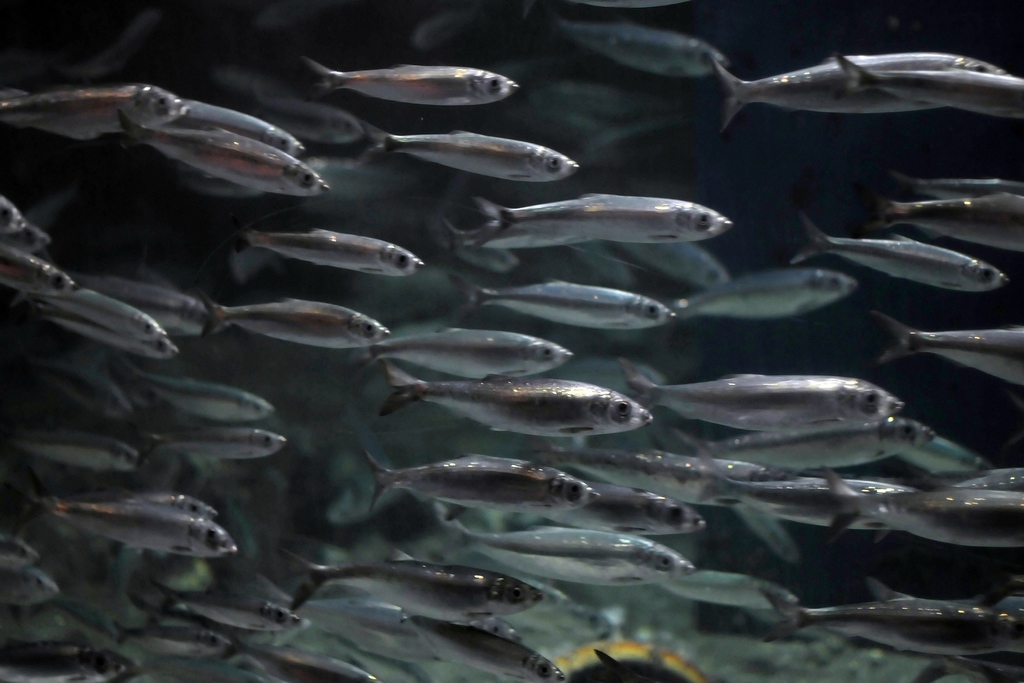
Atlantic herring
Clupea harengus
Also calledHareng (French) · Sild (Norwegian/Danish) · Haring (Dutch) · Arenque (Spanish) · Śledź (Polish)
One of the most abundant fish in the world, swimming in schools of hundreds of millions. Herring underpinned the Hanseatic League and the Dutch Golden Age and still feeds whales, seabirds, cod and people.
Atlantic herring is a herring in the family Clupeidae. It is one of the most abundant fish species in the world. Atlantic herrings can be found on both sides of the northern Atlantic Ocean, congregating in large schools. They can grow up to 45 centimetres (18 in) in length and weigh up to 1.1 kilograms (2.4 lb). They feed on copepods, krill and small fish, while their natural predators are seals, whales, cod and other larger fish. Wikipedia
What it can do
- iForms some of the largest fish schools on Earth
- iiFilter-feeds and also picks individual zooplankton
- iiiReleases bubbles from the anus that produce 'fast repetitive tick' sounds, possibly used to keep schools together at night
- ivDifferent stocks spawn in almost every season
In the field
Field marks
- aSlim, silvery body with blue-green back
- bSingle dorsal fin set at the mid-point of the body
- cBelly keel with scutes that are not sharply serrated
- dLoose, easily shed scales
- eGill cover without radiating ridges
- Not to be confused with
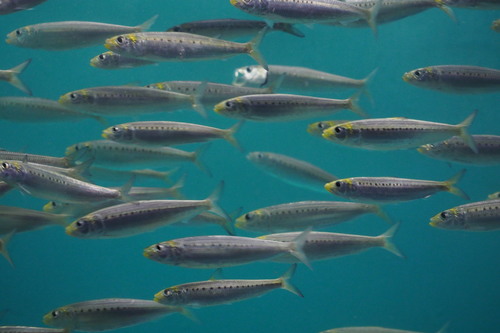
- Sprat is smaller with a sharply saw-edged belly keel and pelvic fins starting in front of the dorsal; shads have a notch in the upper jaw and dark shoulder spots.
- Where to see it
- Northern Norwegian fjords in winter (with feeding orcas and humpbacks), Baltic coasts, Gulf of Maine
- When
- Year-round; Norwegian spring-spawning herring overwinter in northern fjords and coastal waters in winter
Life & habits
- Diet
- Copepods, krill, fish larvae
- Habitat
- Open shelf waters; spawns on gravel banks and seaweed
- Size
- Usually 25–30 cm; up to 45 cm
- Lifespan
- Up to about 20 years
Migrates between feeding, overwintering and spawning grounds in huge schools; eggs are sticky and laid in carpets on the seabed.
Where it lives
Recorded sightings
—
geo-referenced records in GBIF, from museums, herbaria and field observers.
Native range
North Atlantic from the Bay of Biscay to Svalbard and from Cape Hatteras to Greenland; Baltic Sea
Drag the globe to turn it. Dots are where records exist, not a range map; darker means more records.
In the old herbals & bestiaries
Woodcuts and engravings matched from the Source Library’s scanned books by name. Plates marked “relative” show a close kin rather than this exact species. Click a plate to read the page it came from, with translation.


In the stacks
Searching the stacks…
Every page naming Clupea harengus in the Biodiversity Heritage Library →
Marginalia
Dutch tradition credits Willem Beukelszoon with 'gibbing' herring in the 14th century, a preservation method that helped make Holland rich; Scandinavians called the shoals 'silver of the sea'.
Curiosity
The discovery that herring communicate by farting bubbles won an Ig Nobel Prize in Biology in 2004.
Kinship



Photographs: iNaturalist contributors under the licences shown. Records: GBIF.org. Historical plates: Source Library (CC BY-SA 4.0; originals public domain). Summary text: Nature Library editors and Wikipedia (CC BY-SA). Medicinal and edibility notes are historical and educational, not advice. iNaturalist taxon 97990.