 NL·0237
Herbarium of the Nature Library
- Name
- Lissachatina fulica
- Family
- Achatinidae
- Native to
- Coastal East Africa (Kenya, Tanzania, Mozambique); invasive across South and Southeast Asia, the Pacific, the Caribbean and South America
- Habitat
- Farmland, Gardens, Tropical forest edge, Urban areas
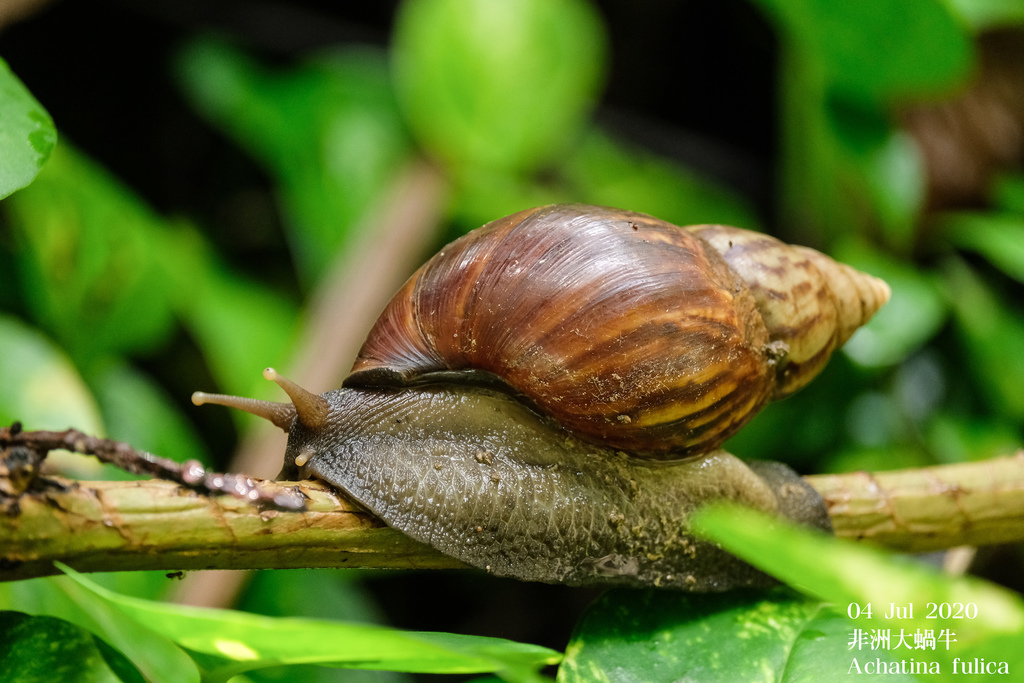
Giant African land snail
Lissachatina fulica
Also calledKonokono (Swahili) · Ghongha (Hindi) · Achatine (French) · Caracol gigante africano (Spanish) · Afurikamaimai (Japanese)
A fist-sized land snail from East Africa that has spread across the tropics and is listed among the world's worst invasive species. It eats hundreds of plant species, can lay over a thousand eggs a year, and can carry rat lungworm, a parasite that causes meningitis.
Lissachatina fulica is a species of large land snail that belongs in the subfamily Achatininae of the family Achatinidae. It is also known as the giant African land snail. It shares the common name "giant African snail" with other species of snails such as Achatina achatina and Archachatina marginata. This snail species has been considered a significant cause of pest issues around the world. It is a federally prohibited species in the U.S., as it is illegal to sell or possess. Internationally, it is the most frequently occurring invasive species of snail. Wikipedia
What it can do
- iEats more than 500 kinds of plants, as well as plaster and concrete for calcium
- iiLays clutches of 100–400 eggs several times a year
- iiiSurvives dry seasons by sealing its shell and becoming dormant for months
- ivHermaphrodite; can store sperm from a single mating for many months
In the field
Field marks
- aLarge, tall, cone-shaped shell
- bBrown to reddish-brown with darker vertical streaks
- cSeven to nine whorls
- dGrey-brown body with long tentacles
- Not to be confused with
- Giant Ghana tiger snail (Achatina achatina) is larger with bold zig-zag stripes. Rosy wolfsnail (Euglandina rosea) is smaller, pinkish, and predatory. Native apple snails (Pomacea) live in water and have a rounder shell.
- Where to see it
- Gardens and farmland across tropical Asia, Pacific islands and parts of Brazil; native forests of coastal Kenya and Tanzania.
- When
- Most active in the rainy season
Life & habits
- Diet
- Crops, garden plants, fallen fruit, decaying matter, and calcium from walls and shells
- Habitat
- Farms, gardens, plantations and disturbed land in warm, humid regions
- Size
- Shell typically 7–10 cm long, up to about 20 cm
- Lifespan
- Usually 3–5 years; up to about 9 years
Active at night and after rain; in dry periods it hides in soil or under debris, sealed behind a mucus membrane.
Where it lives
Recorded sightings
—
geo-referenced records in GBIF, from museums, herbaria and field observers.
Native range
Coastal East Africa (Kenya, Tanzania, Mozambique); invasive across South and Southeast Asia, the Pacific, the Caribbean and South America
Drag the globe to turn it. Dots are where records exist, not a range map; darker means more records.
In the old herbals & bestiaries
No plate in the Source Library names this exact species, so these show its closest relatives as the old naturalists drew them: same genus, or the same kind of animal. Click a plate to read the page it came from, with translation.

Georg Eberhard Rumphius — D'Amboinsche rariteitkamer (1705)
Relative · Georg Eberhard Rumphius · 1705 · p.149

Garden of Health
Relative · Jacob Meydenbach · 1491 · p.698

Ortus sanitatis
Relative · 1491 · p.700

Theater of Earthly Creatures
Relative · Anonymous · 1672 · p.198

August Johann Rösel von Rosenhof — Historia naturalis ranarum nostratium (1758)
Relative · August Johann Rösel von Rosenhof · 1758 · p.109

Garden of Health
Relative · Jacob Meydenbach · 1491 · p.705

Georg Wolfgang Knorr; Johann Ernst Immanuel Walch — Schnecken und Muscheln (1770)
Relative · Georg Wolfgang Knorr; Johann Ernst Immanuel Walch · 1770 · p.21

Books on Marine Fishes
Relative · Guillaume Rondelet · 1554 · p.737

Theater of Earthly Creatures
Relative · Anonymous · 1672 · p.320

Mark Catesby — Piscium, serpentum, insectorum (pt. 1) (1750)
Relative · Mark Catesby · 1750 · p.106
In the stacks
Searching the stacks…
Every page naming Lissachatina fulica in the Biodiversity Heritage Library →
Marginalia
It was carried from East Africa to Mauritius in the early 1800s and to India by the 1840s, then across Asia and the Pacific; in Florida a boy's three pet snails brought from Hawaii in 1966 led to a decade-long eradication campaign.
Curiosity
The rosy wolfsnail introduced to Pacific islands to eat it instead wiped out dozens of native Partula tree snails, a famous biological-control disaster.
Kinship

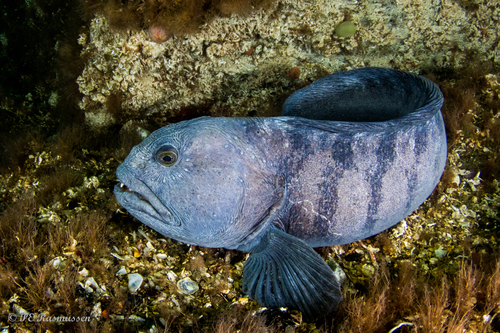
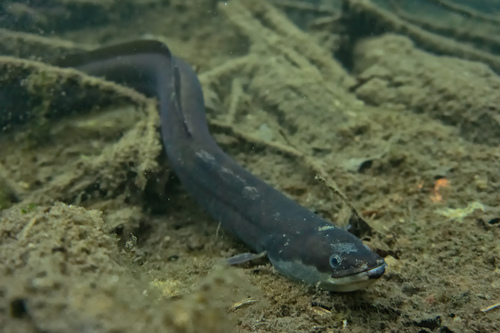
Photographs: iNaturalist contributors under the licences shown. Records: GBIF.org. Historical plates: Source Library (CC BY-SA 4.0; originals public domain). Summary text: Nature Library editors and Wikipedia (CC BY-SA). Medicinal and edibility notes are historical and educational, not advice. iNaturalist taxon 502885.