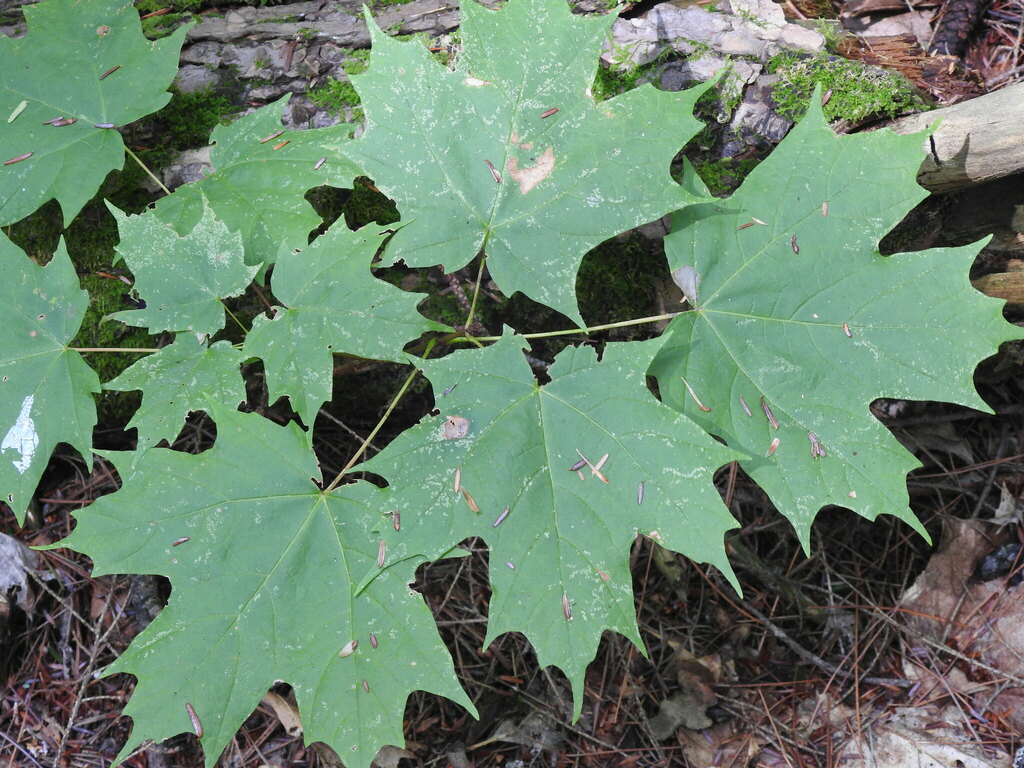
 NL·0153
Herbarium of the Nature Library
- Name
- Acer saccharum
- Family
- Sapindaceae
- Native to
- Eastern Canada and north-eastern and central United States
- Habitat
- Temperate broadleaf forest
Sugar maple
Acer saccharum
Also calledIninaatig (Ojibwe) · Érable à sucre (French) · Arce azucarero (Spanish) · Zuckerahorn (German) · 糖槭 tángqì (Chinese)
The source of maple syrup and the blaze of New England autumns. On spring days after freezing nights, pressure changes inside the wood push sugary sap out of any wound, and about 40 litres of sap boil down to one litre of syrup.
Acer saccharum, the sugar maple, is a species of flowering plant in the soapberry and lychee family, Sapindaceae. It may also be called rock maple, sugar tree, sweet maple, or, particularly in reference to the wood, hard maple. Wikipedia
What it can do
- iFlows sap during freeze–thaw cycles, when gas pressure in the wood fibres pushes sap from wounds
- iiLifts water from deep soil at night and releases it into dry topsoil (hydraulic lift), which helps nearby plants
- iiiTurns brilliant red, orange and yellow in autumn as chlorophyll breaks down and anthocyanins form
- ivTolerates deep shade as a sapling, waiting decades for a canopy gap
At the table
Eatensap (syrup, sugar) · seeds (cooked)
Sap is boiled into syrup and sugar. Not toxic to people, but wilted leaves of the related red maple (Acer rubrum) poison horses.
Fruit & seed

Fruit
Double samara
Ripens: Autumn
Paired winged seeds ('helicopters') joined at a U-shaped angle.
Seed
~2.5 cm with wing
Round seed at the base of a papery wing
- Dispersal
- Wind, spinning
- Germination
- Cold-stratify 60–90 days; sow in spring
Photographs from Wikimedia Commons under open licences; hover for the photographer, click for the file.
How to grow it
Hardiness (USDA zones)
USDA 3–8. Survives winters down to about -40 °C.
- Light
- Full sun to partial shade
- Water
- Moderate
- Soil
- Deep, fertile, well-drained; dislikes road salt
- Propagation
- Seed
- To harvest
- Tap for syrup at about 25 cm diameter (30–40 years)
- Climates
- Temperate, Continental
- 1Stratify seed over winter in moist sand
- 2Sow in spring; protect seedlings from deer
- 3Plant in deep, moist, well-drained soil away from salted roads
- 4Tap in late winter when days are above freezing and nights below; boil the sap down to 66% sugar
Can it grow where you are?
Where it lives
Recorded sightings
—
geo-referenced records in GBIF, from museums, herbaria and field observers.
Native range
Eastern Canada and north-eastern and central United States
Drag the globe to turn it. Dots are where records exist, not a range map; darker means more records.
In the old herbals & bestiaries
No plate in the Source Library names this exact species, so these show its closest relatives as the old naturalists drew them: same genus, or the same kind of plant. Click a plate to read the page it came from, with translation.

History of Plants in Four Books
Relative · Valerius Cordus · 1561 · p.369

Christoph Jakob Trew — Uitgezochte planten (1771)
Relative · Christoph Jakob Trew · 1771 · p.269

Hokusai Manga (北斎漫画), Vol. 3
Relative · Katsushika Hokusai · 1815 · p.17

Book of Herbs
Relative · Hieronymus Bock (Tragus) · 1546 · p.887

Book of Herbs
Relative · Hieronymus Bock (Tragus) · 1546 · p.886

Stirpium adversaria nova
Relative · Matthias de Lobel · 1571 · p.467

A New Herbal, or History of Plants
Relative · Rembert Dodoens (trans. Henry Lyte) · 1578 · p.779

Six Groups of the History of Plants
Relative · Rembert Dodoens · 1583 · p.849

Six Groups of the History of Plants
Relative · Rembert Dodoens · 1583 · p.850

Collected Illustrations of the Three Realms: Plants and Trees
Relative · 王圻, 王思義 · 1609 · p.28
In the stacks
Searching the stacks…
Every page naming Acer saccharum in the Biodiversity Heritage Library →
Marginalia
Anishinaabe, Haudenosaunee and other nations made maple sugar long before Europeans arrived, holding sugar camps each spring; the Haudenosaunee honour the sap run with a Maple Ceremony of thanksgiving. A stylised maple leaf has been on Canada's flag since 1965.
Curiosity
The 2012 'Great Canadian Maple Syrup Heist' saw about 3,000 tonnes of syrup, worth around C$18 million, stolen from a Quebec strategic reserve.
Kinship
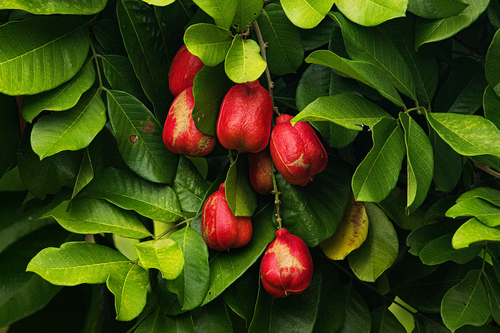
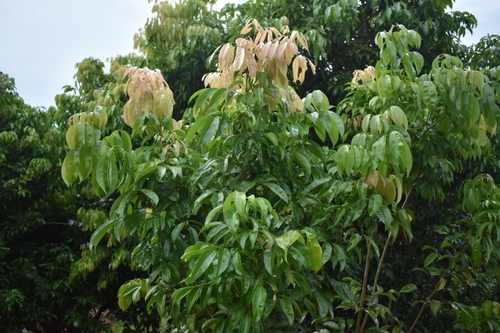

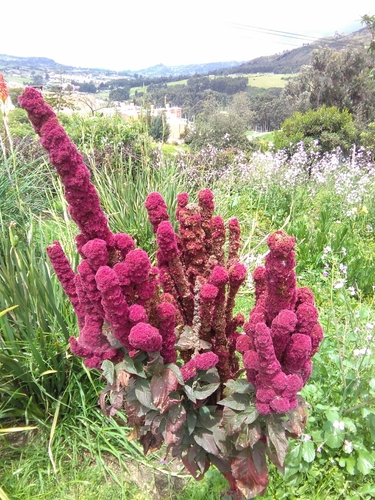

Photographs: iNaturalist contributors under the licences shown. Records: GBIF.org. Historical plates: Source Library (CC BY-SA 4.0; originals public domain). Summary text: Nature Library editors and Wikipedia (CC BY-SA). Medicinal and edibility notes are historical and educational, not advice. iNaturalist taxon 52543.