 NL·0276
Herbarium of the Nature Library
- Name
- Argyroneta aquatica
- Family
- Argyronetidae
- Native to
- Europe and northern Asia, east to Japan
- Habitat
- Ponds, Fens, Wetlands, Slow streams
Diving bell spider
Argyroneta aquatica
Also calledWasserspinne (German) · Argyronète (French) · Araña de agua (Spanish) · Mizugumo (Japanese)
The only spider that lives almost entirely underwater. It spins a silk 'diving bell' among water plants, fills it with air carried down from the surface, and eats, moults, mates and raises young inside.
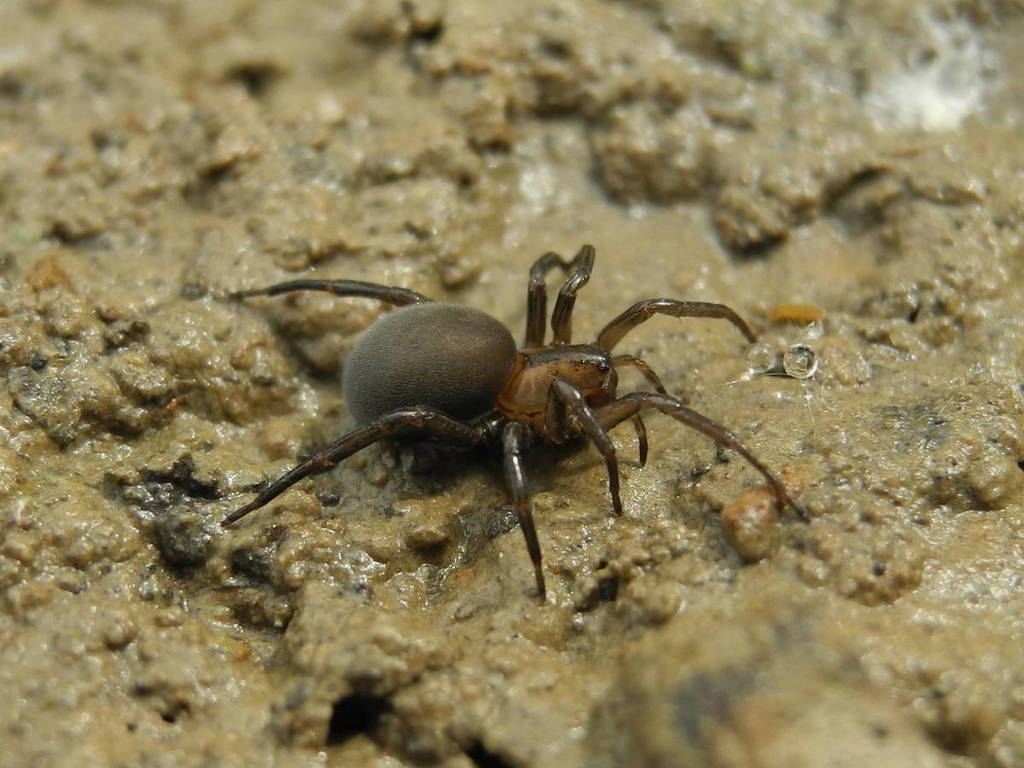
The diving bell spider or water spider is the only species of spider known to live almost entirely under water. It is the only member of the genus Argyroneta and the type genus of the family Argyronetidae. When out of the water, the spider ranges in colour from mid to dark brown, although the hairs on the abdomen give it a dark grey, velvet-like appearance. It is native to freshwater habitats in Europe and Asia. Wikipedia
What it can do
- iCarries air down on its hairy abdomen, which looks silver underwater
- iiIts bell works as a physical gill: oxygen diffuses in from the water, so it needs to refill only rarely
- iiiMales are larger than females, unusual among spiders
- ivOverwinters in a sealed bell or empty snail shell
In the field
Field marks
- aSpider moving underwater with a shining silver air bubble around its abdomen
- bDull dark-brown, velvety body
- cThimble-sized silvery bell of silk among water plants
- dLong, fine hairs on legs and abdomen
- Not to be confused with
- Raft spiders (Dolomedes) are larger, striped, and hunt on the water surface rather than living below it. Pirate wolf spiders (Pirata) dive briefly but live on land.
- Where to see it
- Clean, plant-rich ponds and fen ditches in Europe, e.g. the Norfolk Broads and Somerset Levels in England.
- When
- Year-round; most active spring to autumn
Life & habits
- Diet
- Aquatic insects, water lice and other small aquatic animals
- Habitat
- Clean, still or slow water with dense submerged plants
- Size
- About 8–15 mm; males larger
- Lifespan
- About 2 years
It waits in its bell with legs touching silk lines, then darts out to seize passing prey and drags it inside to eat.
Where it lives
Recorded sightings
—
geo-referenced records in GBIF, from museums, herbaria and field observers.
Native range
Europe and northern Asia, east to Japan
Drag the globe to turn it. Dots are where records exist, not a range map; darker means more records.
In the old herbals & bestiaries
No plate in the Source Library names this exact species, so these show its closest relatives as the old naturalists drew them: same genus, or the same kind of animal. Click a plate to read the page it came from, with translation.

Jan Jonston — Naeukeurige beschryving van de natuur der viervoetige dieren (1660)
Relative · Jan Jonston · 1660 · p.467

Commentaries on the Six Books of Pedanius Dioscorides on Medical Matter
Relative · Pietro Andrea Mattioli · 1565 · p.487

History of Animals, Book II: On Oviparous Quadrupeds
Relative · Conrad Gessner · 1586 · p.573

Georg Wolfgang Knorr — Deliciae naturae selectae (1771)
Relative · Georg Wolfgang Knorr · 1771 · p.98

Books on Marine Fishes
Relative · Guillaume Rondelet · 1554 · p.596

Commentaries on the Six Books of Dioscorides
Relative · Pietro Andrea Mattioli · 1560 · p.341

Commentaries on the Six Books of Dioscorides
Relative · Pietro Andrea Mattioli · 1560 · p.304

Commentaries on the Six Books of Dioscorides on Medical Matter
Relative · Pietro Andrea Mattioli · 1563 · p.289

History of Animals, Book II: On Oviparous Quadrupeds
Relative · Conrad Gessner · 1586 · p.572

Compendium of Materia Medica
Relative · 李時珍 · 1596 · p.129
In the stacks
Searching the stacks…
Every page naming Argyroneta aquatica in the Biodiversity Heritage Library →
Marginalia
Carl Clerck described it in Svenska Spindlar (1757), the work that is the official starting point for scientific names of spiders.
Curiosity
Measurements in 2011 showed a diving bell spider can stay in its bell for more than a day without surfacing, because oxygen seeps into the bubble from the surrounding water.
Kinship



Fact-checked: 1 correction made to this sheet. Photographs: iNaturalist contributors under the licences shown. Records: GBIF.org. Historical plates: Source Library (CC BY-SA 4.0; originals public domain). Summary text: Nature Library editors and Wikipedia (CC BY-SA). Medicinal and edibility notes are historical and educational, not advice. iNaturalist taxon 52953.