 NL·0470
Herbarium of the Nature Library
- Name
- Balearica regulorum
- Family
- Gruidae
- Native to
- Eastern and southern Africa, from Uganda and Kenya to South Africa
- Habitat
- Wetland, Grassland, Farmland
On eBird ↗
Gray Crowned-Crane
Live sightings near you, the range map, bar charts of when it is seen, and Macaulay Library photos and recordings.
Grey crowned crane
Balearica regulorum
Also calledKorongo (Swahili) · Unohemu (Zulu) · Mahem (Afrikaans)
A crane crowned with a halo of stiff golden feathers, famous for exuberant dancing. Uganda's national bird, it is one of only two cranes able to roost in trees.
The grey crowned crane or gray crowned crane is a large crane species native to Sub-Saharan Africa. It occurs mainly in dry savannah, although it nests in somewhat wetter habitats, and can also be found in marshes, cultivated lands and grassy flatlands near rivers and lakes. Its body plumage is mainly grey and it has white cheeks, a red throat patch, and a stiff golden crown. It is omnivorous, consuming a wide variety of animal and plant matter, including plants, seeds, grain, insects, frogs, worms, snakes, small fish and the eggs of aquatic animals. It is listed as endangered on the IUCN Red List. It is the national bird of Uganda. Wikipedia
What it can do
- iLong hind toe lets it grip branches and roost in trees, unlike most cranes
- iiElaborate dances of bowing, leaping and wing-flapping strengthen pair bonds
- iiiInflates a red throat sac to produce a booming call
In the field
Field marks
- aStiff, bristly golden crown
- bBare white cheek patch topped with red, and a small red throat wattle
- cPale grey neck and body
- dWhite wings with golden and chestnut feathers
- eBlack velvet forehead
- Voice
- A honking, two-note 'mu-hem' or 'ya-oo' call; also a deep booming from the inflated throat sac.
- Not to be confused with
- Black crowned crane (West and Central Africa, overlapping in Uganda and South Sudan) has a dark grey to black neck and body and a cheek patch that is white above and red below (red more extensive in the eastern subspecies), whereas the grey crowned crane's cheek is mostly white with only a small red patch at the top. Wattled crane is larger, lacks the golden crown and has long white feathered wattles.
- Where to see it
- Uganda's wetlands (Mabamba, Lake Mburo), Ngorongoro Crater, Amboseli, KwaZulu-Natal Midlands
- When
- Resident; breeds mainly in the rains
Listen
Looking for field recordings…
Life & habits
- Diet
- Omnivorous: seeds, grasses, insects, frogs, lizards and small fish
- Habitat
- Marshes, wet grassland and farmland near wetlands
- Size
- About 1 m tall; wingspan around 2 m; 3–4 kg
- Lifespan
- Over 20 years in the wild
Pairs and flocks dance year-round, bobbing, bowing and leaping high into the air while tossing grass.
Where it lives
Recorded sightings
—
geo-referenced records in GBIF, from museums, herbaria and field observers.
Native range
Eastern and southern Africa, from Uganda and Kenya to South Africa
Drag the globe to turn it. Dots are where records exist, not a range map; darker means more records.
In the old herbals & bestiaries
No plate in the Source Library names this exact species, so these show its closest relatives as the old naturalists drew them: same genus, or the same kind of animal. Click a plate to read the page it came from, with translation.

The Tudor Pattern Book (Herbal-Bestiary)
Relative · Anonymous · 1525 · p.88

Ulyssis Aldrovandi ... Ornithologiae
Relative · Aldrovandi, Ulisse · 1610 · p.992

Jan Jonston — Naeukeurige beschryving van de natuur der viervoetige dieren (1660)
Relative · Jan Jonston · 1660 · p.245

The Tudor Pattern Book (Herbal-Bestiary)
Relative · Anonymous · 1525 · p.70

The Hieroglyphics
Relative · Horapollo · 1551 · p.239

Collected Illustrations of the Three Powers (Sancai Tuhui), Vol. 63
Relative · 王圻, 王思義 · 1609 · p.52

Hokusai Manga (北斎漫画), Vol. 1
Relative · Katsushika Hokusai · 1814 · p.18

Hokusai Manga (北斎漫画), Vol. 3
Relative · Katsushika Hokusai · 1815 · p.32

Bestiary
Relative · Anonymous · 1240 · p.143

Garden of Health (Hortus Sanitatis)
Relative · Jacob Meydenbach · 1491 · p.556
In the stacks
Searching the stacks…
Every page naming Balearica regulorum in the Biodiversity Heritage Library →
Marginalia
The grey crowned crane is the national bird of Uganda and stands on the country's flag and coat of arms. Its Afrikaans name 'mahem' imitates the call.
Curiosity
Its population fell by more than half in about 45 years, largely through wetland drainage and capture for the live-bird trade.
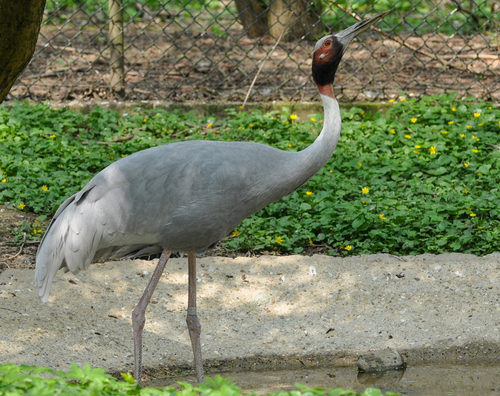
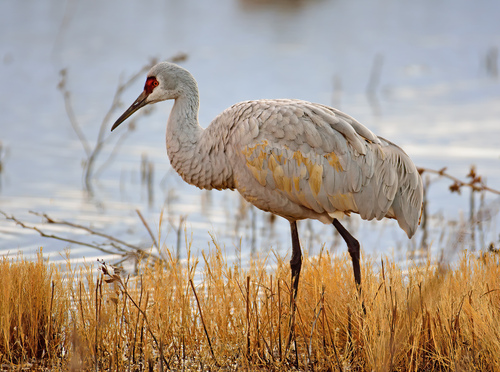
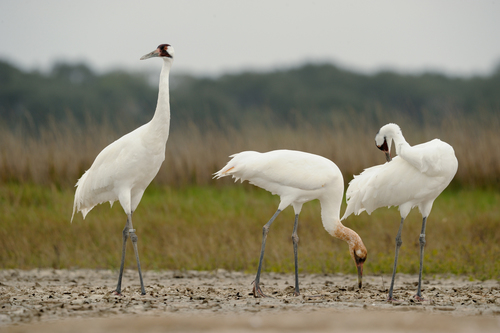
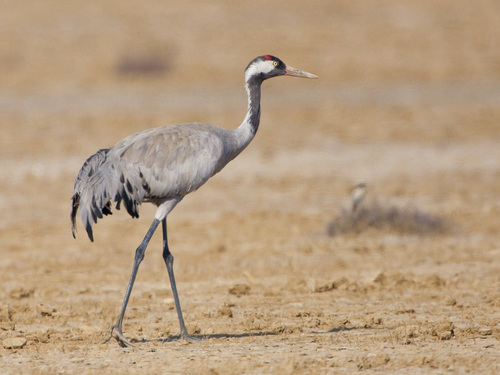
Kinship
Fact-checked: 1 correction made to this sheet. Photographs: iNaturalist contributors under the licences shown. Records: GBIF.org. Historical plates: Source Library (CC BY-SA 4.0; originals public domain). Summary text: Nature Library editors and Wikipedia (CC BY-SA). Medicinal and edibility notes are historical and educational, not advice. iNaturalist taxon 53.