 NL·0030
Herbarium of the Nature Library
- Name
- Calendula officinalis
- Family
- Asteraceae
- Native to
- Known only in cultivation; probably derived from Mediterranean Calendula species. Grown worldwide
- Habitat
- Gardens, Disturbed ground
Pot marigold
Calendula officinalis
Also calledRingelblume (German) · Caléndula / Maravilla (Spanish) · Souci officinal (French) · Jīnzhǎn huā 金盏花 (Chinese) · Gul-e-ashrafi (Urdu/Persian)
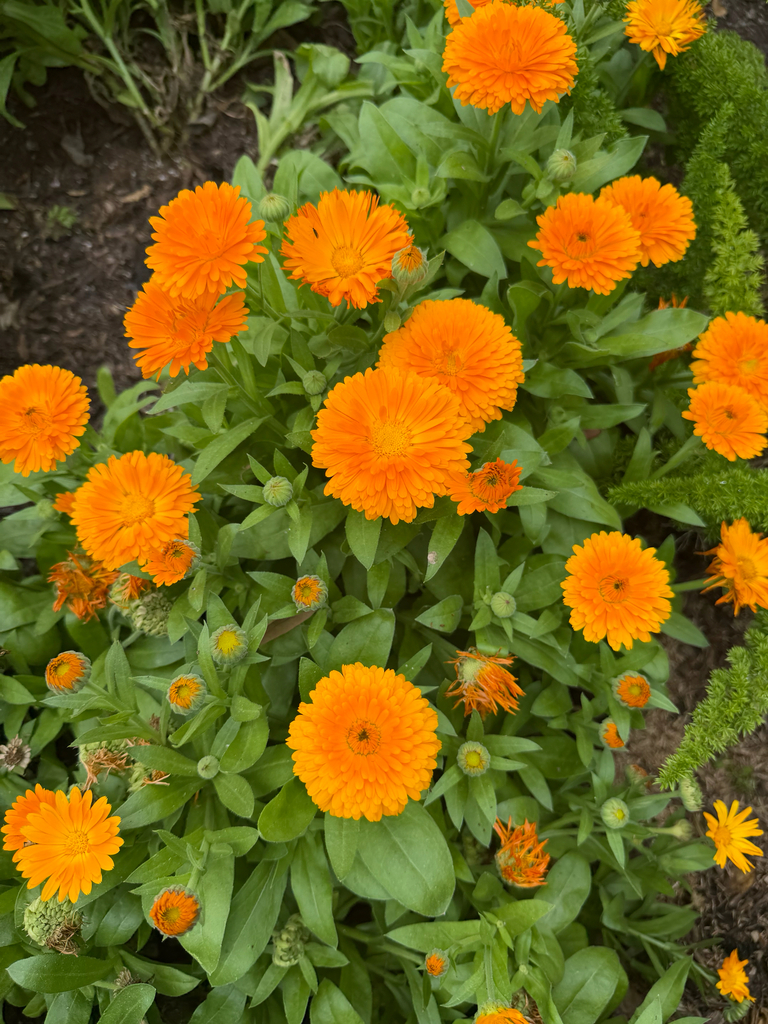
A cheerful orange-and-gold daisy of cottage gardens whose resinous petals colour soups and soothe skin. It is not the Tagetes 'marigold' of Indian garlands, though the two are often confused.
Calendula officinalis, Mary's gold, common marigold, the pot marigold, Scotch marigold, or ruddles, is a flowering plant in the daisy family, Asteraceae. It is probably native to southern Europe, but its long history of cultivation makes its precise origin unknown, and it is widely naturalised. The florets are edible and the plant has historically been used as medicine. Wikipedia
What it can do
- iPetals contain carotenoids (lutein, lycopene) that dye food and fabric yellow-orange
- iiTriterpenoid faradiol esters show anti-inflammatory activity on skin
- iiiOne plant bears several very different seed shapes (heterocarpy), spreading its bets on dispersal
- ivFlowers open in sunshine and close in dull weather
At the table
Eatenpetals · young leaves
Petals colour rice, cheese and butter and garnish salads. Do not confuse it with Tagetes marigolds or the poisonous marsh marigold (Caltha). People allergic to Asteraceae may react.
In the medicine cabinet
| Tradition | Use |
|---|---|
| European folk medicine | Ointments and infused oils for cuts, burns, nappy rash and sore nipples; petal tea for digestion and menstrual pain |
| Unani | Flowers used as a resolvent for swellings and for liver and menstrual complaints |
| Modern phytotherapy | Topical creams studied for radiation dermatitis, leg ulcers and episiotomy healing; EMA traditional-use monograph for minor skin inflammation |
Weight of evidence
Moderate. Some clinical trials with promising but limited or mixed results.
Active compounds
faradiol monoesters, triterpenoid saponins (calendulosides), lutein, β-carotene, isorhamnetin glycosides
Fruit & seed


Fruit
Cypsela (achene)
Ripens: Summer–autumn
Curved, hooked and ridged achenes of several shapes on the same head.
Seed
1–2.5 cm
C-shaped, knobbly, beige-brown seeds of several forms
- Dispersal
- Hooked forms catch on fur; others fall or blow
- Germination
- Easy; 5–14 days at 15–21 °C; cover with 1 cm soil (needs darkness)
Photographs from Wikimedia Commons under open licences; hover for the photographer, click for the file.
How to grow it
Hardiness (USDA zones)
Hardy annual; grown in USDA 2–11. Survives winters down to about -46 °C.
- Light
- Full sun
- Water
- Moderate
- Soil
- Any well-drained soil
- Propagation
- Seed
- To harvest
- Flowers 6–8 weeks from sowing
- Climates
- Temperate, Mediterranean, Subtropical (cool season)
- 1Sow directly 1 cm deep in spring or autumn
- 2Thin to 25–30 cm
- 3Pick flowers every few days to keep new ones coming
- 4Dry petals in shade for tea, oils or colouring
Can it grow where you are?
Where it lives
Recorded sightings
—
geo-referenced records in GBIF, from museums, herbaria and field observers.
Native range
Known only in cultivation; probably derived from Mediterranean Calendula species. Grown worldwide
Drag the globe to turn it. Dots are where records exist, not a range map; darker means more records.
In the old herbals & bestiaries
Woodcuts and engravings matched from the Source Library’s scanned books by name. Plates marked “relative” show a close kin rather than this exact species. Click a plate to read the page it came from, with translation.

Living Images of Plants
Otto Brunfels · 1532 · p.267

Notable Commentaries on the History of Plants
Leonhart Fuchs · 1542 · p.416

Compendium of Materia Medica
李時珍 · 1596 · p.34

Hortus Eystettensis
Basilius Besler · 1640 · p.225

Maria Sibylla Merian — Der rupsen begin, voedzel en wonderbaare verandering (1712)
Maria Sibylla Merian · 1717 · p.401

Ortus sanitatis
1491 · p.223

The Book of Health: The Art of Distillation
Brunschwig, Hieronymus · 1505 · p.213

Garden of Health
1507 · p.179

On the Names of Plants
Hieronymus Bock (Tragus) · 1552 · p.217

Florum et coronariarum historia
Rembert Dodoens · 1568 · p.62
In the stacks
Searching the stacks…
Every page naming Calendula officinalis in the Biodiversity Heritage Library →
Marginalia
Nicholas Culpeper's Complete Herbal (1653) prized marigold flowers for 'comforting the heart'. Medieval cooks used the petals as a cheap stand-in for saffron.
Curiosity
Its name comes from the Latin calendae, the first day of the month, because in mild climates it seemed to be in flower at the start of every month.
Kinship


Photographs: iNaturalist contributors under the licences shown. Records: GBIF.org. Historical plates: Source Library (CC BY-SA 4.0; originals public domain). Summary text: Nature Library editors and Wikipedia (CC BY-SA). Medicinal and edibility notes are historical and educational, not advice. iNaturalist taxon 75931.