 NL·0016
Herbarium of the Nature Library
- Name
- Rauvolfia serpentina
- Family
- Apocynaceae
- Native to
- Indian subcontinent and Sri Lanka to Myanmar, Thailand, southern China, Malaysia and Indonesia
- Habitat
- Tropical moist forest understorey, Monsoon forest
Indian snakeroot
Rauvolfia serpentina
Also calledSarpagandha (Sanskrit/Hindi) · Chhota chand (Hindi) · Pagal-ki-dawa (Hindi, 'medicine for madness') · Shé gēn mù 蛇根木 (Chinese)
A small shrub of Asian monsoon forests whose twisting roots gave medicine reserpine. It was one of the first drugs for high blood pressure and for psychosis, and its effects helped launch modern psychopharmacology.
Rauvolfia serpentina, the Indian snakeroot, devil pepper, serpentine wood, Sarpagandha or Chandrika, is a species of flower in the milkweed family Apocynaceae. It is native to the Indian subcontinent and East Asia. Wikipedia
What it can do
- iRoots contain over 50 indole alkaloids, including reserpine and ajmaline
- iiReserpine depletes the brain and nerves of noradrenaline, dopamine and serotonin
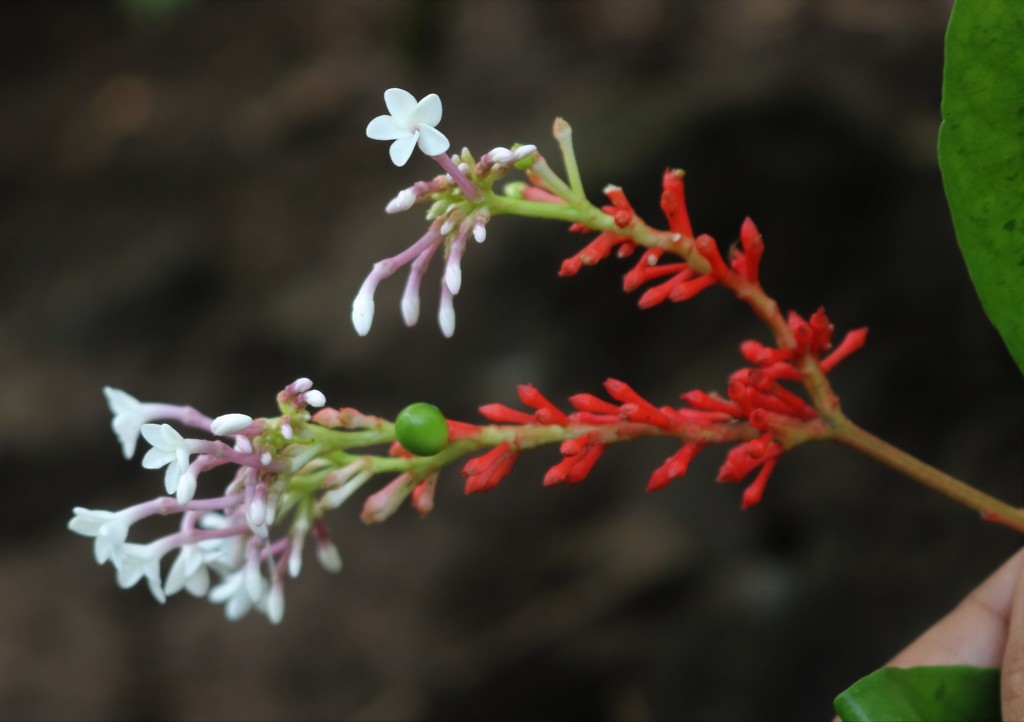
- iiiWhite-pink flowers on red stalks are followed by glossy purple-black drupes
At the table
Not a food. The root is a potent drug; self-medication is dangerous.
In the medicine cabinet
| Tradition | Use |
|---|---|
| Ayurveda | Sarpagandha root for insomnia, anxiety, insanity (unmada), high blood pressure, and snake and insect bites |
| Unani | Asrol (root) as a sedative for hypertension, insomnia and mania |
| Modern medicine | Reserpine for hypertension and formerly for psychosis; ajmaline as an antiarrhythmic and diagnostic for Brugada syndrome |
Weight of evidence
Strong. An approved drug, or consistent results in well-run clinical trials.
Active compounds
reserpine, rescinnamine, ajmaline, ajmalicine (raubasine), serpentine, yohimbine
Fruit & seed

Fruit
Drupe
Ripens: Autumn–winter
Small, paired, shiny purple-black drupes on red stalks.
Seed
~5 mm
Single seed within a hard endocarp
- Dispersal
- Birds
- Germination
- Low and erratic (often under 50%); fresh seed sown in shade, 2–6 weeks
Photographs from Wikimedia Commons under open licences; hover for the photographer, click for the file.
How to grow it
Hardiness (USDA zones)
Tropical only (USDA 10–12). Survives winters down to about -1 °C.
- Light
- Part shade
- Water
- Moderate–high
- Soil
- Humus-rich, well-drained, slightly acidic loam
- Propagation
- Seed, root or stem cuttings
- To harvest
- Roots at 18–30 months
- Climates
- Tropical, Subtropical monsoon
- 1Sow fresh seed in a shaded nursery bed at the start of the monsoon
- 2Transplant at 2 months, 30–45 cm apart
- 3Pinch flowers for better root growth unless saving seed
- 4Dig roots in winter of the second year
Can it grow where you are?
Where it lives
Recorded sightings
—
geo-referenced records in GBIF, from museums, herbaria and field observers.
Native range
Indian subcontinent and Sri Lanka to Myanmar, Thailand, southern China, Malaysia and Indonesia
Drag the globe to turn it. Dots are where records exist, not a range map; darker means more records.
In the old herbals & bestiaries
Woodcuts and engravings matched from the Source Library’s scanned books by name. Plates marked “relative” show a close kin rather than this exact species. Click a plate to read the page it came from, with translation.

In the stacks
Searching the stacks…
Every page naming Rauvolfia serpentina in the Biodiversity Heritage Library →
Marginalia
The genus honours the 16th-century German physician and botanist Leonhard Rauwolf. In 1949 the Bombay cardiologist Rustom Jal Vakil reported its blood-pressure-lowering effect in the British Heart Journal, and in 1952 chemists at Ciba isolated reserpine.
Curiosity
Reserpine caused depression in some patients by draining the brain of monoamines, which helped inspire the 'monoamine hypothesis' of depression.
Kinship




Photographs: iNaturalist contributors under the licences shown. Records: GBIF.org. Historical plates: Source Library (CC BY-SA 4.0; originals public domain). Summary text: Nature Library editors and Wikipedia (CC BY-SA). Medicinal and edibility notes are historical and educational, not advice. iNaturalist taxon 431529.