 NL·0089
Herbarium of the Nature Library
- Name
- Strychnos nux-vomica
- Family
- Loganiaceae
- Native to
- India, Sri Lanka and Southeast Asia
- Habitat
- Tropical dry forest, Tropical moist forest
Strychnine tree
Strychnos nux-vomica
Also calledKuchla (Hindi/Urdu) · Kupilu / Vishamushti (Sanskrit) · Azaraqi (Unani/Arabic) · Mǎqiánzǐ 马钱子 (Chinese) · Etti (Tamil) · Kanjiram (Malayalam) · Poison nut (English)
A tree whose disc-shaped seeds contain strychnine, one of the most notorious poisons in history. Strychnine blocks inhibitory glycine receptors in the spinal cord, so muscles convulse uncontrollably while the victim stays fully conscious.
Strychnos nux-vomica, the strychnine tree, also known as nux vomica, poison fruit, semen strychnos, and quaker buttons, is a deciduous tree native to India and to southeast Asia. It is a medium-sized tree in the family Loganiaceae that grows in open habitats. Its leaves are ovate and 5–9 centimetres (2–3.5 in) in size. It is known for being the natural source of the extremely poisonous compound strychnine. Wikipedia
What it can do
- iMakes strychnine and brucine, mostly in its seeds (about 1–1.5% strychnine)
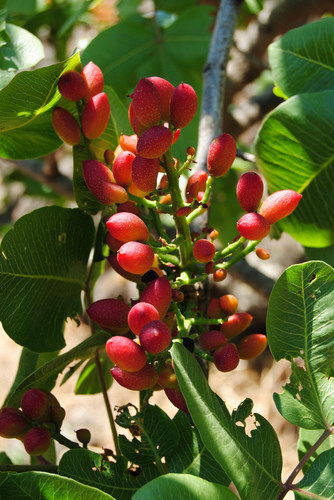
- iiProduces orange, apple-sized fruits whose pulp birds such as hornbills eat while discarding the seeds
- iiiIts alkaloids are so bitter that strychnine can be tasted at extremely low dilutions
- ivGrows in dry and moist forests across the Indian subcontinent
At the table
Seeds are deadly; bark, leaves and root also contain strychnine and brucine. Within 15–60 minutes: anxiety, muscle twitching, then violent convulsions triggered by any noise or touch, arching of the back (opisthotonus), a fixed grin (risus sardonicus) and death from respiratory failure or exhaustion, while the person stays conscious. The fruit pulp is sometimes described as edible but is risky and not recommended.
In the medicine cabinet
| Tradition | Use |
|---|---|
| Ayurveda | Seeds (kupilu) used only after purification in cow's urine, milk or ghee, in tiny doses for nerve and digestive disorders |
| Traditional Chinese medicine | Processed seeds (ma qian zi) for pain and paralysis |
| 19th-century Western medicine | Strychnine used as a 'tonic' and stimulant |
Weight of evidence
Traditional. Long historical use; little or no modern clinical evidence.
Active compounds
strychnine, brucine, loganin
Fruit & seed
Fruit
Berry
Ripens: Winter
Smooth, hard-shelled orange fruit with white jelly-like pulp and several seeds.
Seed
~2–2.5 cm
Flat, grey, velvety discs
- Dispersal
- Birds and monkeys eating the pulp
- Germination
- Not for cultivation
Where it lives
Recorded sightings
—
geo-referenced records in GBIF, from museums, herbaria and field observers.
Native range
India, Sri Lanka and Southeast Asia
Drag the globe to turn it. Dots are where records exist, not a range map; darker means more records.
In the old herbals & bestiaries
Woodcuts and engravings matched from the Source Library’s scanned books by name. Plates marked “relative” show a close kin rather than this exact species. Click a plate to read the page it came from, with translation.

Garden of Malabar, Vol. 1
Hendrik van Rheede · 1683 · p.122

Ortus sanitatis
1491 · p.289

Garden of Health
1507 · p.234

Compendium of Materia Medica
李時珍 · 1596 · p.13

Herbarium Portatile, Oder Behendes Kräuter- und Gewächs-Buch: Darinn nicht allein 1363. so wol Einheimische als Außländndische Kräuter mit Lateinisch und Deutscher Benennung abgebildet, sondern auch die meisten, so in der Medicin gebräuchlich, kürtzlich erkläret werden
Panckow, Thomas · 1656 · p.374
In the stacks
Searching the stacks…
Every page naming Strychnos nux-vomica in the Biodiversity Heritage Library →
Marginalia
Pierre Joseph Pelletier and Joseph Bienaimé Caventou isolated strychnine in 1818. At the 1904 St Louis Olympics, marathon winner Thomas Hicks was given strychnine and brandy by his trainers during the race and nearly collapsed.
Curiosity
Strychnine's complex structure took until 1946 to work out (Robert Robinson), and R. B. Woodward first synthesised it in 1954.
Kinship




Photographs: iNaturalist contributors under the licences shown. Records: GBIF.org. Historical plates: Source Library (CC BY-SA 4.0; originals public domain). Summary text: Nature Library editors and Wikipedia (CC BY-SA). Medicinal and edibility notes are historical and educational, not advice. iNaturalist taxon 498755.