 NL·0730
Herbarium of the Nature Library
- Name
- Sturnus vulgaris
- Family
- Sturnidae
- Native to
- Europe, Western Asia and North Africa; introduced to North America, Australia, New Zealand and South Africa
- Habitat
- Farmland, Grassland, Cities
On eBird ↗
European Starling
Live sightings near you, the range map, bar charts of when it is seen, and Macaulay Library photos and recordings.
Common starling
Sturnus vulgaris
Also calledZarzur (Arabic) · Tilyar (Hindi/Urdu) · Sār (Persian) · Estornino pinto (Spanish) · Star (German)
A glossy, speckled songbird whose winter flocks wheel at dusk in murmurations of hundreds of thousands. Introduced to North America in 1890, it now numbers in the tens of millions there.
The common starling, also known simply as the starling in Great Britain and Ireland, and as the European starling in North America, is a medium-sized passerine bird in the starling family, Sturnidae. It is about 20 cm (8 in) long and has glossy black plumage with a metallic sheen, which is speckled with white at some times of the year. The legs are pink and the bill is black in winter and yellow in summer; young birds have browner plumage than the adults. Its gift for mimicry has been noted in literature including the Mabinogion and the works of Pliny the Elder and William Shakespeare. Wikipedia
What it can do
- iMurmurations: each bird tracks about seven neighbours, letting waves pass across the flock
- iiSkilled mimic of other birds, phones and human speech
- iiiNavigates using a sun compass and magnetic sense
- ivOpens its bill inside the soil to pry prey ('open-bill probing')
In the field
Field marks
- aShort-tailed, glossy black bird with purple-green sheen
- bPale-spotted in fresh winter plumage
- cYellow bill in breeding season
- dPointed, triangular wings in flight
- Voice
- Varied song of whistles, clicks, rattles and accurate mimicry
- Not to be confused with
- Common blackbird has a longer tail, no gloss or spots, and hops rather than walks. Spotless starling (Iberia) is unspotted in summer.
- Where to see it
- Winter murmurations at Brighton Palace Pier and RSPB Ham Wall (Somerset Levels), England
- When
- Resident in much of Europe; murmurations Nov–Feb
Listen
Looking for field recordings…
Life & habits
- Diet
- Insects, larvae, fruit and seeds
- Habitat
- Open fields, farmland, towns and cities
- Size
- 19–23 cm
- Lifespan
- About 2–3 years on average; record over 22
Males decorate nests with aromatic green herbs, which may deter parasites.
Where it lives
Recorded sightings
—
geo-referenced records in GBIF, from museums, herbaria and field observers.
Native range
Europe, Western Asia and North Africa; introduced to North America, Australia, New Zealand and South Africa
Drag the globe to turn it. Dots are where records exist, not a range map; darker means more records.
In the old herbals & bestiaries
Woodcuts and engravings matched from the Source Library’s scanned books by name. Plates marked “relative” show a close kin rather than this exact species. Click a plate to read the page it came from, with translation.

Jan Jonston — Naeukeurige beschryving van de natuur der viervoetige dieren (1660)
Jan Jonston · 1660 · p.171

Historiae Animalium Liber III: De Avium Natura
Conrad Gesner · 1555 · p.756

History of Animals, Book I: On Viviparous Quadrupeds
Conrad Gessner · 1554 · p.901

De Indiae utriusque re naturali et medica
Willem Piso · 1658 · p.469
In the stacks
Searching the stacks…
Every page naming Sturnus vulgaris in the Biodiversity Heritage Library →
Marginalia
Mozart bought a pet starling in 1784 that could sing a theme from his Piano Concerto K.453, and buried it with a poem. Eugene Schieffelin released about 100 in New York's Central Park in 1890–91.
Curiosity
In Shakespeare's Henry IV, Part 1, Hotspur plans to teach a starling to say 'Mortimer' to annoy the king.
Kinship
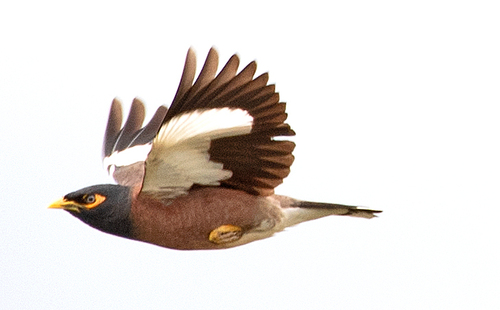
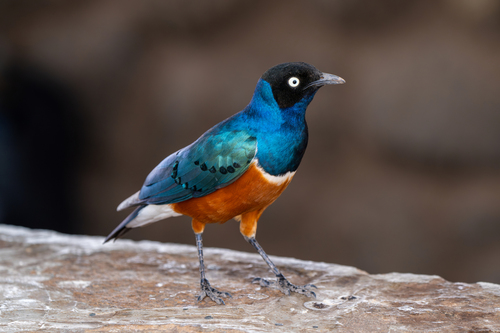




Photographs: iNaturalist contributors under the licences shown. Records: GBIF.org. Historical plates: Source Library (CC BY-SA 4.0; originals public domain). Summary text: Nature Library editors and Wikipedia (CC BY-SA). Medicinal and edibility notes are historical and educational, not advice. iNaturalist taxon 14850.