 NL·0098
Herbarium of the Nature Library
- Name
- Swietenia macrophylla
- Family
- Meliaceae
- Native to
- Southern Mexico through Central America to the Amazon basin (Bolivia, Brazil, Peru)
- Habitat
- Tropical moist forest, Tropical dry forest
Big-leaf mahogany
Swietenia macrophylla
Also calledCaoba (Spanish) · Mogno (Brazilian Portuguese) · Aguano (Peru) · Sky fruit / Buah tunjuk langit (Malay) · Mahoni (Indonesian) · 大叶桃花心木 (Chinese)
The 'true' mahogany of fine furniture, whose deep-red, stable wood made it one of the most valuable timbers of the Americas. Heavy logging ran ahead of the law, and it was listed on CITES Appendix II in 2003. Its fruit capsules point skyward and split open to release winged seeds.
Swietenia macrophylla, commonly known as mahogany, Honduran mahogany, Honduras mahogany, or big-leaf mahogany is a species of plant in the Meliaceae family. It is one of three species in genus Swietenia that yield genuine mahogany timber, the others being Swietenia mahagoni and Swietenia humilis. It is native to South America, Mexico and Central America, but naturalized in the Philippines, Singapore, Malaysia and Hawaii, and cultivated in plantations and wind-breaks elsewhere. Wikipedia
What it can do
- iProduces dense, stable, rot-resistant red-brown heartwood
- iiIts upright capsules split into five valves and release winged seeds that spin away on the wind
- iiiGrows into a forest giant over 40 m tall with buttressed trunks
- ivRegenerates best after large disturbances such as floods, fires or hurricanes
At the table
Not a food. Seeds are very bitter and used only medicinally; high doses have been linked to liver injury.
In the medicine cabinet
| Tradition | Use |
|---|---|
| Malaysian/Indonesian folk medicine | Seeds taken for diabetes and high blood pressure |
| Amazonian folk medicine | Bark decoctions for fever and diarrhoea |
Weight of evidence
Traditional. Long historical use; little or no modern clinical evidence.
Active compounds
limonoids (swietenine, swietenolide), tannins
Fruit & seed


Fruit
Woody capsule
Ripens: Dry season
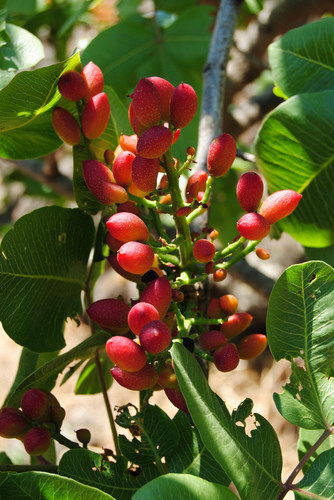
Upright, pear-shaped brown capsules 12–20 cm long that split from the base.


Seed
~7–10 cm with wing
Flat seeds with a long brown wing
- Dispersal
- Wind
- Germination
- Sow fresh (short viability); 2–4 weeks in warmth
Photographs from Wikimedia Commons under open licences; hover for the photographer, click for the file.
How to grow it
Hardiness (USDA zones)
Tropical only (USDA 10–12). Survives winters down to about -1 °C.
- Light
- Full sun
- Water
- Moderate–high
- Soil
- Deep, well-drained
- Propagation
- Seed
- To harvest
- Timber after 25–40 years in plantations
- Climates
- Tropical
- 1Sow fresh seed with the wing pointing up, barely covered
- 2Keep in partial shade in the nursery
- 3Plant out in mixed stands: monocultures are attacked by the mahogany shoot borer (Hypsipyla)
- 4Prune to a single leader
Can it grow where you are?
Where it lives
Recorded sightings
—
geo-referenced records in GBIF, from museums, herbaria and field observers.
Native range
Southern Mexico through Central America to the Amazon basin (Bolivia, Brazil, Peru)
Drag the globe to turn it. Dots are where records exist, not a range map; darker means more records.
In the old herbals & bestiaries
No plate in the Source Library names this exact species, so these show its closest relatives as the old naturalists drew them: same genus, or the same kind of plant. Click a plate to read the page it came from, with translation.


In the stacks
Searching the stacks…
Every page naming Swietenia macrophylla in the Biodiversity Heritage Library →
Marginalia
Mahogany furniture became a status symbol in 18th-century Britain, and Chippendale's designs relied on Caribbean and Central American mahogany cut and shipped largely by enslaved and forced labour. Illegal logging of mogno in the Brazilian Amazon was a major conservation scandal of the 1990s.
Curiosity
In Malaysia the seed is called 'sky fruit' because its capsules point straight up at the sky.
Kinship





Fact-checked: 1 correction made to this sheet. Photographs: iNaturalist contributors under the licences shown. Records: GBIF.org. Historical plates: Source Library (CC BY-SA 4.0; originals public domain). Summary text: Nature Library editors and Wikipedia (CC BY-SA). Medicinal and edibility notes are historical and educational, not advice. iNaturalist taxon 169442.