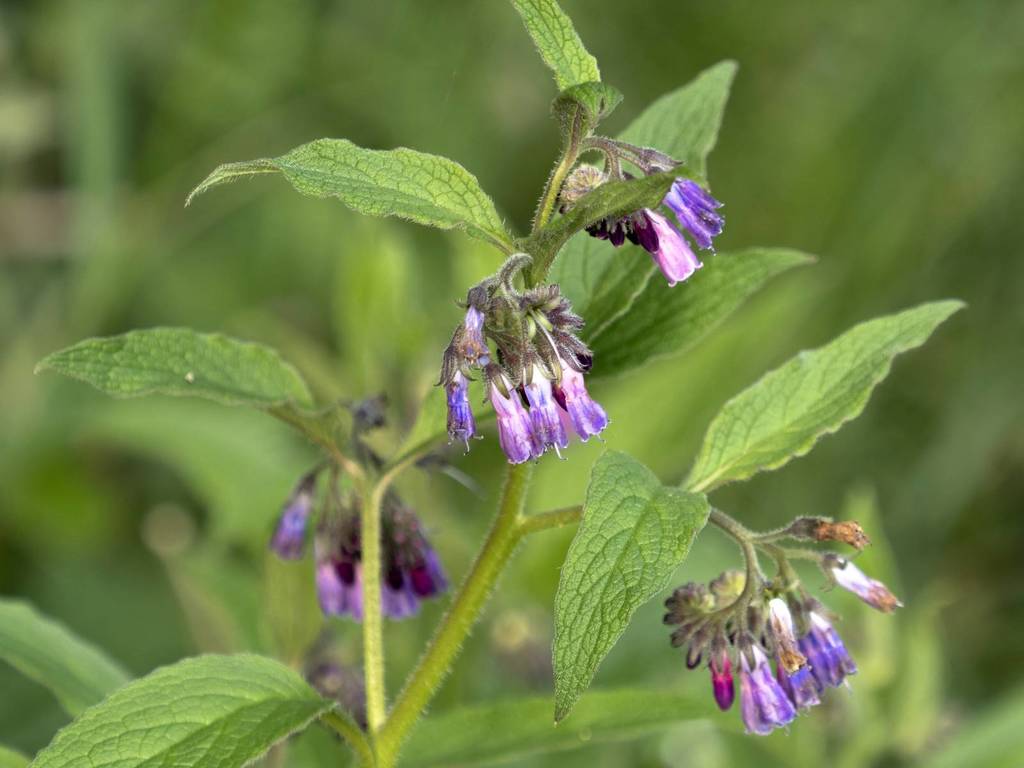
 NL·0037
Herbarium of the Nature Library
- Name
- Symphytum officinale
- Family
- Boraginaceae
- Native to
- Europe to Western Asia; naturalised in North America and elsewhere
- Habitat
- Riverbanks, Wet meadow, Ditches
Comfrey
Symphytum officinale
Also calledBeinwell (German, 'bone-heal') · Consuelda (Spanish) · Grande consoude (French) · Knitbone (English) · Jùhécǎo 聚合草 (Chinese)
A big, bristly riverside perennial whose roots were once packed around broken limbs to set like plaster. It works well on bruises and sprains, but contains alkaloids that harm the liver when taken by mouth.
Symphytum officinale is a perennial flowering plant in the family Boraginaceae. Along with 34 other species of Symphytum, it is known as comfrey. Internal or long-term topical use of comfrey is discouraged due to its strong potential to cause liver toxicity. Wikipedia
What it can do
- iLeaves and roots contain allantoin, which promotes cell proliferation in wound healing
- iiThick, mucilaginous roots once set hard enough to splint fractures
- iiiDeep roots draw up potassium, making its leaves a prized garden fertiliser
- ivBell flowers are a staple of bumblebees; short-tongued bees 'rob' nectar by biting holes in them
At the table
Formerly eaten as a vegetable and tea, but all parts, especially the roots, contain pyrrolizidine alkaloids that cause liver damage. Before flowering its leaves can be mistaken for deadly foxglove.
In the medicine cabinet
| Tradition | Use |
|---|---|
| European folk medicine | Root and leaf poultices for fractures, sprains, bruises and wounds; formerly teas for coughs and ulcers |
| Modern phytotherapy | Alkaloid-reduced root creams for ankle sprains, back pain and knee osteoarthritis, with positive trials |
Weight of evidence
Moderate. Some clinical trials with promising but limited or mixed results.
Active compounds
allantoin, rosmarinic acid, symphytine, lycopsamine, intermedine, mucilage
Fruit & seed
Fruit
Nutlets (4)
Ripens: Summer
Shiny dark nutlets with an oil-rich attachment that ants carry off.
Seed
~4–5 mm
Glossy black nutlets
- Dispersal
- Ants and water
- Germination
- Slow and erratic; root cuttings are easier
How to grow it
Hardiness (USDA zones)
USDA 3–9. Survives winters down to about -40 °C.
- Light
- Full sun to part shade
- Water
- Moderate–high
- Soil
- Moist, rich, heavy soils
- Propagation
- Root cuttings or division
- To harvest
- Leaves from year 1; cut 3–4 times a season
- Climates
- Temperate, Continental
- 1Plant root sections 5 cm deep where it can stay; any root fragment left behind will regrow
- 2Keep moist the first season
- 3Cut leaves for compost or liquid fertiliser before flowering
- 4Label clearly and keep away from edible greens and foxgloves
Can it grow where you are?
Where it lives
Recorded sightings
—
geo-referenced records in GBIF, from museums, herbaria and field observers.
Native range
Europe to Western Asia; naturalised in North America and elsewhere
Drag the globe to turn it. Dots are where records exist, not a range map; darker means more records.
In the old herbals & bestiaries
Woodcuts and engravings matched from the Source Library’s scanned books by name. Plates marked “relative” show a close kin rather than this exact species. Click a plate to read the page it came from, with translation.

Living Images of Plants
Otto Brunfels · 1532 · p.85

Garden of Health
Jacob Meydenbach · 1491 · p.130

Living Images of Plants
Otto Brunfels · 1532 · p.83

Living Images of Plants
Otto Brunfels · 1532 · p.86

The Dutch Herbarium or Herbal
Petrus Nylandt · 1670 · p.170

Marcelli Malpighii ... Anatome Plantarum
Malpighi, Marcello · 1675 · p.337

Ortus sanitatis
1491 · p.130

Ortus sanitatis
1491 · p.131

Living Images of Plants
Otto Brunfels · 1532 · p.82

The Great Herbary with all the figures of the herbs
1532 · p.98
In the stacks
Searching the stacks…
Every page naming Symphytum officinale in the Biodiversity Heritage Library →
Marginalia
The name Symphytum comes from the Greek symphyo, 'to grow together', and 'comfrey' from the Latin confervere, 'to boil together' or heal. Its old English name knitbone records its traditional use on fractures.
Curiosity
Organic gardeners grow sterile 'Bocking 14', a Russian comfrey (S. × uplandicum) bred by Lawrence Hills, as a fertiliser plant that cannot seed itself about.
Kinship




Fact-checked: 1 correction made to this sheet. Photographs: iNaturalist contributors under the licences shown. Records: GBIF.org. Historical plates: Source Library (CC BY-SA 4.0; originals public domain). Summary text: Nature Library editors and Wikipedia (CC BY-SA). Medicinal and edibility notes are historical and educational, not advice. iNaturalist taxon 55724.