 NL·0034
Herbarium of the Nature Library
- Name
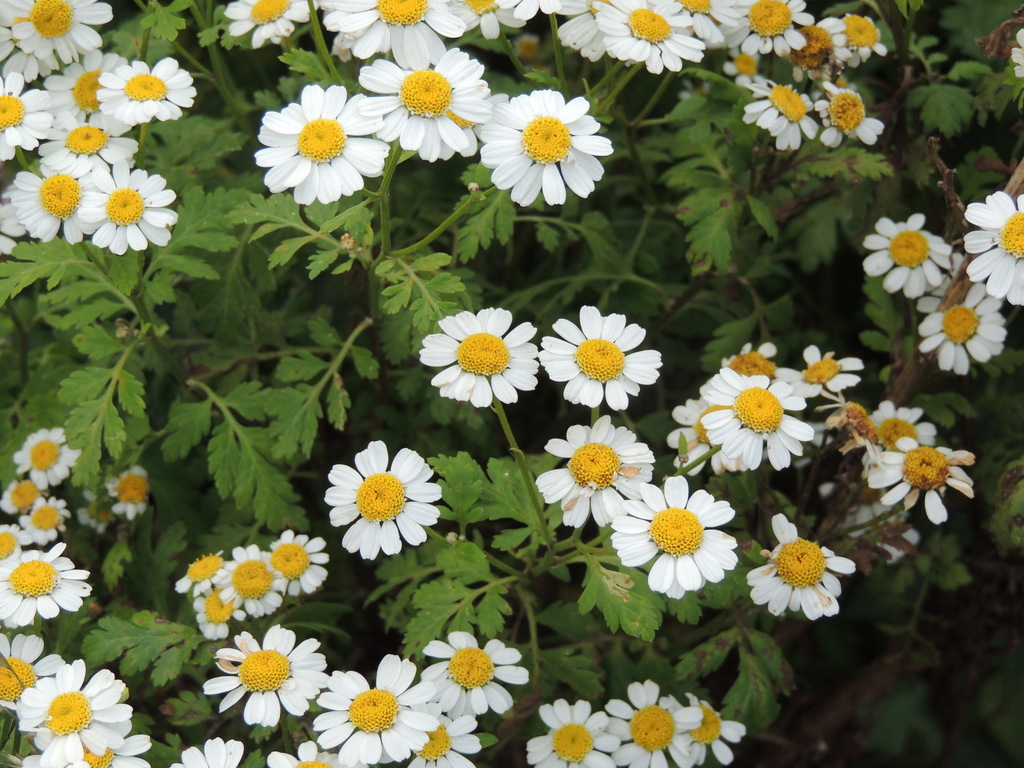
- Tanacetum parthenium
- Family
- Asteraceae
- Native to
- Balkan Peninsula, Anatolia and the Caucasus; naturalised widely in Europe, the Americas and Australasia
- Habitat
- Rocky scrub, Disturbed ground, Old walls
Feverfew
Tanacetum parthenium
Also calledMutterkraut (German) · Matricaria / Hierba de Santa María (Spanish) · Grande camomille (French) · Bachelor's buttons (English) · Xiǎo bái jú 小白菊 (Chinese)
A bitter, strongly scented little daisy whose name is a corruption of 'febrifuge'. Today it is best known as a herbal migraine preventative.
Tanacetum parthenium, known as feverfew, is a flowering plant in the daisy family, Asteraceae. It may be grown as an ornament, and may be identified by its synonyms, Chrysanthemum parthenium and Pyrethrum parthenium. Having its origin in the Balkans region, it is now distributed worldwide. Wikipedia
What it can do
- iLeaves contain parthenolide, a sesquiterpene lactone that blocks NF-κB inflammatory signalling in lab studies
- iiPungent camphor-scented foliage repels many insects
- iiiSelf-seeds freely into wall crevices and paving
At the table
Very bitter; chewing fresh leaves causes mouth ulcers in some people.
In the medicine cabinet
| Tradition | Use |
|---|---|
| European folk medicine | Leaves eaten in bread or as tea for headache, fevers, arthritis and to bring on menstruation |
| Modern phytotherapy | Dried leaf or CO2 extract to prevent migraine attacks; EMA traditional-use monograph |
| Latin American folk medicine | Infusions used in Mexico and Central America for colic, stomach ache and menstrual pain |
Weight of evidence
Moderate. Some clinical trials with promising but limited or mixed results.
Active compounds
parthenolide, camphor, chrysanthenyl acetate, tanetin, apigenin
Fruit & seed

Fruit
Cypsela (achene)
Ripens: Summer–autumn
Tiny ribbed achenes with a short crown.
Seed
~1.5 mm
Minute ribbed seeds
- Dispersal
- Gravity, wind and soil; self-sows
- Germination
- Needs light; 10–15 days at 15–20 °C
Photographs from Wikimedia Commons under open licences; hover for the photographer, click for the file.
How to grow it
Hardiness (USDA zones)
USDA 5–9. Survives winters down to about -29 °C.
- Light
- Full sun to part shade
- Water
- Low–moderate
- Soil
- Any well-drained soil
- Propagation
- Seed, cuttings or division
- To harvest
- Leaves from 3–4 months; flowers first summer
- Climates
- Temperate, Mediterranean
- 1Surface-sow in spring
- 2Plant 30 cm apart in sun
- 3Pick leaves as needed and dry for capsules or tea
- 4Deadhead to limit self-seeding
Can it grow where you are?
Where it lives
Recorded sightings
—
geo-referenced records in GBIF, from museums, herbaria and field observers.
Native range
Balkan Peninsula, Anatolia and the Caucasus; naturalised widely in Europe, the Americas and Australasia
Drag the globe to turn it. Dots are where records exist, not a range map; darker means more records.
In the old herbals & bestiaries
Woodcuts and engravings matched from the Source Library’s scanned books by name. Plates marked “relative” show a close kin rather than this exact species. Click a plate to read the page it came from, with translation.

New Genera of Plants
Pier Antonio Micheli · 1729 · p.324

Hortus Eystettensis
Basilius Besler · 1640 · p.228

Latin Herbal with German Synonyms
1486 · p.190

Commentaries on the Six Books of Dioscorides
Pietro Andrea Mattioli · 1560 · p.626

History of Rare Plants
Carolus Clusius · 1601 · p.349

Elements of Botany
Joseph Pitton de Tournefort · 1719 · p.32

Latin Herbal with German Synonyms
1484 · p.217

Latin Herbal
1484 · p.189

Herbarius
1485 · p.190

Herbarius latinus (with Dutch synonyms)
1486 · p.187
In the stacks
Searching the stacks…
Every page naming Tanacetum parthenium in the Biodiversity Heritage Library →
Marginalia
Dioscorides recommended parthenion, a name later linked to the Parthenon. The modern migraine interest began in the 1970s with Welsh patients' reports and led to a 1985 trial at the London Migraine Clinic published in the BMJ.
Curiosity
'Feverfew' comes from the Latin febrifugia, 'fever-chaser', although the plant does little to lower fevers.
Kinship

Photographs: iNaturalist contributors under the licences shown. Records: GBIF.org. Historical plates: Source Library (CC BY-SA 4.0; originals public domain). Summary text: Nature Library editors and Wikipedia (CC BY-SA). Medicinal and edibility notes are historical and educational, not advice. iNaturalist taxon 54520.