 NL·0205
Herbarium of the Nature Library
- Name
- Trametes versicolor
- Family
- Polyporaceae
- Native to
- Cosmopolitan on dead hardwood in temperate and tropical forests
- Habitat
- Temperate forest, Tropical forest, Woodland, Urban parks
Turkey tail
Trametes versicolor
Also calledYun zhi 云芝 (Chinese) · Kawaratake (Japanese) · Schmetterlings-Tramete (German) · Tramète versicolore (French)
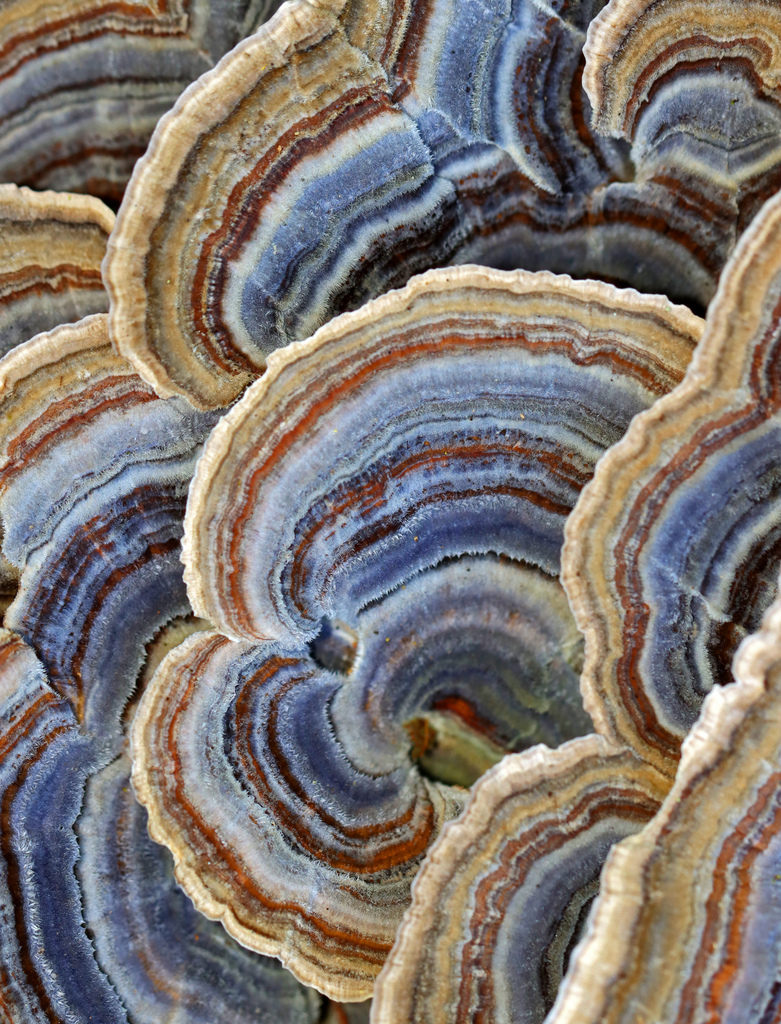
Thin, velvety brackets banded in browns, blues and creams, fanned out like a turkey's tail across dead logs. It is one of the most common fungi on Earth. It is also the source of PSK (Krestin), a protein-bound polysaccharide used alongside cancer therapy in Japan since the 1970s.
Trametes versicolor – also known as Coriolus versicolor and Polyporus versicolor – is a common polypore mushroom found throughout the world. Owing to its shape being similar to that of a wild turkey's tail feathers, T. versicolor is most commonly referred to as turkey tail. Wikipedia
What it can do
- iA white-rot decomposer that breaks down lignin in dead hardwood
- iiIts laccase enzymes can degrade dyes, PCBs and other pollutants (studied for bioremediation)
- iiiHas a pore surface underneath with 3–5 tiny pores per millimetre, which separates it from gill-less lookalikes
- ivVelvety, concentrically banded caps vary greatly in colour, hence 'versicolor'
At the table
Eatendried brackets (decoction or tea)
Too leathery to eat; it is simmered as a tea or taken as an extract. Lookalikes such as false turkey tail (Stereum ostrea, smooth underside without pores) and Trichaptum species are not known to be dangerous but have no medicinal value.
In the medicine cabinet
| Tradition | Use |
|---|---|
| Traditional Chinese medicine | Yun zhi decoction to clear damp-heat and support the spleen and lungs |
| Japanese oncology | PSK (Krestin) given orally as an adjunct to chemotherapy for gastric and colorectal cancer |
| Chinese oncology | PSP (polysaccharopeptide) extracts used in cancer supportive care |
Weight of evidence
Moderate. Some clinical trials with promising but limited or mixed results.
Active compounds
polysaccharide-K (PSK, krestin), polysaccharopeptide (PSP), β-glucans
Fruiting body & spores
Spores
Spore print white to pale cream; spores cylindrical to slightly curved (allantoid), smooth, about 5–6 × 1.5–2 µm
- Dispersal
- Wind-borne basidiospores from the pore surface
How to cultivate it
Hardiness (USDA zones)
- Light
- Shade
- Water
- Keep logs damp
- Soil
- Fresh-cut hardwood logs or stumps (oak, maple, birch)
- Propagation
- Plug spawn
- To harvest
- Usually 1–2 years on logs
- Climates
- Temperate
- 1Drill and plug fresh hardwood logs with turkey tail plug spawn, then seal with wax
- 2Stack or partly bury logs in a shaded, damp spot
- 3Keep moist; brackets appear along the bark after colonisation
- 4Harvest firm, fresh brackets and dry them for tea
Where it lives
Recorded sightings
—
geo-referenced records in GBIF, from museums, herbaria and field observers.
Native range
Cosmopolitan on dead hardwood in temperate and tropical forests
Drag the globe to turn it. Dots are where records exist, not a range map; darker means more records.
In the old herbals & bestiaries
Woodcuts and engravings matched from the Source Library’s scanned books by name. Plates marked “relative” show a close kin rather than this exact species. Click a plate to read the page it came from, with translation.


In the stacks
Searching the stacks…
Every page naming Trametes versicolor in the Biodiversity Heritage Library →
Marginalia
Kureha Chemical's Japanese researchers isolated PSK in the 1960s after a chemical engineer reportedly noticed a neighbour treating his own cancer with kawaratake tea. Japan's health ministry approved Krestin in 1977.
Curiosity
One fallen log can carry hundreds of turkey tail brackets, each possibly a genetically different individual competing for the wood.
Kinship
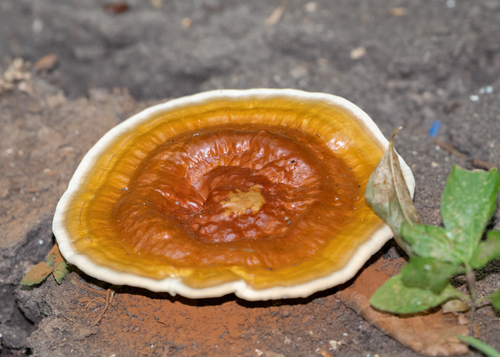


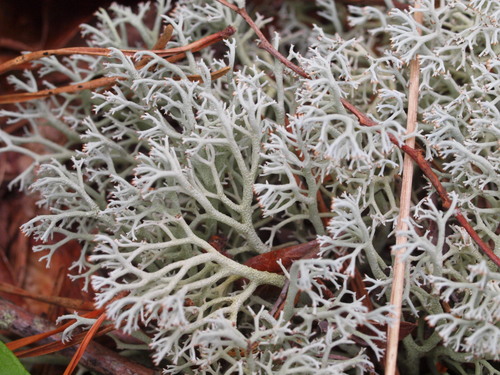
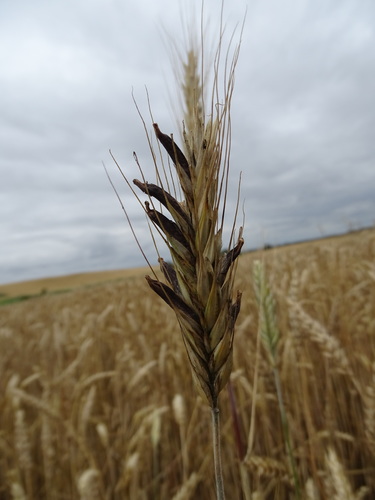
Photographs: iNaturalist contributors under the licences shown. Records: GBIF.org. Historical plates: Source Library (CC BY-SA 4.0; originals public domain). Summary text: Nature Library editors and Wikipedia (CC BY-SA). Medicinal and edibility notes are historical and educational, not advice. iNaturalist taxon 54134.