 NL·0186
Herbarium of the Nature Library
- Name
- Claviceps purpurea
- Family
- Clavicipitaceae
- Native to
- Worldwide in temperate grasses and cereals; especially rye in Europe
- Habitat
- Grassland, Farmland
Ergot
Claviceps purpurea
Also calledMutterkorn (German) · Seigle ergoté (French) · Cornezuelo del centeno (Spanish) · Sporynya (Russian) · Sporysz (Polish)
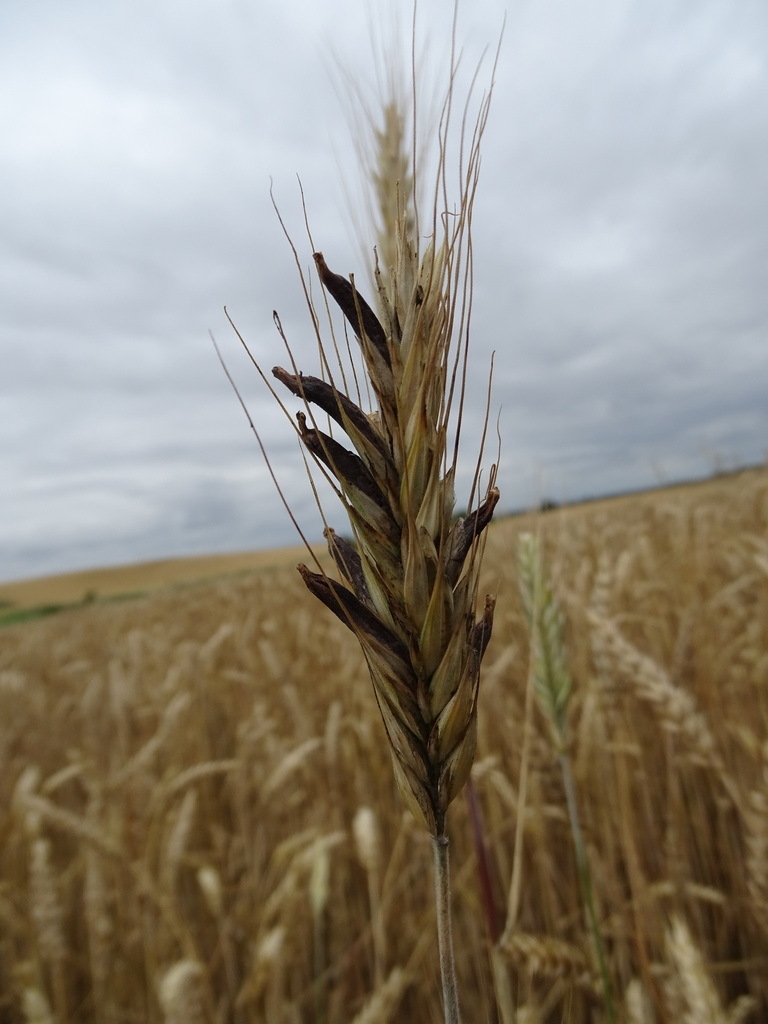
A parasite of rye and other grasses that replaces grain with a hard, purple-black, horn-like sclerotium full of alkaloids. Contaminated bread caused mass poisoning in medieval Europe. The same alkaloids gave medicine drugs for childbirth and migraine, and gave chemistry LSD.
Claviceps purpurea is an ergot fungus that grows on the ears of rye and related cereal and forage plants. Consumption of grains or seeds contaminated with the survival structure of this fungus, the ergot sclerotium, can cause ergotism in humans and other mammals. C. purpurea most commonly affects outcrossing species such as rye, as well as triticale, wheat and barley. It affects oats only rarely. Wikipedia
What it can do
- iInfects grass flowers and replaces the ovary with a sclerotium (the 'ergot')
- iiExudes sticky, sugary 'honeydew' full of conidia that insects carry to new flowers
- iiiProduces ergot alkaloids (ergotamine, ergometrine, lysergic acid derivatives) that constrict blood vessels and act on serotonin and dopamine receptors
- ivSclerotia overwinter in soil and sprout tiny drumstick-like stromata in spring
At the table
Deadly. Ergotism takes two forms: gangrenous (burning limbs that blacken and drop off) and convulsive (seizures, hallucinations). Grain is screened to remove sclerotia, and modern regulations set limits for ergot in flour.
In the medicine cabinet
| Tradition | Use |
|---|---|
| European midwifery (16th–19th c.) | 'Pulvis parturiens' given to speed labour; later used against haemorrhage after birth |
| Modern pharmacology | Ergometrine/methylergometrine for postpartum haemorrhage; ergotamine and dihydroergotamine for migraine |
Weight of evidence
Strong. An approved drug, or consistent results in well-run clinical trials.
Active compounds
ergotamine, ergometrine (ergonovine), ergocristine, lysergic acid
Fruiting body & spores
Spores
Ascospores (not seeds) thread-like (filiform), about 50–76 × 0.6–0.7 µm, from flask-shaped perithecia in purple stromata; asexual conidia in sugary honeydew
- Dispersal
- Ascospores shot into the air in spring; conidia spread by insects attracted to honeydew and by rain splash
Where it lives
Recorded sightings
—
geo-referenced records in GBIF, from museums, herbaria and field observers.
Native range
Worldwide in temperate grasses and cereals; especially rye in Europe
Drag the globe to turn it. Dots are where records exist, not a range map; darker means more records.
In the stacks
Searching the stacks…
Every page naming Claviceps purpurea in the Biodiversity Heritage Library →
Marginalia
Medieval Europe called ergotism 'St Anthony's Fire', and the Antonite monks ran hospitals for victims. Albert Hofmann first synthesised LSD from ergot's lysergic acid at Sandoz in 1938. In 1976, Linnda Caporael proposed (controversially) that ergotism lay behind the Salem witch trials.
Curiosity
One of the last major outbreaks was in Pont-Saint-Esprit, France, in 1951, though its cause is still debated.
Kinship


Photographs: iNaturalist contributors under the licences shown. Records: GBIF.org. Historical plates: Source Library (CC BY-SA 4.0; originals public domain). Summary text: Nature Library editors and Wikipedia (CC BY-SA). Medicinal and edibility notes are historical and educational, not advice. iNaturalist taxon 360212.