 NL·0023
Herbarium of the Nature Library
- Name
- Yucca brevifolia
- Family
- Asparagaceae
- Native to
- Western Mojave Desert, California and Nevada (eastern populations often treated as Yucca jaegeriana)
- Habitat
- Hot desert, Desert woodland
Joshua tree
Yucca brevifolia
Also calledIzote de desierto (Spanish) · Palma del desierto (Spanish) · Yucca palm (English)
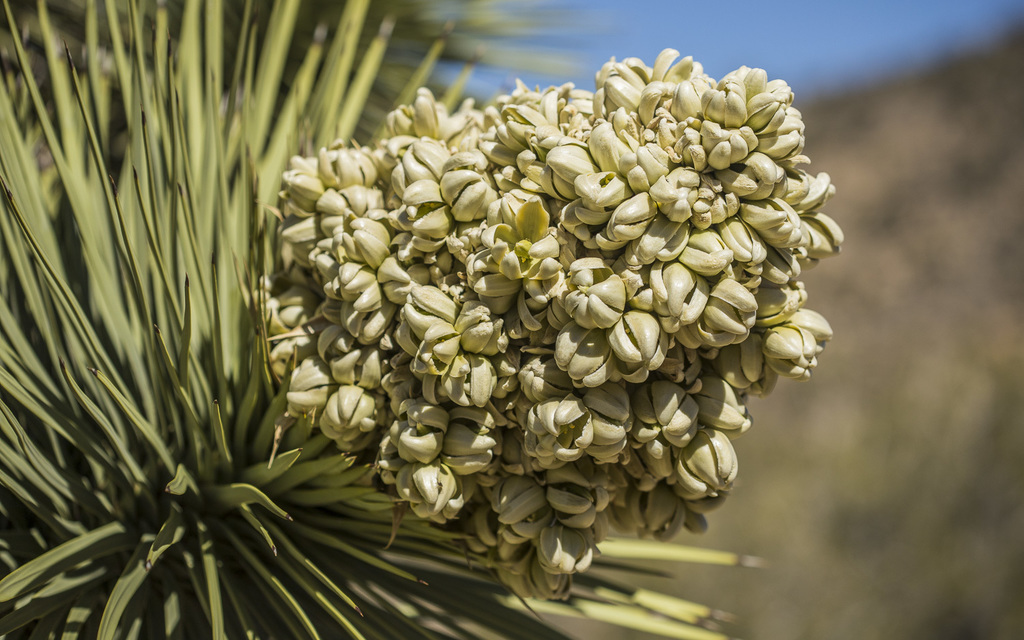
The shaggy, twisted tree-yucca of the Mojave Desert, which depends completely on one moth. The yucca moth deliberately packs pollen into the flower and lays its eggs there, and its larvae eat some, but not all, of the seeds. Climate warming is shrinking the areas where it can live.
Yucca brevifolia, commonly known as the Joshua tree, yucca palm, tree yucca, or palm tree yucca, is a plant species belonging to the genus Yucca. Wikipedia
What it can do
- iIs pollinated only by the yucca moth Tegeticula synthetica, which gathers pollen and stuffs it into the flower on purpose
- iiSprouts clones from roots and rhizomes, especially after damage
- iiiBranches only after flowering or when the growing tip is damaged
- ivProvides nest sites and food for desert birds, lizards and woodrats
At the table
Eatenflower buds (roasted) · seeds
Indigenous peoples of the Mojave roasted the buds and ate the seeds. Like other yuccas it contains saponins, which are bitter and can upset the stomach.
Fruit & seed


Fruit
Capsule
Ripens: Late spring
Green, egg-shaped capsules that dry and release flat black seeds.


Seed
~1 cm
Flat, black seeds
- Dispersal
- Rodents that cache seeds
- Germination
- Sow fresh, warm, in sandy mix; germination is quick but seedlings are slow
Photographs from Wikimedia Commons under open licences; hover for the photographer, click for the file.
How to grow it
Hardiness (USDA zones)
USDA 6–10. Survives winters down to about -23 °C.
- Light
- Full sun
- Water
- Very low
- Soil
- Sandy, gravelly, sharply drained
- Propagation
- Seed, offsets
- To harvest
- Flowers after 30–60 years
- Climates
- Arid
- 1Sow seed in deep pots of sandy mix
- 2Keep warm and barely moist
- 3Plant out young in full sun on free-draining ground
- 4Do not move wild plants: Joshua trees are protected in California
Can it grow where you are?
Where it lives
Recorded sightings
—
geo-referenced records in GBIF, from museums, herbaria and field observers.
Native range
Western Mojave Desert, California and Nevada (eastern populations often treated as Yucca jaegeriana)
Drag the globe to turn it. Dots are where records exist, not a range map; darker means more records.
In the old herbals & bestiaries
No plate in the Source Library names this exact species, so these show its closest relatives as the old naturalists drew them: same genus, or the same kind of plant. Click a plate to read the page it came from, with translation.


In the stacks
Searching the stacks…
Every page naming Yucca brevifolia in the Biodiversity Heritage Library →
Marginalia
Mormon settlers crossing the Mojave in the 1850s are said to have named it after the biblical Joshua, raising his hands to heaven. The Cahuilla used its leaf fibres for baskets and sandals and its roots for red dye.
Curiosity
Studies predict that under high-warming scenarios Joshua Tree National Park could lose most of its suitable Joshua tree habitat by 2100.
Kinship



Photographs: iNaturalist contributors under the licences shown. Records: GBIF.org. Historical plates: Source Library (CC BY-SA 4.0; originals public domain). Summary text: Nature Library editors and Wikipedia (CC BY-SA). Medicinal and edibility notes are historical and educational, not advice. iNaturalist taxon 47785.