- Animals
- ›Cnidarians
- ›Sea Anemones and Corals
- ›Hexacorallians
- ›Sea Anemones
- ›Enthemonae
- ›Actinioidea
- ›Haloclavidae
- ›Haloclava
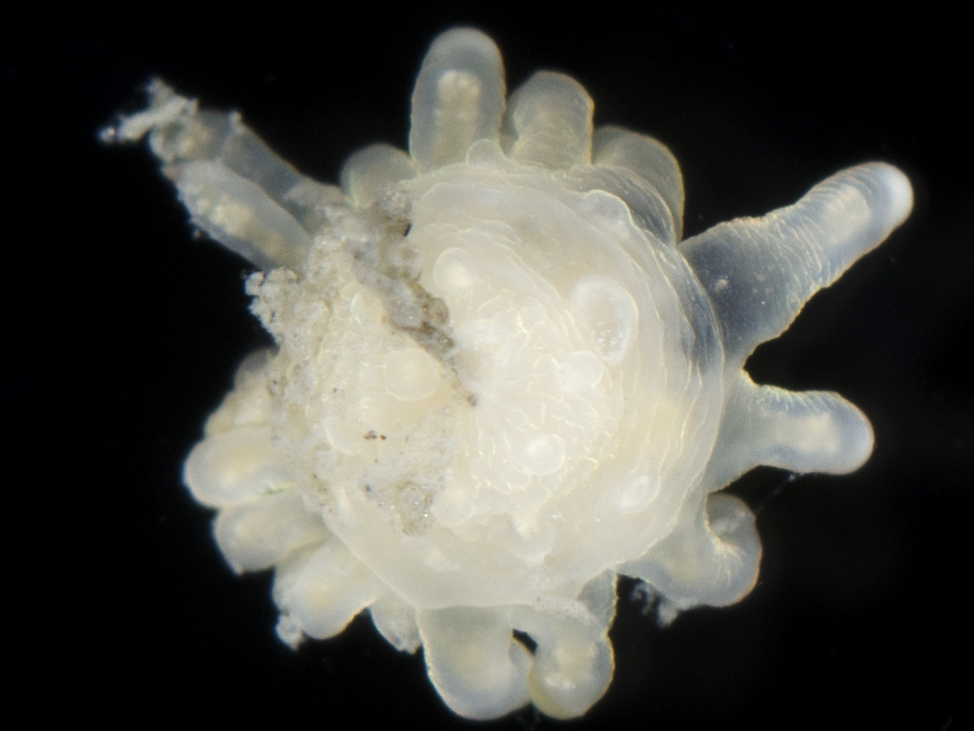
Haloclava producta
Haloclava producta is a species of sea anemone in the family Haloclavidae, commonly known as the ghost anemone. This species is native to shallow water in the northwestern Atlantic Ocean, between Cape Hatteras and the Bay of Fundy, where it makes a temporary burrow in soft sediment. It is found on sand flats, both intertidally and subtidally.
From the article Haloclava producta on Wikipedia (CC BY-SA), quoted section by section
Description
H. producta has an elongated column up to 15 cm (6 in) in length and an oral disc surrounded by a whorl of about twenty short, knobbed tentacles. The column has a very thin body wall and is studded with about twenty rows of hollow blisters; it makes up most of this anemone's surface area. At the base of the column, the pedal disc is modified into a "physa", an inflatable digging organ.
Toxicity
A type of dermatitis with itchy red skin has been recognised in people who are exposed to the sand and mud flats around Long Island, New York. Although H. producta had not previously been considered to be venomous to humans, exposure to these sea anemones was thought to be responsible for the irritating rash, and this is now accepted as the cause. The condition is known as "clam diggers' itch" or "ghost anemone dermatitis", and usually affects hands and wrists, ankles, knees and inner thighs.
== References ==
Wikipedia: “Venom”
Where it lives
Recorded sightings
—
geo-referenced records in GBIF, from museums, herbaria and field observers.
Drag the globe to turn it. Dots are where records exist, not a range map; darker means more records.
In the stacks
Searching the stacks…
Every page naming Haloclava producta in the Biodiversity Heritage Library →
This page is assembled live from iNaturalist, GBIF, Wikipedia, the Source Library and the Internet Archive. It is not yet part of the hand-edited codex. iNaturalist taxon 1023007.