- Animals
- ›Arthropods
- ›Hexapods
- ›Insects
- ›Winged and Once-winged Insects
- ›Dragonflies and Damselflies
- ›Damselflies
- ›Coenagrionoid Damselflies
- ›Narrow-winged Damselflies
- ›Megalagrion
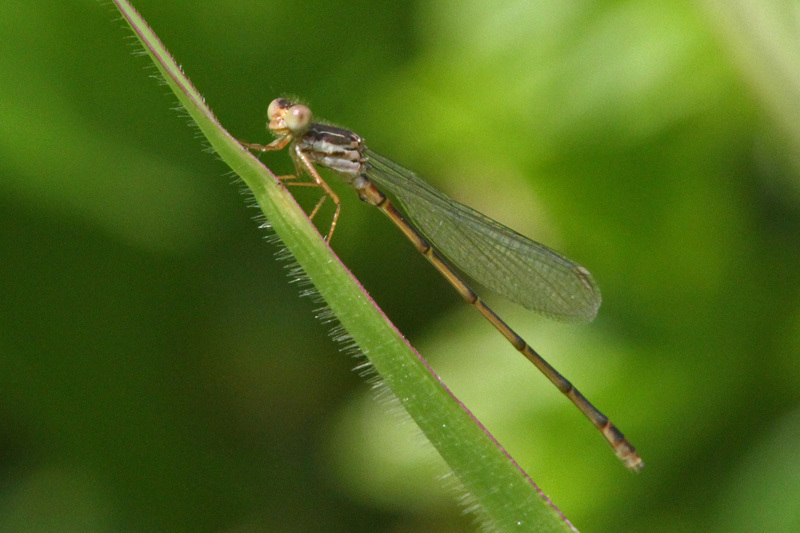
Orangeblack Hawaiian Damselfly
Megalagrion xanthomelas
Megalagrion xanthomelas (orangeblack Hawaiian damselfly) is a species of damselfly in the order Odonata and the family Coenagrionidae. The species was first found by G. F. Matthew and described in 1876 by Selys-Longchamps. Classified as an endemic species, the orangeblack Hawaiian damselfly can only be found in the forests of the Hawaiian Islands. Derived from a freshwater ancestor, the genus Megalarion consists of very diversified groups of damselflies that can grow between the lengths of 33 to 37 millimeters. Megalagrion xanthomelas are commonly found in calm water sources throughout Hawaii including streams and ponds and is threatened by habitat loss. Anchialine ponds are a common habitat for Megalagrion xanthomelas to live in which requires the species to adapt to mechanisms of osmoregulation, which helps maintain their internal fluids when the surrounding salinity of the water fluctuates. Osmoregulation resulted in the species adapting behaviorally to finding habitats that have lower salinity levels. Osmoregulation leads to an increase in diversity within the species causing western coast populations to adapt and be less sensitive to higher salinity habitats, creating a salinity tolerance, while eastern coast populations lack a high salinity tolerance.
Since the genus Megalagrion is native to the Hawaiian Islands, the species has been exposed to adaptive radiation causing varieties within the species especially in color.
From the article Megalagrion xanthomelas on Wikipedia (CC BY-SA), quoted section by section
Range & habitat
Megalagrion xanthomelas is commonly found near the coastal wetlands of the Hawaiian Islands. The species is also found in wetlands fed by basal springs and different levels of elevation throughout the Hawaiian Islands. Megalagrion xanthomelas is usually found between the range of 60 to 610 meters above sea level, with some populations recorded as high as 1000 meters above sea level. Megalagrion xanthomelas thrive in habitats that have tall Guinea grass lining the perimeter of the water source. Females will use the tall leaves of the Guinea grass to lay their eggs onto when mating while males perch on top of the leaves, waiting to chase out intruder males. The inlet of Pearl Harbor used to be a common habitat for the species Megalagrion xanthomelas. After World War II, Megalagrion xanthomelas declined in numbers over the years and is no longer present within the inlet of Pearl Harbor. The decrease in numbers is due to civilian and military airport traffic and housing constructed within the inlet to create a military base.
Wikipedia: “Common habitats”
What it does
The life cycle of Megalagrion xanthomelas is done fully within water sources that have a salinity level lower than 8 ppt (Tango). The order Odonata, including Megalagrion xanthomelas, undergo incomplete metamorphosis within their life cycles. The life cycle of the Megalagrion xanthomelas contains four stages. The first stage of the life cycle is the egg stage which lasts about 21 days before the larva emerges. Next, is the pre-larva which takes anywhere between 11 and 17 days to complete. The third stage is the naiad. Naiads can develop from a range of 103 to 111 days. The last stage is the adult, which is the only stage that does not require water to be completed. When females lay their eggs, they lay their eggs fully submerged within aquatic plants. When the eggs are laid, they are covered by an outer shell called a chorion. The chorion provides a structure that allows for the intake of oxygen while preventing any level of salinity from entering and killing the baby organism inside. After the life cycle is completed, the adult stage of Megalagrion xanthomelas can decide on looking for another habitat to reproduce in or staying near the water source itself emerged from.
Wikipedia: “Life cycle”
Listen
Looking for field recordings…
Where it lives
Recorded sightings
—
geo-referenced records in GBIF, from museums, herbaria and field observers.
Drag the globe to turn it. Dots are where records exist, not a range map; darker means more records.
In the stacks
Searching the stacks…
Every page naming Megalagrion xanthomelas in the Biodiversity Heritage Library →
This page is assembled live from iNaturalist, GBIF, Wikipedia, the Source Library and the Internet Archive. It is not yet part of the hand-edited codex. iNaturalist taxon 105418.