- Animals
- ›Arthropods
- ›Chelicerates
- ›Arachnids
- ›Spiders
- ›Mygalomorphs
- ›Avicularioidea
- ›Tarantulas
- ›Indian Large Burrowing Spiders
- ›Thrigmopoeus
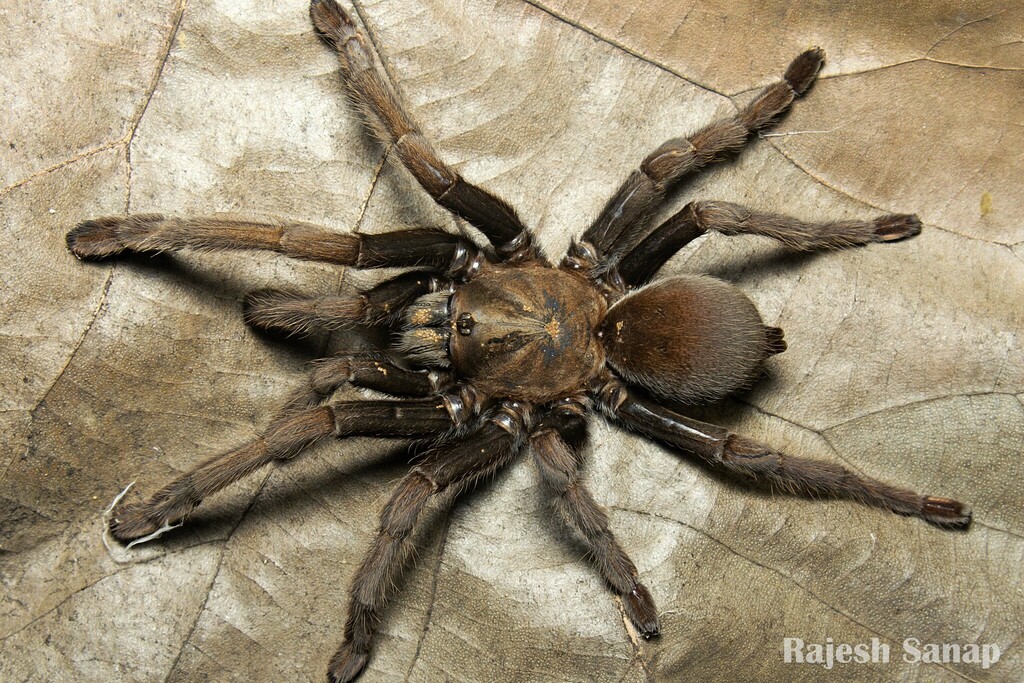
Lesser Goa Mustard Tarantula
Thrigmopoeus truculentus
Thrigmopoeus truculentus is a species of Indian tarantula found in the Western Ghats. It is also known as the Karwar large burrowing spider, Karwar burrowing spider and lesser Goa mustard tarantula.
From the article Thrigmopoeus truculentus on Wikipedia (CC BY-SA), quoted section by section
Range & habitat
Thrigmopoeus truculentus is endemic to the Western Ghats region, specifically Karnataka, Goa, Maharashtra. It has been recorded from vertical bunds along the roads and trek paths in Coorg as well as other locations in Goa, Maharashtra and Karnataka.
Wikipedia: “Range”
What it does
Burrows of Thrigmopoeus truculentus were found in 0.5-5m height from the ground in Coorg and Uttara Kannada districts. These bunds are usually covered with ferns and grasses in Monsoon and post-monsoon. The burrows are found on bunds with high canopy or in the ghat areas were direct sunlight was minimum. Only very few sightings of burrows without canopy are observed. The entrances of burrows belonging to T. truculentus is often shaped like a trumpet-bell, the rim of which is consolidated with wet mud and spider silk. In some cases a porch like entrance is seen due to the extended dorsal rim of the burrow. Often the burrow entrance is reinforced with adjacent twigs, dry leaves and other such artifacts that prevents it from collapsing, as it also offers an extended passage during entry and exit for the inmate of the burrows. The embankments on which the burrows were dug by the spiders were predominantly covered with herbaceous flora, and in the monsoon season the microhabitat was covered in lush green vegetation which conspicuously decreased in post-monsoon.
Wikipedia: “Habitat and ecology”
Where it lives
Recorded sightings
—
geo-referenced records in GBIF, from museums, herbaria and field observers.
Drag the globe to turn it. Dots are where records exist, not a range map; darker means more records.
In the stacks
Searching the stacks…
Every page naming Thrigmopoeus truculentus in the Biodiversity Heritage Library →
This page is assembled live from iNaturalist, GBIF, Wikipedia, the Source Library and the Internet Archive. It is not yet part of the hand-edited codex. iNaturalist taxon 114116.