- Animals
- ›Arthropods
- ›Hexapods
- ›Insects
- ›Winged and Once-winged Insects
- ›Butterflies and Moths
- ›Curved-horn Moths
- ›Twirler Moths
- ›Anomologinae
- ›Nealyda
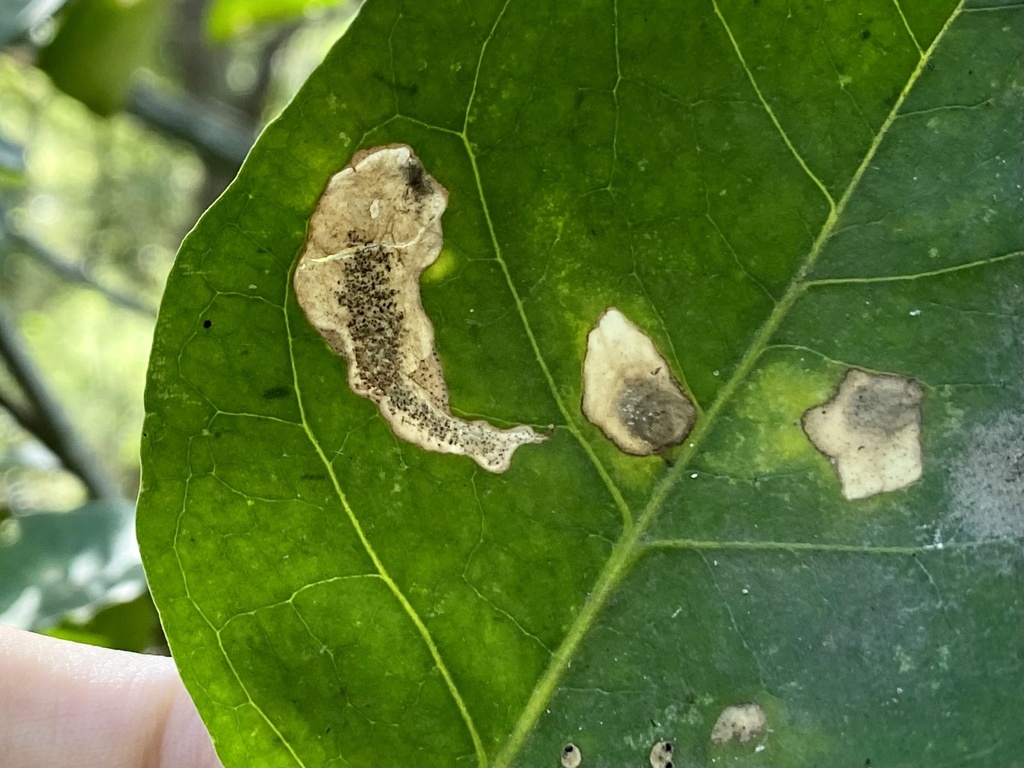
Nealyda pisoniae
Nealyda pisoniae is a moth of the family Gelechiidae. It was described by August Busck in 1900. It is found in Cuba and the United States, where it has been recorded from Florida.
The wingspan is about 7 mm for males and 8.2 mm for females. The forewings are bright golden brown, with a dark, rich, velvety brown, broad fascia at one-third from the base, sharply defined on both sides, darkest, nearly black, and somewhat broader at the dorsal edge, where it terminates in slightly raised scales, projecting outside the edge of the wing in a dorsal tooth, and forming (at rest) a curious hump on the back. This fascia is still more thickly scaled than the rest of the wing. A little more than the apical third of wing is densely dusted with black scales, which condense into four, all black, velvety spots, one large costal spot, one-third from apex reaching down to the fold, one smaller apical, one moon shaped at the tornus, and a small round dot between the two latter. The last three are internally edged by light silvery scales forming an indistinct, thin, open V shape, with the point toward the apex. The hindwings are purplish gray with silvery reflections.
Listen
Looking for field recordings…
Where it lives
Recorded sightings
—
geo-referenced records in GBIF, from museums, herbaria and field observers.
Drag the globe to turn it. Dots are where records exist, not a range map; darker means more records.
In the stacks
Searching the stacks…
Every page naming Nealyda pisoniae in the Biodiversity Heritage Library →
This page is assembled live from iNaturalist, GBIF, Wikipedia, the Source Library and the Internet Archive. It is not yet part of the hand-edited codex. iNaturalist taxon 1181986.