- Animals
- ›Arthropods
- ›Chelicerates
- ›Arachnids
- ›Spiders
- ›Typical Spiders
- ›Entelegyne Spiders
- ›RTA Clade Spiders
- ›Oval calamistrum clade spiders
- ›Wolf Spiders and Allies
- ›Dolomedidae
- ›Dolomedes
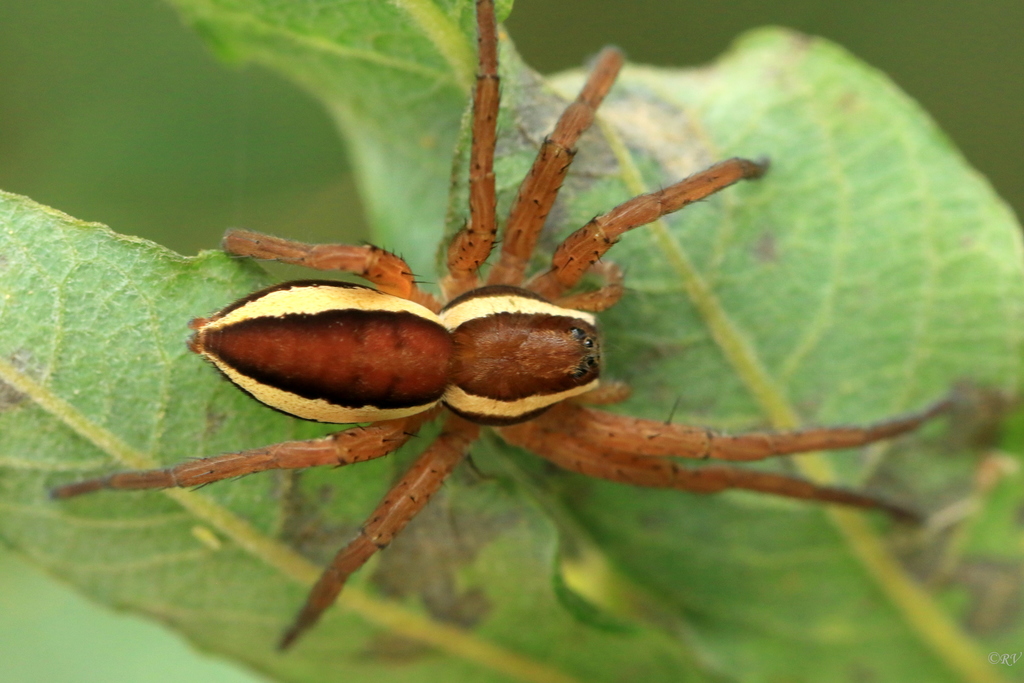
Raft Spider
Dolomedes fimbriatus
The raft spider (Dolomedes fimbriatus) is a large semi-aquatic spider of the family Dolomedidae found throughout north-western and central Europe. It is one of only two species of the genus Dolomedes found in Europe, the other being the slightly larger Dolomedes plantarius which is endangered in the UK.
From the article Raft spider on Wikipedia (CC BY-SA), quoted section by section
Range & habitat
Raft spiders are semi-aquatic and adults inhabit freshwater wetlands, specifically wet heaths and acid swamps; although juveniles are predominantly found in terrestrial vegetation surrounding wetland areas. Adults are dark brown with a conspicuous white, cream or yellow stripe along both sides of their abdomen and thorax. Juveniles are similar in appearance but often have green translucent legs. As is common in other spiders, female raft spiders (body length: 9–22mm) are usually larger than males (body length (9-15mm). Dolomedes fimbriatus was described in chapter 5 of the book Svenska Spindlar by the Swedish arachnologist and entomologist Carl Alexander Clerck. It is the type species of its genus.
Wikipedia: “Habitat and description”
What it does
Like many other species of the genus Dolomedes (Greek translation= crafty or wily), the raft spider typically hunts on the surface of the water with its front appendages outstretched and relies on aquatic vibrations to detect prey. Juveniles are thought mainly to hunt in terrestrial vegetation. Their diet consists largely of freshwater invertebrates such as water beetles, pond striders and dragonfly larvae, but they occasionally feed on small vertebrates such as sticklebacks and small frogs. To avoid predation by birds, the raft spider can fully submerge itself in water and has been known to hide underwater for several minutes. As is the case with some other Dolomedes species, Dolomedes fimbriatus is sexually cannibalistic, meaning that the female will sometimes eat the male before, during or immediately after mating. Males will try to court the female and prevent her from attacking by signalling their presence using vibrations on the female dragline. However, Dolomedes fimbriatus is one of the few species known to attempt to attack nearly all approaching males. This behaviour is regarded as unusual among biologists as it can prevent both the male and the female from copulating successfully. If successful copulation takes place, the female will carry her fertilised egg sac around with her, before placing the egg sac inside a silken nursery tent that she has made. …
Wikipedia: “Behaviour”
Where it lives
Recorded sightings
—
geo-referenced records in GBIF, from museums, herbaria and field observers.
Drag the globe to turn it. Dots are where records exist, not a range map; darker means more records.
In the stacks
Searching the stacks…
Every page naming Dolomedes fimbriatus in the Biodiversity Heritage Library →
This page is assembled live from iNaturalist, GBIF, Wikipedia, the Source Library and the Internet Archive. It is not yet part of the hand-edited codex. iNaturalist taxon 121778.