- Plants
- ›Vascular Plants
- ›flowering plants
- ›Dicots
- ›Nances, Willows, and Allies
- ›Spurge Family
- ›Euphorbioideae
- ›Euphorbieae
Euphorbiinae
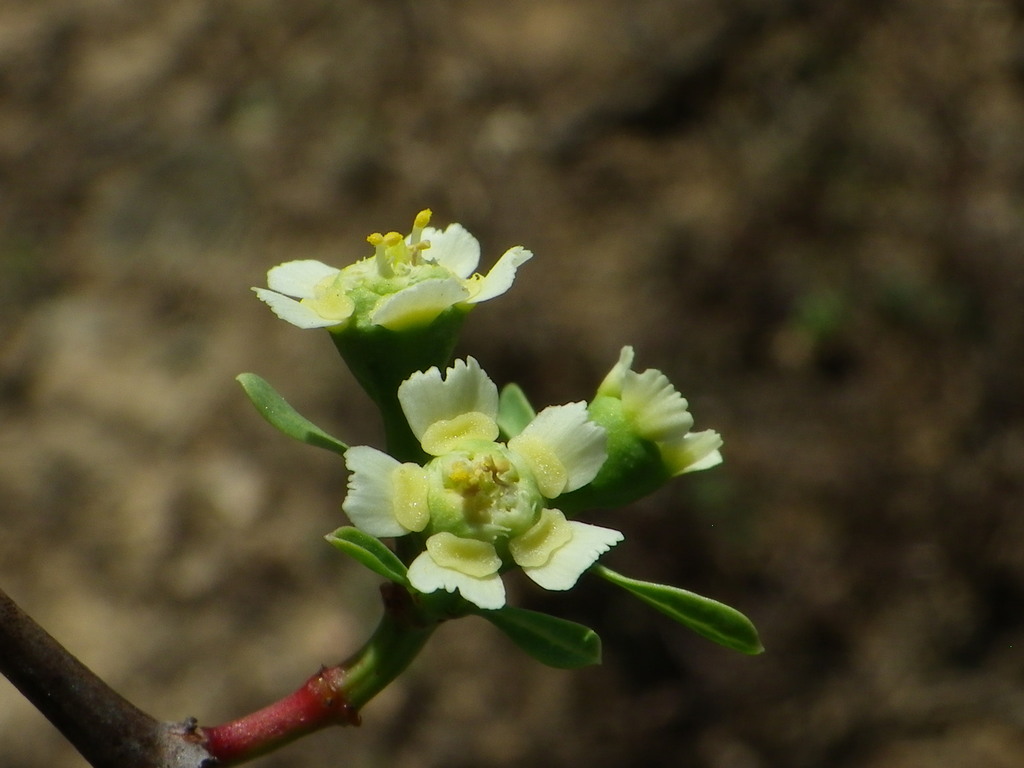
Euphorbia is a large and diverse genus of flowering plants, commonly called spurge, in the family Euphorbiaceae.
Euphorbias all share the feature of having a poisonous, latex-like sap and unique floral structures. When viewed as a whole, the head of flowers looks like a single flower (a pseudanthium). It has a unique kind of pseudanthium, called a cyathium, where each flower in the head is reduced to its barest essential part needed for sexual reproduction. The individual flowers are either male or female, with the male flowers reduced to only the stamen, and the females to the pistil. These flowers have no sepals, petals, or other parts that are typical of flowers in other kinds of plants. Structures supporting the flower head and other structures underneath have evolved to attract pollinators with nectar, and with shapes and colors that function in a way petals and other flower parts do in other flowers. It is the only genus of plants that has all three kinds of photosynthesis; CAM, C3, and C4.
1 branches of this group, most-observed first
See this branch on the Wheel of Life →
Where it lives
Recorded sightings
—
geo-referenced records in GBIF, from museums, herbaria and field observers.
Drag the globe to turn it. Dots are where records exist, not a range map; darker means more records.
In the stacks
Searching the stacks…
Every page naming Euphorbiinae in the Biodiversity Heritage Library →
This page is assembled live from iNaturalist, GBIF, Wikipedia, the Source Library and the Internet Archive. It is not yet part of the hand-edited codex. iNaturalist taxon 1244731.