- Animals
- ›Arthropods
- ›Hexapods
- ›Insects
- ›Winged and Once-winged Insects
- ›Ants, Bees, Wasps, and Sawflies
- ›Narrow-waisted Wasps, Ants, and Bees
- ›Ants, Bees, and Stinging Wasps
- ›Bees and Apoid Wasps
- ›Bees
- ›Honey Bees, Bumble Bees, and Allies
- ›Apine Bees
- ›Digger Bees
- ›Anthophora
- ›Anthophora
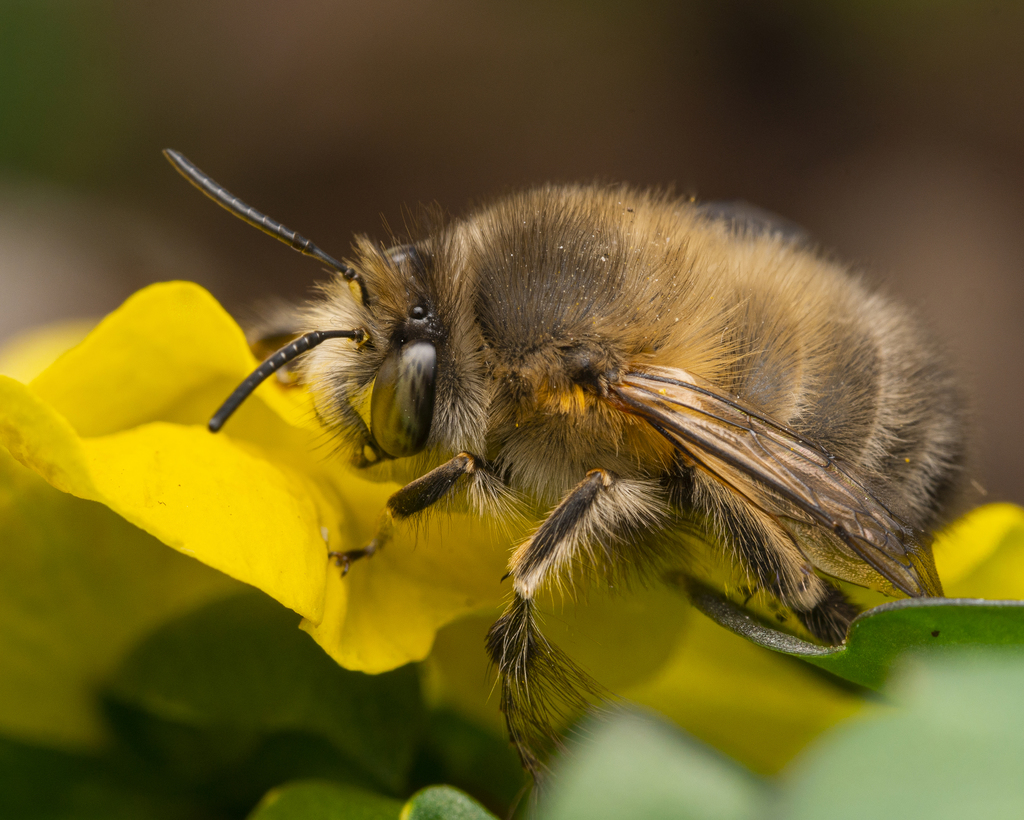
Hairy-footed Flower Bee
Anthophora plumipes
The hairy-footed flower bee (Anthophora plumipes) is a species of bee belonging to the family Apidae....
From the article Anthophora plumipes on Wikipedia (CC BY-SA), quoted section by section
Description
The adults of Anthophora plumipes grow up to 13–15 millimetres (0.5–0.6 in) long. There are numerous color forms over the species' geographic range, which have resulted in this species being described under many different names. This species shows an evident sexual dimorphism. The body is always densely hairy. Males have most often bright reddish brown or gray hair, while females are usually all black or dark brown. Furthermore, the females show reddish orange scopal hairs on the hind tibia. The middle legs of males are very elongated. Males are also distinguished from females by having long hairs on its mid tarsi and the integument of the lower face yellow or cream coloured, rather than black. The long tufts of black hairs on the tarsi (hence the Latin word plumipes) are active during mating, but their precise purpose is unknown.
Range & habitat
These bees are widespread in most of Europe and Asia from Britain to China and Japan, the Near East and in North Africa. In the 20th century, the species was introduced to the United States. The species was spotted for the first time in Ireland in April 2022.
Wikipedia: “Distribution”
Listen
Looking for field recordings…
Where it lives
Recorded sightings
—
geo-referenced records in GBIF, from museums, herbaria and field observers.
Drag the globe to turn it. Dots are where records exist, not a range map; darker means more records.
In the stacks
Searching the stacks…
Every page naming Anthophora plumipes in the Biodiversity Heritage Library →
This page is assembled live from iNaturalist, GBIF, Wikipedia, the Source Library and the Internet Archive. It is not yet part of the hand-edited codex. iNaturalist taxon 124542.