 NL·0680
Herbarium of the Nature Library
- Name
- Attacus atlas
- Family
- Saturniidae
- Native to
- South and Southeast Asia, from India to southern China and Indonesia
- Habitat
- Tropical rainforest, Secondary forest
Atlas moth
Attacus atlas
Also calledKupu-kupu gajah (Malay/Indonesian) · Shéwěi é (Chinese, 'snake-head moth') · Ngaa yak (Thai)
One of the largest moths on Earth, with a wing area of up to about 400 cm². The adult has no working mouth and lives only on fat stored as a caterpillar, dying within one to two weeks.
Attacus atlas, the Atlas moth, is a large saturniid moth endemic to the forests of Asia. The species was described by Carl Linnaeus in his 1758 10th edition of Systema Naturae. Wikipedia
What it can do
- iForewing tips resemble a cobra's head, possibly deterring predators when the moth drops and flaps
- iiMales detect female pheromone with large feathery antennae from far away
- iiiAdults survive entirely on larval fat reserves, with vestigial mouthparts
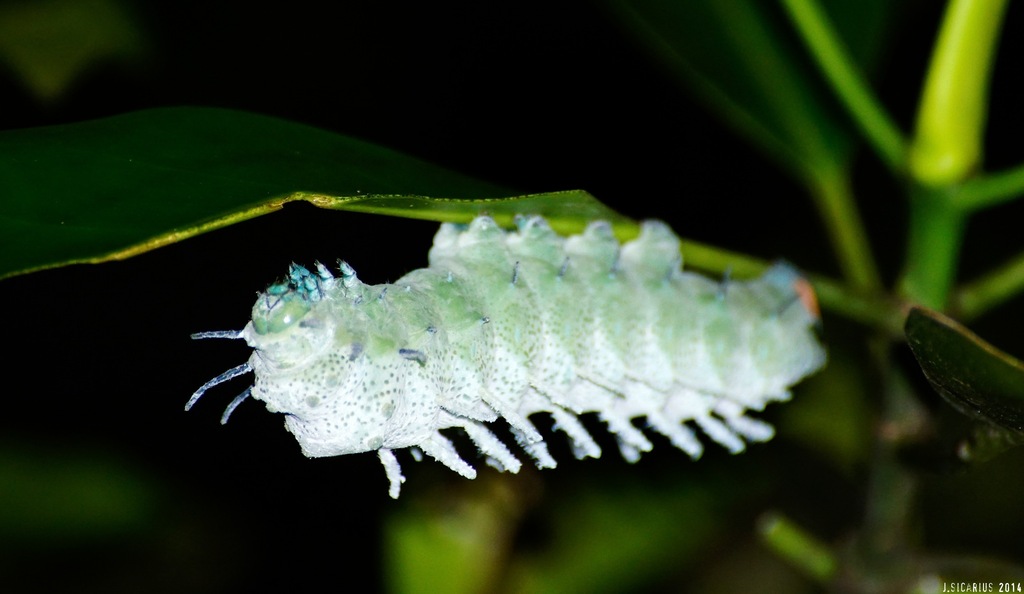
- ivCaterpillars spray a pungent defensive fluid
- vCocoons are spun from a coarse brown silk
In the field
Field marks
- aHuge moth with reddish-brown wings banded in white, pink and purple
- bA triangular, scale-less translucent 'window' in each wing
- cForewing tips hooked and patterned like a snake's head
- dMales have broad feathery antennae; females are larger with thinner antennae
- Not to be confused with
- Attacus taprobanis of southern India and Sri Lanka is very similar and was once treated as a subspecies; other Attacus species are also called 'Atlas moths'. The New World Rothschildia moths look alike but live only in the Americas.
- When
- Adults can appear all year but are most numerous Nov–Jan; each adult lives only one to two weeks
Listen
Looking for field recordings…
Life & habits
- Diet
- Larvae eat leaves of citrus, cinnamon, guava, soursop and other trees; adults do not feed
- Habitat
- Lowland tropical and secondary forests
- Size
- Wingspan up to ~25 cm; females larger
- Lifespan
- Adults 1–2 weeks
When disturbed, the moth falls to the ground and slowly flaps, displaying its snake-head wingtips.
Where it lives
Recorded sightings
—
geo-referenced records in GBIF, from museums, herbaria and field observers.
Native range
South and Southeast Asia, from India to southern China and Indonesia
Drag the globe to turn it. Dots are where records exist, not a range map; darker means more records.
In the old herbals & bestiaries
No plate in the Source Library names this exact species, so these show its closest relatives as the old naturalists drew them: same genus, or the same kind of animal. Click a plate to read the page it came from, with translation.

Jan Moninckx; Maria Moninckx — Moninckx Atlas, vol. 5 (1686)
Relative · Jan Moninckx; Maria Moninckx · 1686 · p.29

Garden of Health (Hortus Sanitatis)
Relative · Jacob Meydenbach · 1491 · p.589

Jan Moninckx; Maria Moninckx — Moninckx Atlas, vol. 5 (1686)
Relative · Jan Moninckx; Maria Moninckx · 1686 · p.13

Jan Moninckx; Maria Moninckx — Moninckx Atlas, vol. 6 (1686)
Relative · Jan Moninckx; Maria Moninckx · 1686 · p.48

Jan Moninckx; Maria Moninckx — Moninckx Atlas, vol. 3 (1686)
Relative · Jan Moninckx; Maria Moninckx · 1686 · p.36

Jan Moninckx; Maria Moninckx — Moninckx Atlas, vol. 8 (1686)
Relative · Jan Moninckx; Maria Moninckx · 1686 · p.33
In the stacks
Searching the stacks…
Every page naming Attacus atlas in the Biodiversity Heritage Library →
Marginalia
In Taiwan the empty cocoons have been used as small purses, and its coarse silk has been spun experimentally. Its name may refer to the Titan Atlas or to the map-like patterns on its wings.
Curiosity
Its Cantonese name means 'snake's head moth', after the wingtip pattern.
Kinship
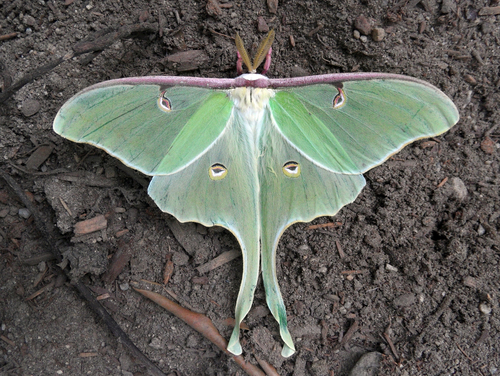
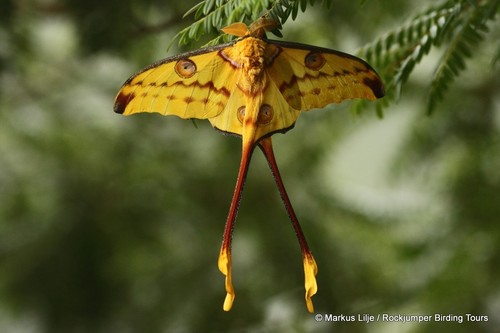
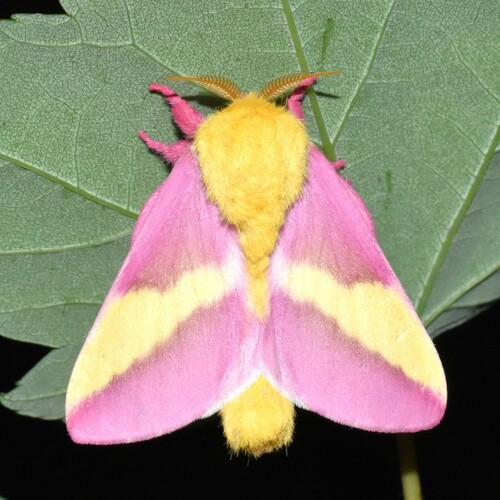



Photographs: iNaturalist contributors under the licences shown. Records: GBIF.org. Historical plates: Source Library (CC BY-SA 4.0; originals public domain). Summary text: Nature Library editors and Wikipedia (CC BY-SA). Medicinal and edibility notes are historical and educational, not advice. iNaturalist taxon 125071.