- Animals
- ›Arthropods
- ›Hexapods
- ›Insects
- ›Winged and Once-winged Insects
- ›Butterflies and Moths
- ›Pyralid and Crambid Snout Moths
- ›Crambid Snout Moths
- ›Pearl Moths
- ›Margaroniini
- ›Diaphania
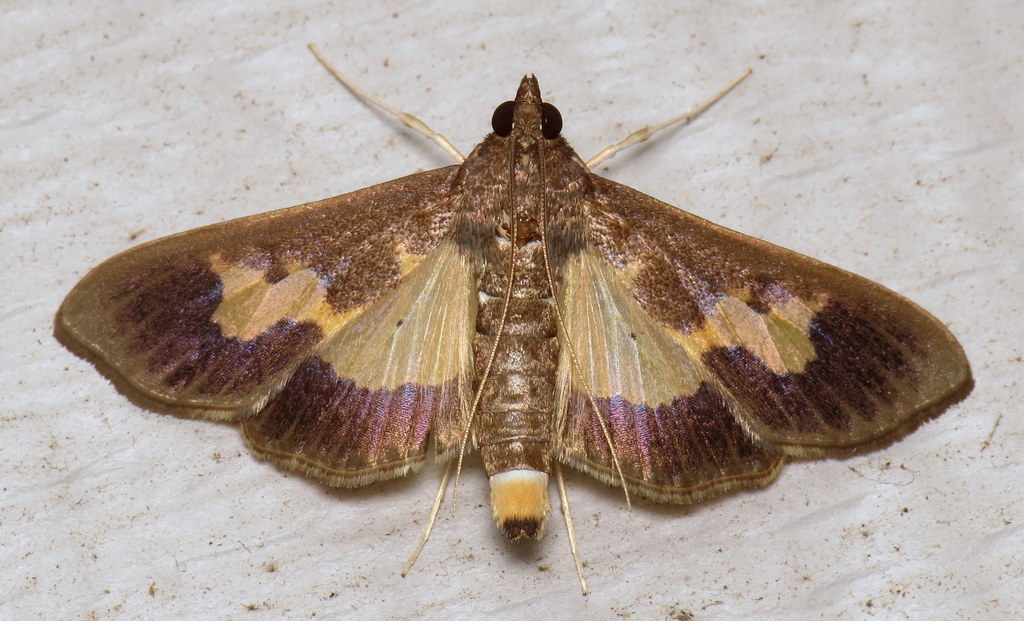
Pickleworm Moth
Diaphania nitidalis
Diaphania nitidalis, the pickleworm, is a serious agricultural pest insect in the family Crambidae. It damages squash primarily, but it is also a common pest of other cucurbits such as cucumbers and melons. It is a tropical species which can be found in the southern United States. In the southern United States, earlier plants are less affected compared to later plantings. It does not tolerate cold temperatures. The species was first described by Caspar Stoll in 1781.
The pickleworm adult is a flashy moth with wide triangular wings and a wingspan of about one inch. The wings are mostly iridescent brown with a central band of yellow and thin white borders. The legs are white. The abdomen is mostly brown except for the tail segment, which is white and has a large fluffy tuft. Adults are not active during daylight hours and eggs are laid only at night. It lays tiny eggs in small clusters on growing areas of the plant, such as flowers, shoots, and new leaf buds. These areas are the feeding spots for the larvae, which emerge after a few days and eat voraciously for two weeks. The younger larvae are thin white caterpillars with numerous small black spots. As the larvae mature they become plump and darker in color and they lose their spots. The larvae tuck themselves into crumpled dead leaves to pupate for 8 to 10 days. The life cycle varies by environmental conditions ranging from 22 to 55 days. In warm areas the pickleworm can produce four generations per year.
Listen
Looking for field recordings…
Where it lives
Recorded sightings
—
geo-referenced records in GBIF, from museums, herbaria and field observers.
Drag the globe to turn it. Dots are where records exist, not a range map; darker means more records.
In the stacks
Searching the stacks…
Every page naming Diaphania nitidalis in the Biodiversity Heritage Library →
This page is assembled live from iNaturalist, GBIF, Wikipedia, the Source Library and the Internet Archive. It is not yet part of the hand-edited codex. iNaturalist taxon 126218.