- Animals
- ›Arthropods
- ›Hexapods
- ›Insects
- ›Winged and Once-winged Insects
- ›Butterflies and Moths
- ›Owlet Moths and Allies
- ›Cutworm Moths and Allies
- ›Eustrotiinae
- ›Naranga
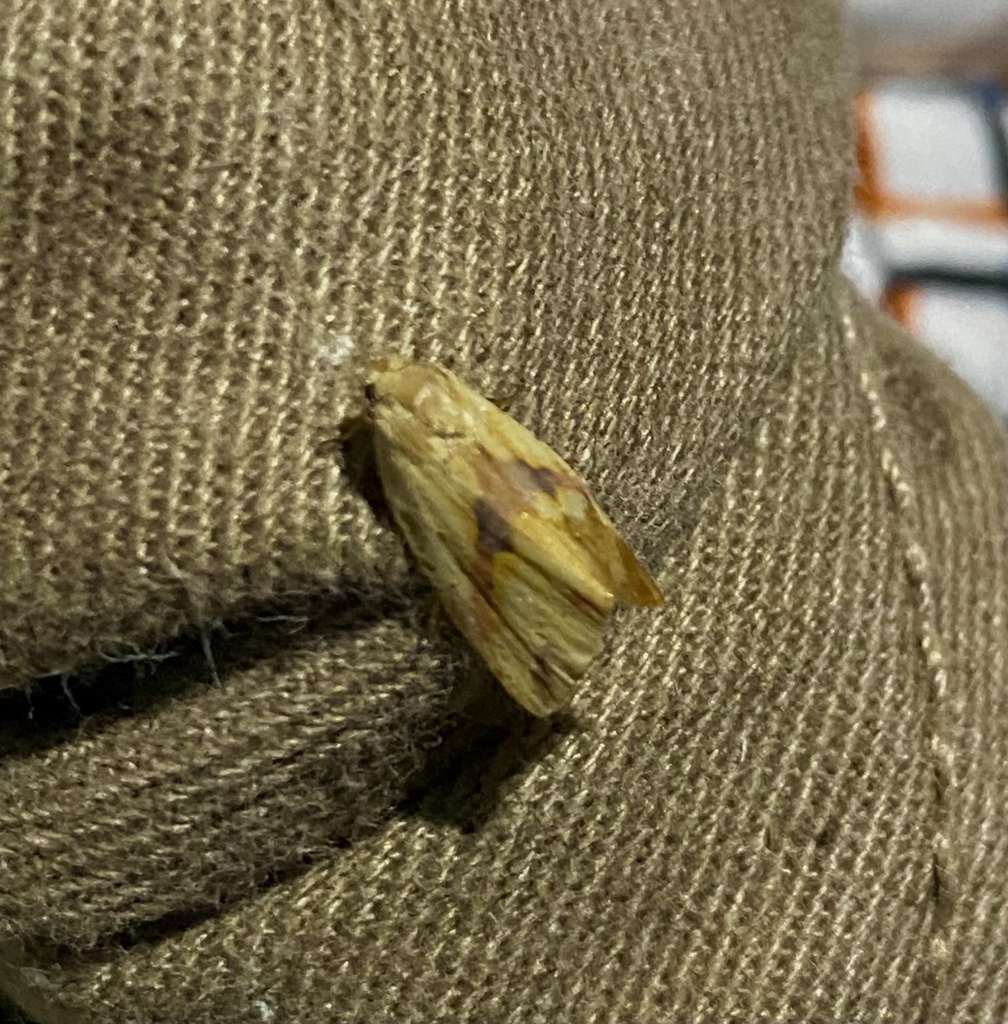
Naranga diffusa
Naranga diffusa, the rice green semilooper, is a moth of the family Noctuidae. The species was first described by Francis Walker in 1865. It is found in many agricultural based countries such as Bangladesh, India, Sri Lanka, China, Hong Kong, Iran, Japan, the Korean Peninsula, Malaysia, Myanmar, the Philippines, Thailand, Taiwan and Vietnam.
From the article Naranga diffusa on Wikipedia (CC BY-SA), quoted section by section
Description
Palpi with second joint reaching above vertex of head and smoothly scaled, and third joint minute. Antennae somewhat thickened, annulate and minutely ciliated in male. Thorax and abdomen tuftless. Forewings with stalked veins 7, 8 and 9. Hindwings with veins 3 and 4 from cell or on a short stalk. Adult has creamy coloured wings with two distinctive oblique bars of brown on the forewing. At the time the eggs are laid, they are yellowish, however the eggs develop purple markings when mature. Caterpillars are green or yellow green. There are narrow white lines which run along the body.
Listen
Looking for field recordings…
Where it lives
Recorded sightings
—
geo-referenced records in GBIF, from museums, herbaria and field observers.
Drag the globe to turn it. Dots are where records exist, not a range map; darker means more records.
In the stacks
Searching the stacks…
Every page naming Naranga diffusa in the Biodiversity Heritage Library →
This page is assembled live from iNaturalist, GBIF, Wikipedia, the Source Library and the Internet Archive. It is not yet part of the hand-edited codex. iNaturalist taxon 1305779.