- Animals
- ›Arthropods
- ›Hexapods
- ›Insects
- ›Winged and Once-winged Insects
- ›Butterflies and Moths
- ›Palaephatoidea
- ›Palaephatidae
- ›Palaephatus
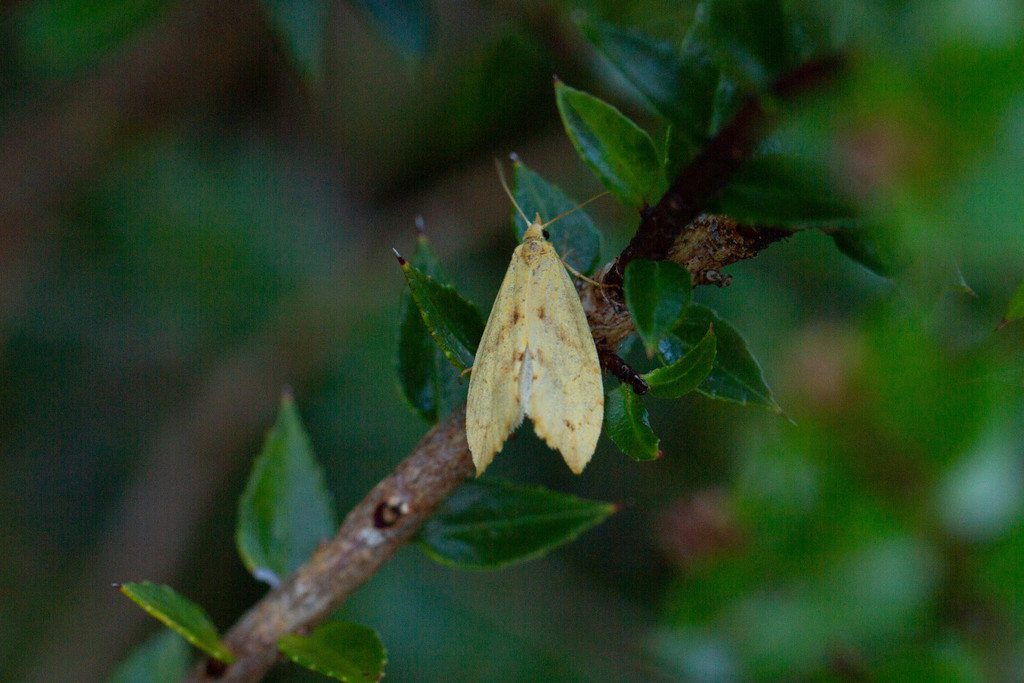
Palaephatus luteolus
Palaephatus luteolus is a moth of the family Palaephatidae. It was described by Donald R. Davis in 1986. It is found in the Valdivian forest region of southern Chile and Argentina, from the Cautin Province and the Neuquen Province south to the Interoceanic Magellanic region of Tierra del Fuego.
The length of the forewings is 12–14.5 mm for males and 14–16 mm for females. Adults have pale to bright yellow forewings usually marked with variable spots and oblique bands of brownish fuscous. They are on wing from October to March, possibly in multiple generations per year.
From the article Palaephatus luteolus on Wikipedia (CC BY-SA), quoted section by section
In human culture
The specific name is derived from Latin luteolus (meaning yellowish) and refers to the predominantly yellowish color of the forewings.
== References ==
Wikipedia: “Etymology”
Listen
Looking for field recordings…
Where it lives
Recorded sightings
—
geo-referenced records in GBIF, from museums, herbaria and field observers.
Drag the globe to turn it. Dots are where records exist, not a range map; darker means more records.
In the stacks
Searching the stacks…
Every page naming Palaephatus luteolus in the Biodiversity Heritage Library →
This page is assembled live from iNaturalist, GBIF, Wikipedia, the Source Library and the Internet Archive. It is not yet part of the hand-edited codex. iNaturalist taxon 1306026.