Neobodonidae
Neobodonidae are free-living biflagellate kinetoplastids with an apical cytostome and a curved, longitudinal cytopharynx that occupies half to two-thirds of the cell's length. The cytostome is supported by five or more microtubules, which fold from the flagellar pocket. The cytostome may have a labium, a small cellular extension. The cytopharynx has an MTR (microtubular reinforced) band. The posterior flagellum is trailed behind when the organism swims. Neobodonids of the family Neobodonidae feed by phagocytosis, ingesting bacteria...
2 branches of this family, most-observed first
See this branch on the Wheel of Life →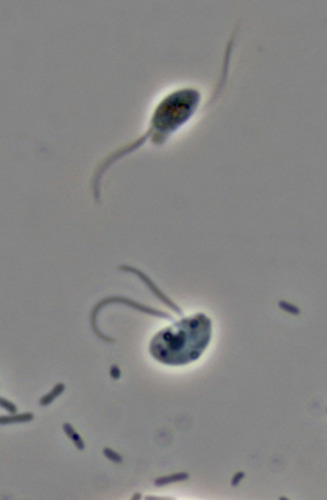
Where it lives
Recorded sightings
—
geo-referenced records in GBIF, from museums, herbaria and field observers.
Drag the globe to turn it. Dots are where records exist, not a range map; darker means more records.
In the stacks
Searching the stacks…
Every page naming Neobodonidae in the Biodiversity Heritage Library →
This page is assembled live from iNaturalist, GBIF, Wikipedia, the Source Library and the Internet Archive. It is not yet part of the hand-edited codex. iNaturalist taxon 1446535.