- Animals
- ›Arthropods
- ›Hexapods
- ›Insects
- ›Winged and Once-winged Insects
- ›Flies
- ›Nematoceran Flies
- ›Mosquitoes and Midges
- ›Culicoidea
- ›Mosquitoes
- ›Culicine Mosquitoes
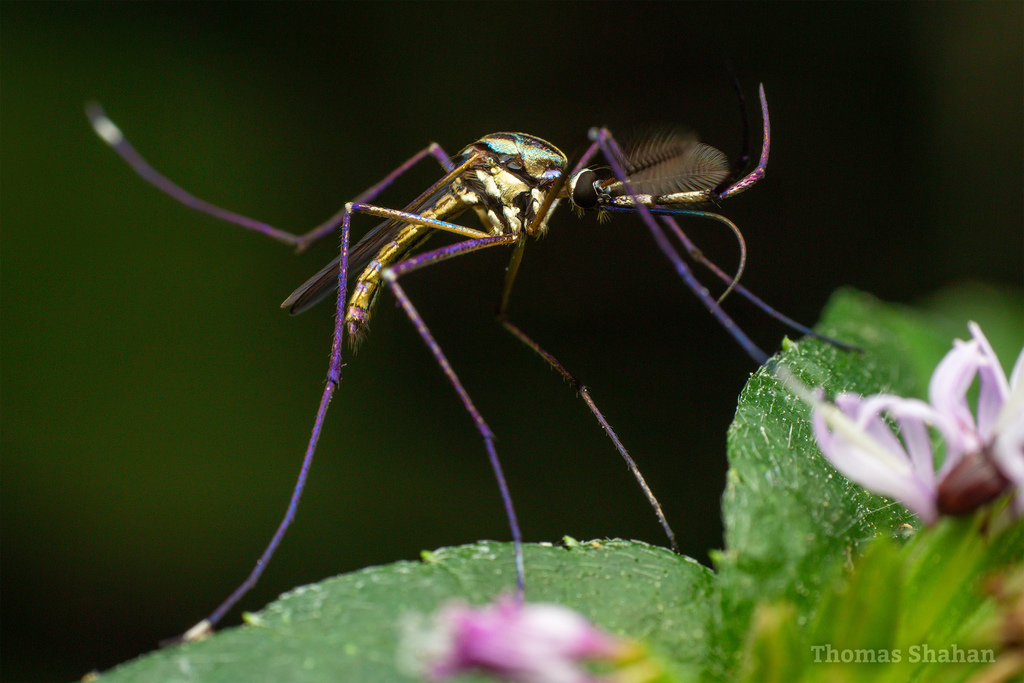
Toxorhynchitini
Toxorhynchites, also called elephant mosquitoes or mosquito eaters, is a genus of diurnal and often relatively colorful mosquitoes, found worldwide between about 35° north and 35° south. Most species occur in forests. It includes the largest known species of mosquito, at up to 18 mm (0.71 in) in length and 24 mm (0.94 in) in wingspan. It is among the few kinds of mosquito that do not consume blood. The adults subsist on carbohydrate-rich materials, such as honeydew, or saps and juices from damaged plants, refuse, fruit, and nectar.
Mating in mid-air, males and females synchronize their wing beats to the same frequency. Eggs are deposited by flinging them onto water surfaces while hovering. They are either white or yellow in color, with an incubation period of 40–60 hours depending on the temperature. The older the female mosquito, the less likely the eggs will be healthy.
1 branches of this tribe, most-observed first
See this branch on the Wheel of Life →
Where it lives
Recorded sightings
—
geo-referenced records in GBIF, from museums, herbaria and field observers.
Drag the globe to turn it. Dots are where records exist, not a range map; darker means more records.
In the stacks
Searching the stacks…
Every page naming Toxorhynchitini in the Biodiversity Heritage Library →
This page is assembled live from iNaturalist, GBIF, Wikipedia, the Source Library and the Internet Archive. It is not yet part of the hand-edited codex. iNaturalist taxon 1469622.