- Animals
- ›Arthropods
- ›Chelicerates
- ›Arachnids
- ›Spiders
- ›Typical Spiders
- ›Entelegyne Spiders
- ›RTA Clade Spiders
- ›Oval calamistrum clade spiders
- ›Wolf Spiders and Allies
- ›Wolf Spiders
- ›Pardosinae
- ›Pardosa
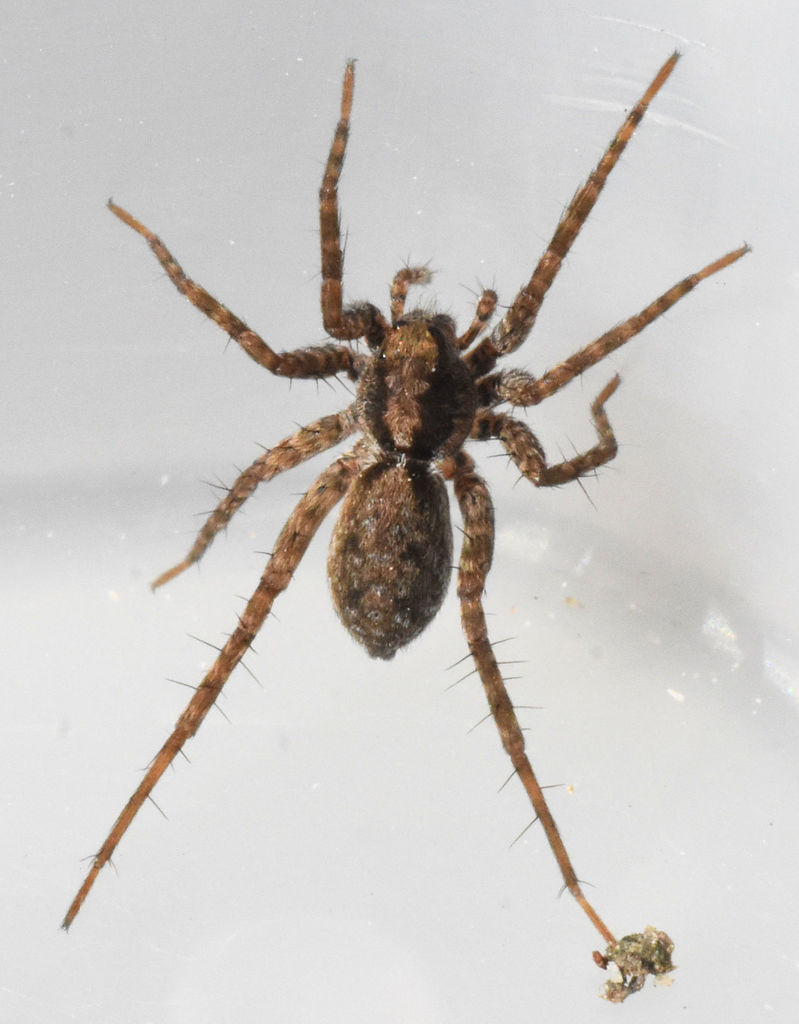
Shore Spider
Pardosa milvina
Pardosa milvina, the shore spider, is a species in the wolf spider family. They are mainly found near rivers and in agricultural areas in eastern North America. P. milvina feed on a large variety of small insects and spiders. Ground beetles such as Scarites quadriceps and large wolf spiders such as Tigrosa helluo are predators of P. milvina. P. milvina are smaller spiders with thin, long legs. This species captures prey such as arthropods with their legs and then kills them with their venom. Their predators are larger wolf spiders and beetles. P. milvina are able to detect these predators from chemotactile and vibratory cues. These spiders lose limbs when escaping from predators and they can change their preferred location in order to avoid predators. P. milvina also use chemical cues in order to mate. During their mating ritual, the male raises his legs and shakes his body. Both males and females can use silk, a chemotactile cue, for sexual communication. Additionally, female shore spiders heavily invest in their offspring, keeping them in egg sacs and carrying them for a few weeks after they are born.
From the article Pardosa milvina on Wikipedia (CC BY-SA), quoted section by section
Description
The shore spider’s eyes are arranged in a characteristic pattern with the top row having four eyes and the subsequent rows having only two eyes each. They have thin, long legs with long spines. Pardosa milvina cannot climb smooth surfaces due to their lack of tufts of hair that are common at the end of legs on other spiders. These wolf spiders have smaller chelicerae and more wavy dorsal stripes than other spiders in this family. They have yellow spots on their abdomen and males have white hairs on their kneecaps. Shore spiders are a smaller spider, as the largest female is approximately 6.2 mm in length and the largest male is approximately 4.7 mm. Additionally, female spiders carry large egg sacs.
Range & habitat
Pardosa milvina are located in high densities near rivers and agricultural areas of eastern North America. There are large variances in their abundance throughout the year, between months, or even from one year to the next. They can also be found in dry, open woods near water, such as by rivers, ponds, and streams of New England, Georgia, and west of the Rockies. Additionally, shore spiders are abundant in disturbed habitats and are commonly found on soil surfaces or in patches of mulch.
Wikipedia: “Habitat and Distribution”
What it does
Pardosa milvina are active cursorial predators and active foragers. They feed on ground-dwelling arthropods like crickets. Thesey also consume Diptera, Collembola, Homoptera, Thysanoptera, small Orthoptera, and small spiders. Although they are smaller spiders, they can overwhelm their prey with their chelicerae and legs. This species grabs prey with their legs and chelicerae, biting the prey until it is killed by the spider's venom. They sometimes roll onto their backs when they are fighting with the prey. They can also eat juvenile Hogna helluo.
Wikipedia: “Diet”
Where it lives
Recorded sightings
—
geo-referenced records in GBIF, from museums, herbaria and field observers.
Drag the globe to turn it. Dots are where records exist, not a range map; darker means more records.
In the stacks
Searching the stacks…
Every page naming Pardosa milvina in the Biodiversity Heritage Library →
This page is assembled live from iNaturalist, GBIF, Wikipedia, the Source Library and the Internet Archive. It is not yet part of the hand-edited codex. iNaturalist taxon 153808.