- Animals
- ›Arthropods
- ›Hexapods
- ›Insects
- ›Winged and Once-winged Insects
- ›Flies
- ›Nematoceran Flies
- ›Mosquitoes and Midges
- ›Culicoidea
- ›Mosquitoes
- ›Culicine Mosquitoes
- ›Culicini
- ›Culex
- ›Barraudius
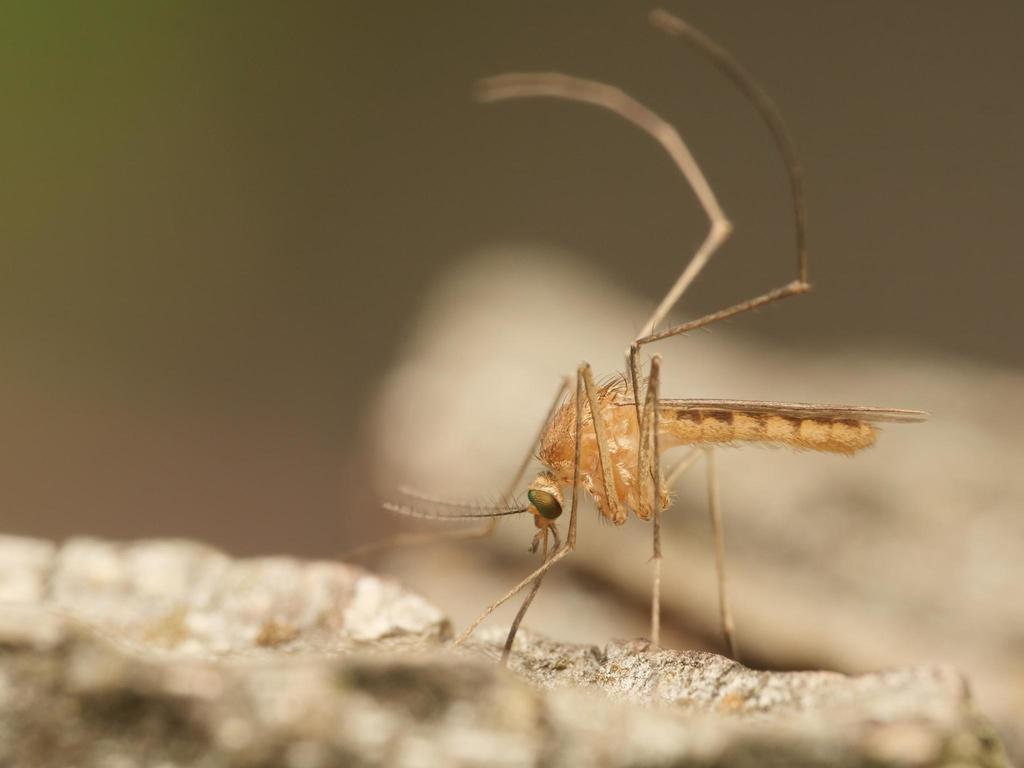
Culex modestus
Culex modestus (no common name) is a species of blood-feeding mosquito of the family Culicidae. It has been experimentally demonstrated to be capable of transmitting West Nile Virus (WNV), and its habit of feeding aggressively on both birds and humans gives it significant potential for transmission of zoonotic infections from birds to humans. It is believed to be the principle bridge vector of WNV between birds and humans in southern France and is thought to have...
From the article Culex modestus on Wikipedia (CC BY-SA), quoted section by section
Range & habitat
Cx. modestus has been found to occur in the following countries: Algeria, China, Croatia, Czech Republic, Denmark, Finland, Greece, Hungary, Iran, Iraq, Israel, Italy, Mongolia, Morocco, Poland, Romania, Russia, Slovakia, Spain, Sweden, Tajikistan, Turkey, and the United Kingdom. It was recently rediscovered in the United Kingdom, where larval surveys in 2010 and 2011 identified populations in a small area of southeast England. A significant number of Culex modestus specimens was found in 2018 in Leningrad region of Russia, in which only occasional findings were known earlier.
Wikipedia: “Distribution”
What it does
Cx. modestus larvae live in fresh to slightly saline water in irrigation channels, marshes, and rice fields. Adult Cx. modestus females feed on blood of vertebrates, especially birds, horses, and humans; males feed on nectar.
Wikipedia: “Ecology”
In medicine
It has been experimentally demonstrated to be capable of transmitting West Nile virus (WNV), and its habit of feeding aggressively on both birds and humans gives it significant potential for transmission of zoonotic infections from birds to humans. It is believed to be the principle bridge vector of WNV between birds and humans in southern France and is thought to have played a role in WNV transmission in the Danube delta, Caspian and Azov sea deltas, and the Volga region in Russia. It has also been implicated in Tahyna virus and Lednice virus transmission in France and Slovakia, respectively.
== References ==
Wikipedia: “Medical importance”
Listen
Looking for field recordings…
Where it lives
Recorded sightings
—
geo-referenced records in GBIF, from museums, herbaria and field observers.
Drag the globe to turn it. Dots are where records exist, not a range map; darker means more records.
In the stacks
Searching the stacks…
Every page naming Culex modestus in the Biodiversity Heritage Library →
This page is assembled live from iNaturalist, GBIF, Wikipedia, the Source Library and the Internet Archive. It is not yet part of the hand-edited codex. iNaturalist taxon 155384.