- Animals
- ›Arthropods
- ›Hexapods
- ›Insects
- ›Winged and Once-winged Insects
- ›Flies
- ›Nematoceran Flies
- ›Mosquitoes and Midges
- ›Culicoidea
- ›Mosquitoes
- ›Culicine Mosquitoes
- ›Aedini
- ›Aedes
- ›Stegomyia
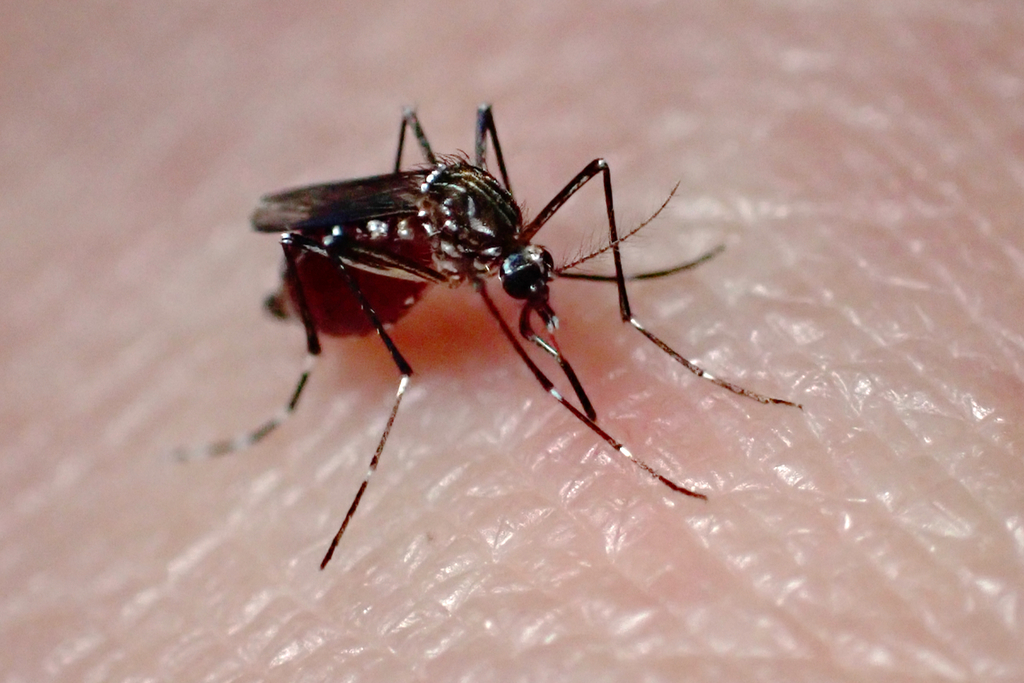
Yellow Fever Mosquito
Aedes aegypti
Aedes aegypti (; US: ; from Ancient Greek αηδής (aēdḗs) 'unpleasant' and Latin aegyptī 'Egyptian') – sometimes called the yellow fever mosquito – is a mosquito that spreads diseases such as dengue fever, yellow fever, and chikungunya. The mosquito can be recognized by black and white markings on its legs and a marking in the form of a lyre on the upper surface of its thorax. The mosquito is native to north Africa, but is now a common invasive species that has spread to tropical, subtropical, and temperate regions throughout the world. It was spread to the New World through the slave trade, and is considered to be among the most widespread mosquito species.
From the article Aedes aegypti on Wikipedia (CC BY-SA), quoted section by section
Range & habitat
Aedes aegypti originated in Africa and was spread to the New World through the slave trade, but is now found in tropical, subtropical and temperate regions throughout the world. Ae. aegypti's distribution has increased in the past two to three decades worldwide, and it is considered to be among the most widespread mosquito species. Studies in the Caribbean have documented the presence of Aedes aegypti in several island settings. In Grenada, researchers collected 1,152 A. aegypti mosquitoes from six semi-rural locations in St. George Parish between January and December 2018, using traps placed near houses. n Trinidad, a 53-week study conducted in high-rise apartments in Port of Spain during 1999–2000 detected A. aegypti eggs at multiple building elevations, demonstrating that the species was present in densely populated urban environments. More recently, a survey conducted in Puerto Rico in June 2025 detected adult mosquitoes or immature stages of A. aegypti in 43 municipalities, including ten municipalities without previously published occurrence records. …
Wikipedia: “Distribution”
Listen
Looking for field recordings…
Where it lives
Recorded sightings
—
geo-referenced records in GBIF, from museums, herbaria and field observers.
Drag the globe to turn it. Dots are where records exist, not a range map; darker means more records.
In the stacks
Searching the stacks…
Every page naming Aedes aegypti in the Biodiversity Heritage Library →
This page is assembled live from iNaturalist, GBIF, Wikipedia, the Source Library and the Internet Archive. It is not yet part of the hand-edited codex. iNaturalist taxon 155453.