- Plants
- ›Vascular Plants
- ›flowering plants
- ›monocots
- ›Agaves, Orchids, Irises, and Allies
- ›Orchids
- ›Pogonias and vanilla orchids
- ›vanilla orchid tribe
- ›Vanilla

Vanilla
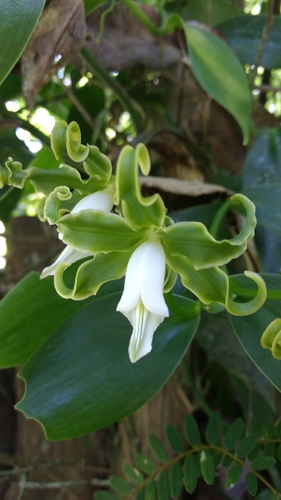
Vanilla is a spice derived from orchids of the genus Vanilla, primarily obtained from the seed pods of the flat-leaved Mexican and Central American vanilla (V. planifolia).
Vanilla is not autogamous, so pollination is required to produce the pods. In 1837, the Belgian botanist Charles François Antoine Morren discovered this and pioneered a method of artificially pollinating the plant. The method proved financially unworkable and was not deployed commercially. In 1841, Edmond Albius, a 12-year-old enslaved child who lived on the French island of Réunion in the Indian Ocean, discovered that the plant could be hand-pollinated. Hand-pollination allowed global cultivation of the plant. The noted French botanist and plant collector Jean Michel Claude Richard falsely claimed to have discovered the technique three or four years earlier. By the end of the 20th century, Albius was considered the true discoverer.
2 branches of this group, most-observed first
See this branch on the Wheel of Life →
Where it lives
Recorded sightings
—
geo-referenced records in GBIF, from museums, herbaria and field observers.
Drag the globe to turn it. Dots are where records exist, not a range map; darker means more records.
In the old herbals & bestiaries


In the stacks
Searching the stacks…
Every page naming Vanilla in the Biodiversity Heritage Library →
This page is assembled live from iNaturalist, GBIF, Wikipedia, the Source Library and the Internet Archive. It is not yet part of the hand-edited codex. iNaturalist taxon 1617461.