- Animals
- ›Arthropods
- ›Chelicerates
- ›Arachnids
- ›Spiders
- ›Typical Spiders
- ›Entelegyne Spiders
- ›Salticoid Spiders
- ›Jumping Spiders
- ›Typical Jumping Spiders
- ›Aelurillini
- ›Freyina
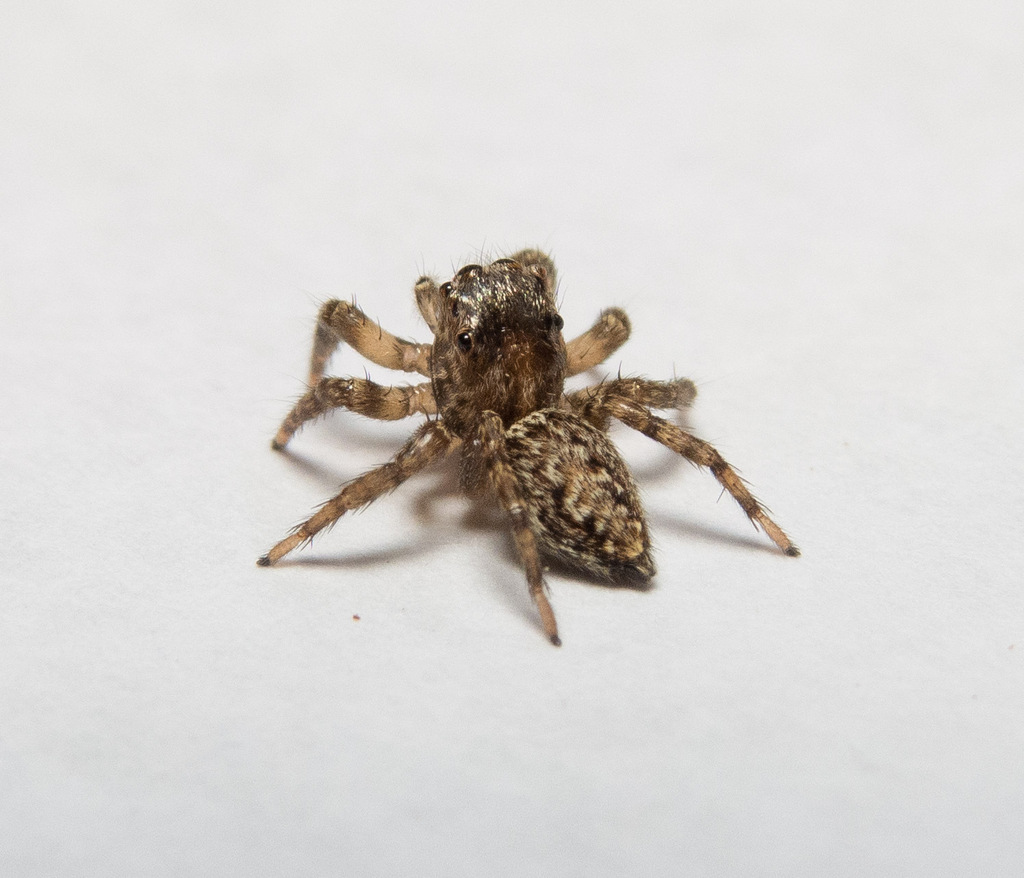
Tentacula
.mw-parser-output .ombox{margin:4px 0;border-collapse:collapse;border:1px solid #a2a9b1;background-color:var(--background-color-neutral-subtle,#f8f9fa);box-sizing:border-box;color:var(--color-base,#202122)}.mw-parser-output .ombox.mbox-small{font-size:88%;line-height:1.25em}.mw-parser-output .ombox-speedy{border:2px solid #b32424;background-color:#fee7e6}.mw-parser-output .ombox-delete{border:2px solid #b32424}.mw-parser-output .ombox-content{border:1px solid #f28500}.mw-parser-output .ombox-style{border:1px solid #fc3}.mw-parser-output .ombox-move{border:1px solid #9932cc}.mw-parser-output .ombox-protection{border:2px solid #a2a9b1}.mw-parser-output .ombox .mbox-text{border:none;padding:0.25em 0.9em;width:100%}.mw-parser-output .ombox .mbox-image{border:none;padding:2px 0 2px 0.9em;text-align:center}.mw-parser-output .ombox .mbox-imageright{border:none;padding:2px 0.9em 2px 0;text-align:center}.mw-parser-output .ombox .mbox-empty-cell{border:none;padding:0;width:1px}.mw-parser-output .mbox-invalid-type{text-align:center}@media(min-width:720px){.mw-parser-output .ombox{margin:4px 10%}.mw-parser-output .ombox.mbox-small{clear:right;float:right;margin:4px 0 4px 1em;width:238px}}body.skin--responsive .mw-parser-output table.ombox img{max-width:none!important}@media screen{html.skin-theme-clientpref-night .mw-parser-output .ombox-speedy{background-color:#310402}}@media screen and (prefers-color-scheme:dark){html.skin-theme-clientpref-os .mw-parser-output .ombox-speedy{background-color:#310402}} @media print{body.ns-0 .mw-parser-output .tpl-wiktionary{display:none!important}}.mw-parser-output table.plainlinks.ombox.ombox-notice.tpl-wiki-redirect{margin-top:1.1em;border:solid 1px darkblue;border-left-width:0.5em}.mw-parser-output .tpl-wiki-redirect-text{padding-top:0.3em;padding-bottom:0.3em}.mw-parser-output .tpl-wiki-redirect div.tpl-wiki-redirect-button{text-align:center;margin-top:0.5em}@media screen{html.skin-theme-clientpref-night .mw-parser-output img{filter:invert(1)brightness(55%)contrast(250%)hue-rotate(180deg)}}@media screen and (prefers-color-scheme:dark){html.skin-theme-clientpref-os .mw-parser-output img{filter:invert(1)brightness(55%)contrast(250%)hue-rotate(180deg)}}
1 branches of this genus, most-observed first
See this branch on the Wheel of Life →
Where it lives
Recorded sightings
—
geo-referenced records in GBIF, from museums, herbaria and field observers.
Drag the globe to turn it. Dots are where records exist, not a range map; darker means more records.
In the stacks
Searching the stacks…
Every page naming Tentacula in the Biodiversity Heritage Library →
This page is assembled live from iNaturalist, GBIF, Wikipedia, the Source Library and the Internet Archive. It is not yet part of the hand-edited codex. iNaturalist taxon 1680167.