- Animals
- ›Arthropods
- ›Hexapods
- ›Insects
- ›Winged and Once-winged Insects
- ›Butterflies and Moths
- ›Mandibulate Archaic Moths
Micropterigidae
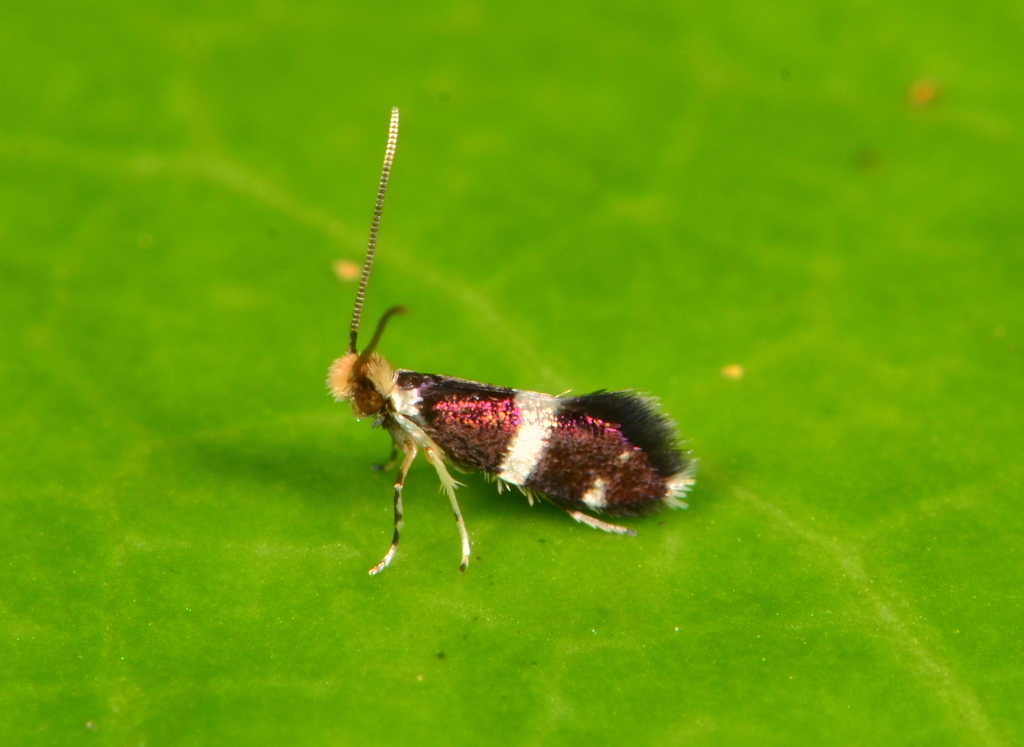
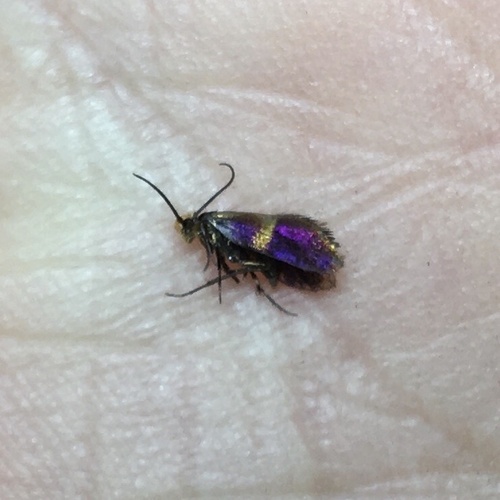
Micropterigoidea is the superfamily of "mandibulate archaic moths", all placed in the single family Micropterigidae, containing currently about twenty living genera. They are considered the most primitive extant lineage of lepidoptera (Kristensen, 1999), and the sole superfamily in the suborder Zeugloptera. The name comes from the Greek for mikros, little and pterux, a wing. Unique among the Lepidoptera, these moths have chewing mouthparts rather than a proboscis, and are seen feeding, often in large aggregations, on the pollen of the flowers of many herbaceous plants, shrubs and trees. The fossil record of the group goes back to the middle-late Jurassic with the earliest known species being Auliepterix from the Karabastau Formation in Kazakhstan.
Micropterigid larvae possess a uniquely specialised trunk cuticle, in which the exo- and endocuticle are separated by fluid-filled chambers arranged in a honeycomb pattern, each chamber corresponding to an individual epidermal cell.
17 branches of this family, most-observed first

Micropterix
genusMicropterix

Sabatinca
genusSabatinca

Epimartyria
genusEpimartyria
Tasmantrix
genusTasmantrix
Zealandopterix
genusZealandopterix

Neomicropteryx
genusNeomicropteryx

Aureopterix
genusAureopterix

Palaeomicroides
genusPalaeomicroides

Paramartyria
genusParamartyria
Jaw Moths
genusAgrionympha

Hypomartyria
genusHypomartyria
Squamicornia
genusSquamicornia
Vietomartyria
genusVietomartyria
Issikiomartyria
genusIssikiomartyria
Kurokopteryx
genusKurokopteryx
Melinopteryx
genusMelinopteryx
Austromartyria
genusAustromartyria
Where it lives
Recorded sightings
—
geo-referenced records in GBIF, from museums, herbaria and field observers.
Drag the globe to turn it. Dots are where records exist, not a range map; darker means more records.
In the stacks
Searching the stacks…
Every page naming Micropterigidae in the Biodiversity Heritage Library →
This page is assembled live from iNaturalist, GBIF, Wikipedia, the Source Library and the Internet Archive. It is not yet part of the hand-edited codex. iNaturalist taxon 173650.