- Animals
- ›Arthropods
- ›Hexapods
- ›Insects
- ›Winged and Once-winged Insects
- ›Butterflies and Moths
- ›Owlet Moths and Allies
- ›Cutworm Moths and Allies
- ›Cutworms and Dart Moths
- ›Noctuini
- ›Agrotina
- ›Peridroma
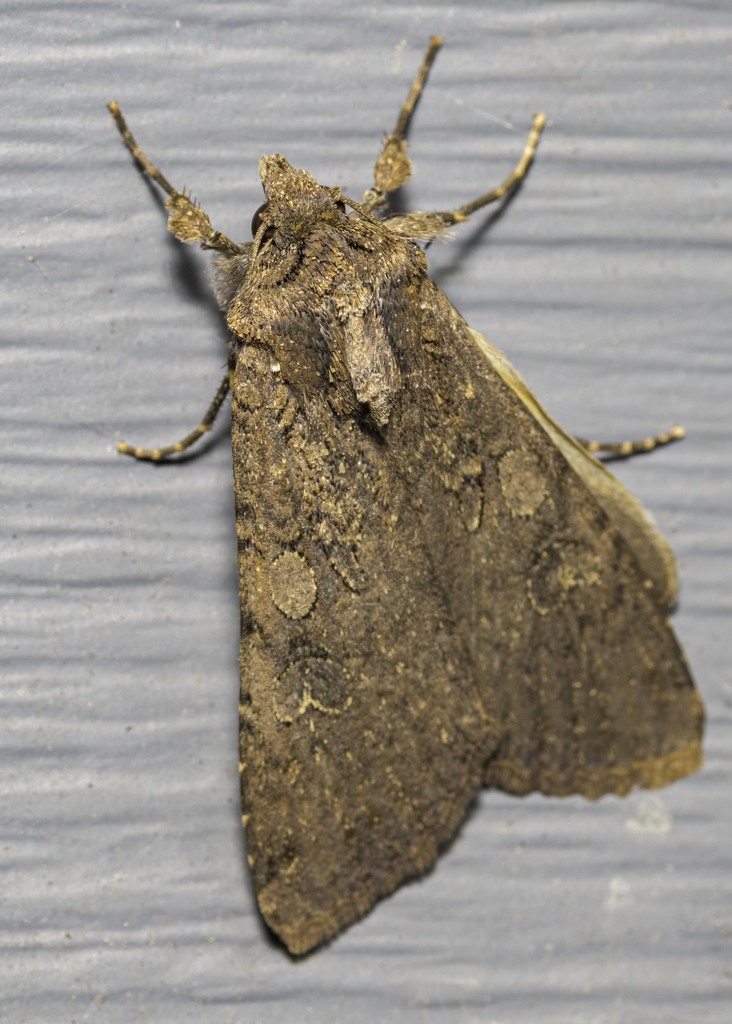
Variegated Cutworm Moth
Peridroma saucia
Peridroma saucia, the pearly underwing or variegated cutworm, is a moth of the family Noctuidae. The species was first described by Jacob Hübner in 1808. It is found in North and South America, Europe, Asia and Africa. The variegated cutworm feeds on many plants, especially common fruits and vegetables. The moth undergoes two to four generations per year. The development of the moth slows in colder temperatures, indicative of its migratory nature. All stages of the life cycle have a developmental threshold for temperature. The moth is known to migrate to the northern regions during warmer months, returning to the southern regions when the climate becomes colder.
The variegated cutworm has a number of wasp and fly parasites, which account for most of the larval deaths each year. The female P. saucia produces a sex pheromone to attract male moths. Most notably, the variegated cutworm is known as one of the most damaging garden pests. The larvae cause considerable damage to common garden vegetables and fruits, destroying large amounts of crops every year. There are many methods of pest control that are being implemented in order to control P. saucia and its damage to crops.
From the article Peridroma saucia on Wikipedia (CC BY-SA), quoted section by section
Range & habitat
The variegated cutworm can be found in North and South America, the Hawaiian Islands, Europe, Asia, and North Africa. The origin of the moth is uncertain, but the earliest records with the description of the moth are from Europe in 1790. However, the moth was first observed in North America in 1841, where today it primarily inhabits Southern Canada and Northern United States. P. saucia was discovered in Japan in the 1970s, where it is dubbed "nise-tamanayaga", which directly translates to "false black cutworm moth". As Japanese populations of the variegated cutworm continue to grow, studies are still being conducted to identify the distribution areas in the region.
Wikipedia: “Geographic range”
What it does
The variegated cutworm feeds mainly when the sun sets. The larvae often hide in the soil or under other shelter during the daytime and move to foliage in the evenings to feed. P. saucia is known to invade greenhouses, where food is plentiful. Larvae are also known to consume large amounts of plants during development, with studies showing up to 125 square centimeters of sugarbeet or 160 square centimeters of potato foliage eaten during their larval stage.
Wikipedia: “Feeding habits”
Listen
Looking for field recordings…
Where it lives
Recorded sightings
—
geo-referenced records in GBIF, from museums, herbaria and field observers.
Drag the globe to turn it. Dots are where records exist, not a range map; darker means more records.
In the stacks
Searching the stacks…
Every page naming Peridroma saucia in the Biodiversity Heritage Library →
This page is assembled live from iNaturalist, GBIF, Wikipedia, the Source Library and the Internet Archive. It is not yet part of the hand-edited codex. iNaturalist taxon 179339.