 NL·0039
Herbarium of the Nature Library
- Name
- Boswellia sacra
- Family
- Burseraceae
- Native to
- Dhofar (southern Oman), Hadramawt (eastern Yemen) and northern Somalia
- Habitat
- Arid woodland, Limestone escarpments, Monsoon-fog desert
Frankincense
Boswellia sacra
Also calledLubān لبان (Arabic, 'milk') · Kundur كندر (Persian/Arabic, Unani) · Rǔxiāng 乳香 (Chinese, 'milk incense') · Olibanum (Latin)
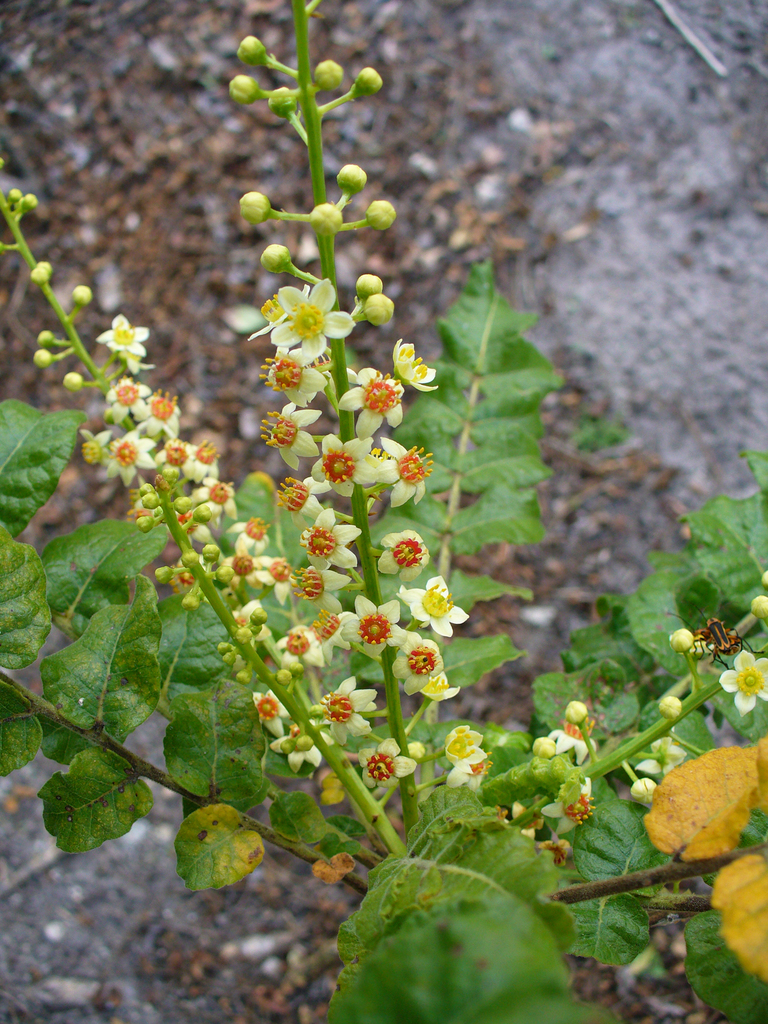
A small, papery-barked tree that clings to sun-scorched limestone in Dhofar and Somalia. For thousands of years its milky resin was the backbone of the incense trade, and caravans carried it to temples from Rome to China.
Boswellia sacra, also known as Boswellia carteri and others, and commonly called the frankincense tree or the olibanum tree, is a tree in the genus Boswellia, in the Burseraceae family, from which frankincense, a resinous dried sap, is harvested. The olibanum tree is a plant native to the countries of Oman and Yemen, in the south of the Arabian Peninsula, and to Somalia and Ethiopia, in the Horn of Africa. In 2012, it was replanted in Israel in the Middle East, 1,500 years after dying out there. Wikipedia
What it can do
- iBleeds a milky resin rich in boswellic acids, which inhibit the inflammatory enzyme 5-lipoxygenase in lab studies
- iiGrips sheer rock with a swollen, cushion-like base
- iiiSurvives in hyper-arid country by drawing on summer monsoon fog (khareef)
At the table
Small pieces of high-grade resin are chewed as gum in Oman and soaked in drinking water, but it is not a food.
In the medicine cabinet
| Tradition | Use |
|---|---|
| Arabian / Omani traditional medicine | Resin chewed or soaked in water for digestion, coughs and memory; smoke to purify homes and after childbirth |
| Unani | Kundur for memory and the brain, for coughs, diarrhoea and to heal wounds |
| Traditional Chinese Medicine | Ruxiang to invigorate blood and relieve pain, often paired with myrrh (moyao) |
| Modern phytotherapy | Boswellia extracts (mostly the Indian B. serrata) trialled for osteoarthritis and inflammatory bowel disease |
Weight of evidence
Traditional. Long historical use; little or no modern clinical evidence.
Active compounds
β-boswellic acid, 3-acetyl-11-keto-β-boswellic acid (AKBA), incensole acetate, α-pinene, limonene
Fruit & seed
Fruit
Capsule
Ripens: After flowering, late spring
Small three- to five-valved capsule.
Seed
~5 mm
Small, winged seeds
- Dispersal
- Wind and gravity
- Germination
- Low; warm (25–30 °C), sharply drained gritty mix, 2–4 weeks
How to grow it
Hardiness (USDA zones)
USDA 10–12. Survives winters down to about -1 °C.
- Light
- Full sun
- Water
- Very low
- Soil
- Limestone gravel, sharply drained
- Propagation
- Seed or large cuttings
- To harvest
- Resin from trees about 8–10 years old
- Climates
- Arid, Tropical dry
- 1Sow fresh seed in pure grit and pumice
- 2Keep warm and barely moist
- 3Grow in containers in a greenhouse outside desert climates
- 4Never overwater; it is easily killed by wet roots
Can it grow where you are?
Where it lives
Recorded sightings
—
geo-referenced records in GBIF, from museums, herbaria and field observers.
Native range
Dhofar (southern Oman), Hadramawt (eastern Yemen) and northern Somalia
Drag the globe to turn it. Dots are where records exist, not a range map; darker means more records.
In the old herbals & bestiaries
Woodcuts and engravings matched from the Source Library’s scanned books by name. Plates marked “relative” show a close kin rather than this exact species. Click a plate to read the page it came from, with translation.

Compendium of Materia Medica
李時珍 · 1596 · p.114

Garden of Health
Jacob Meydenbach · 1491 · p.294

Ortus sanitatis
1491 · p.463

Ortus sanitatis
1491 · p.294

Stirpium adversaria nova
Matthias de Lobel · 1571 · p.454

Garden of Health
1507 · p.238

The Pagan World and the Origin of its Gods
Herold, Johann · 1554 · p.673
In the stacks
Searching the stacks…
Every page naming Boswellia sacra in the Biodiversity Heritage Library →
Marginalia
The Land of Frankincense in Dhofar, including the ancient port of Sumhuram (Khor Rori) and the wadi Dawkah tree groves, was inscribed as a UNESCO World Heritage Site in 2000. Pliny claimed southern Arabia was the richest land on earth because of the incense trade.
Curiosity
Its name lubān (and Greek libanos) comes from a Semitic root meaning 'white' or 'milk', after the pale resin.
Kinship




Photographs: iNaturalist contributors under the licences shown. Records: GBIF.org. Historical plates: Source Library (CC BY-SA 4.0; originals public domain). Summary text: Nature Library editors and Wikipedia (CC BY-SA). Medicinal and edibility notes are historical and educational, not advice. iNaturalist taxon 189867.