- Animals
- ›Arthropods
- ›Hexapods
- ›Insects
- ›Winged and Once-winged Insects
- ›Butterflies and Moths
- ›Ghost Moths and Swift Moths
- ›Swift Moths
- ›Hepialus
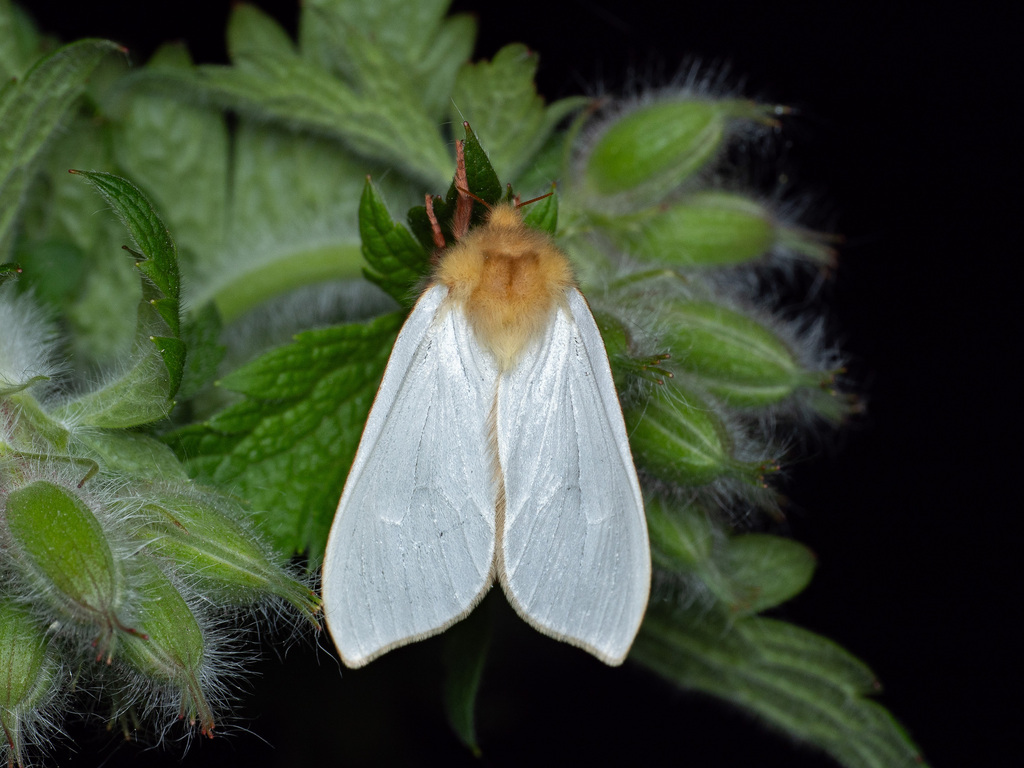
Ghost Moth
Hepialus humuli
The ghost moth or ghost swift (Hepialus humuli) is a moth of the family Hepialidae. It is common throughout Europe, except for the far south-east.
Female ghost moths are larger than males, and exhibit sexual dimorphism with their differences in size and wing color. The adults fly from June to August and are attracted to light. The species overwinters as a larva. The larva is whitish and maggot-like and feeds underground on the roots of a variety of wild and cultivated plants (see list below). The species can be an economically significant pest in forest nurseries.
From the article Ghost moth on Wikipedia (CC BY-SA), quoted section by section
In human culture
Hepialus humuli was first described by the Swedish taxonomist, Carl Linnaeus, in 1758. He named it Phalaena Noctua humuli — implying night moth of the hop vine. It was later allocated to the genus Hepialus (a fever), which was raised by Johan Christian Fabricius in 1775 and refers to its ″fitful, alternating flight″. The specific name humuli refers to the genus of hops (Humulus), on which Linnaeus wrongly thought the larvae fed on its roots.
Subspecies. Hepialus humuli humuli Hepialus humuli thulensis Newman, 1865 (Great Britain, Faroe Islands)
Ghost moth in folklore. It is believed that the common name of "ghost moth" for Hepialus humuli may have originated from European folklore, as there are numerous references to white moths being the souls of the departed. It is believed that the ghost moth is also referenced in the last passage of Wuthering Heights by Emily Brontë.
Wikipedia: “Etymology”
Listen
Looking for field recordings…
Where it lives
Recorded sightings
—
geo-referenced records in GBIF, from museums, herbaria and field observers.
Drag the globe to turn it. Dots are where records exist, not a range map; darker means more records.
In the stacks
Searching the stacks…
Every page naming Hepialus humuli in the Biodiversity Heritage Library →
This page is assembled live from iNaturalist, GBIF, Wikipedia, the Source Library and the Internet Archive. It is not yet part of the hand-edited codex. iNaturalist taxon 205224.