- Animals
- ›Arthropods
- ›Hexapods
- ›Insects
- ›Winged and Once-winged Insects
- ›Butterflies and Moths
- ›Curved-horn Moths
- ›Casebearing Moths
- ›Coleophorinae
- ›Coleophora
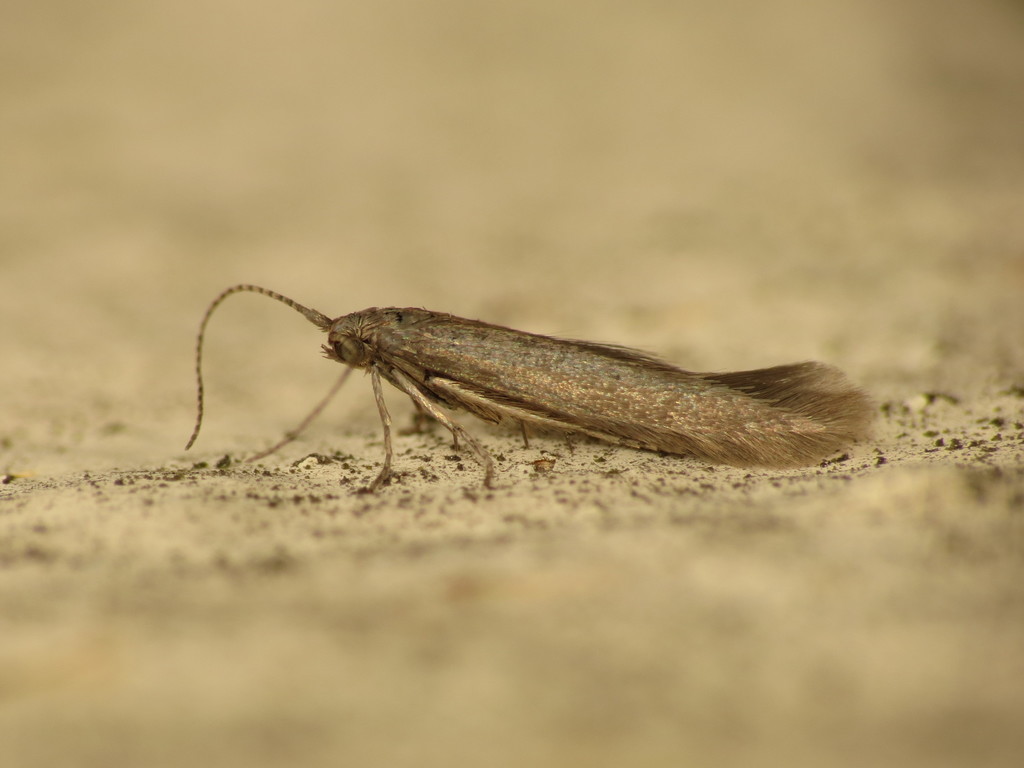
Larch Casebearer Moth
Coleophora laricella
Coleophora laricella, the western larch case-bearer, is a moth belonging to the family of case-bearing moths Coleophoridae. It is native to Central and Northern Europe, with its original food source being the European larch or Larix decidua. However, it was introduced to North America in the mid-19th century where it has gained a wide range and become an invasive defoliator of several species of the genus Larix, particularly the western larch Larix occidentalis and the tamarack larch Larix laricina.
From the article Coleophora laricella on Wikipedia (CC BY-SA), quoted section by section
What it does
Coleophora laricella produces one generation per year with four life stages egg, larva (with four instars, or growth stages), pupa and adult.
Egg. Adult females produce 50–70 eggs, deposited one at a time on the needles of the larch. New eggs are a bright yellow colour, but they later turn burnished red. Eggs have 12 to 14 ridges extending from the top to the base of the egg. In areas with dense C. laricella infestations, females may deposit as many as 10 eggs per needle. Eggs hatch in about two weeks.
Larva. Larvae are 5–6 mm long, hatch in July, and pupate about 11 months later. The first and second instar larvae hatch and bore directly from the egg into the needle, and mine inside the needle until August or September, during which the hollowed out needle is converted into the distinctive case. Once the case is created, the larvae progress to the third instar during which the case is fastened to a new needle with silk. The larvae continue to mine the needles discarding old cases as new needles are hollowed out and converted. In October, the larvae prepare for winter by attaching their cases to more solid parts of the tree (twigs, bark, etc.). When spring comes and the larch refoliates the larvae molt into the fourth instar stage and continue mining.
Pupa. The pupal stages lasts for about two weeks late May or early June. …
Wikipedia: “Life cycle”
Listen
Looking for field recordings…
Where it lives
Recorded sightings
—
geo-referenced records in GBIF, from museums, herbaria and field observers.
Drag the globe to turn it. Dots are where records exist, not a range map; darker means more records.
In the stacks
Searching the stacks…
Every page naming Coleophora laricella in the Biodiversity Heritage Library →
This page is assembled live from iNaturalist, GBIF, Wikipedia, the Source Library and the Internet Archive. It is not yet part of the hand-edited codex. iNaturalist taxon 217344.