- Animals
- ›Arthropods
- ›Hexapods
- ›Insects
- ›Winged and Once-winged Insects
- ›Butterflies and Moths
- ›Bagworms, Clothes Moths, and Allies
- ›Fungus Moths, Clothes Moths, & Allies
- ›Tineinae
- ›Monopis
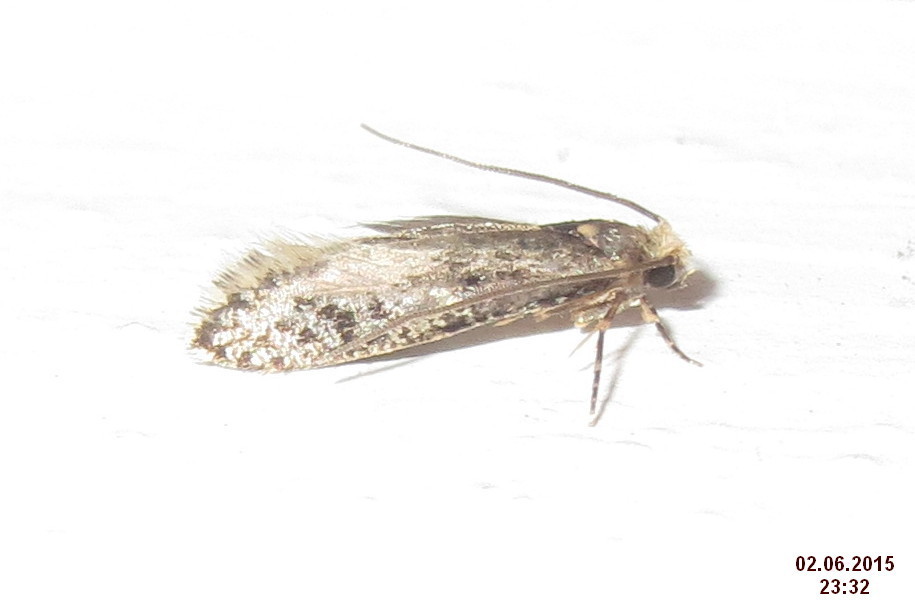
Monopis rusticella
Monopis laevigella, the skin moth, is a species of tineoid moth. It belongs to the fungus moth family (Tineidae), and therein to the nominate subfamily Tineinae. It is (under its junior synonym Tinea rusticella) the type species of the genus Monopis and its junior objective synonym Hyalospila. As with the common clothes moth (Tineola bisselliella), earlier authors frequently misapplied the name Tinea vestianella to the present species.
It is not uncommon all across western Palearctic as well as in North America. It has not been recorded in Slovenia yet, but given that it occurs in all neighboring countries, it probably has simply been overlooked. Its absence from some Mediterranean islands may be genuine however.
From the article Monopis laevigella on Wikipedia (CC BY-SA), quoted section by section
Description
The adults of this small moth have a wingspan of 13–20 mm. On the wing around May to September (depending on the location), they are nocturnal and come out at dusk. They have dark brown forewings with a white fringe and the translucent center spot characteristic for the genus Monopis, but lack the white markings adjacent to it found in many congeners. The hindwings are lighter brown-grey; they are surrounded by a long-haired fringe, as usual for fungus moths and relatives. The body is dark brown, and the head bears a tuft of reddish-ochre hair. Two generations per year may occur as far north as southern England. Otherwise, the caterpillar larvae are found in the colder months only. They generally feed on animal detritus. They have been recorded from dried-out animal carcasses, in the debris of bird nests and on owl pellets. They have also been found to eat feathers, furs, hairs, carpets, rags and rotted fabrics.
Wikipedia: “Description and ecology”
Listen
Looking for field recordings…
Where it lives
Recorded sightings
—
geo-referenced records in GBIF, from museums, herbaria and field observers.
Drag the globe to turn it. Dots are where records exist, not a range map; darker means more records.
In the stacks
Searching the stacks…
Every page naming Monopis rusticella in the Biodiversity Heritage Library →
This page is assembled live from iNaturalist, GBIF, Wikipedia, the Source Library and the Internet Archive. It is not yet part of the hand-edited codex. iNaturalist taxon 225226.