- Animals
- ›Molluscs
- ›Cephalopods
- ›Octopuses, Squids, and Cuttlefishes
- ›Octopuses and Vampire Squids
- ›Octopuses
- ›Incirrate Octopuses
- ›Typical Octopuses, Giant Octopuses, and Allies
- ›Typical Octopuses
- ›Octopus
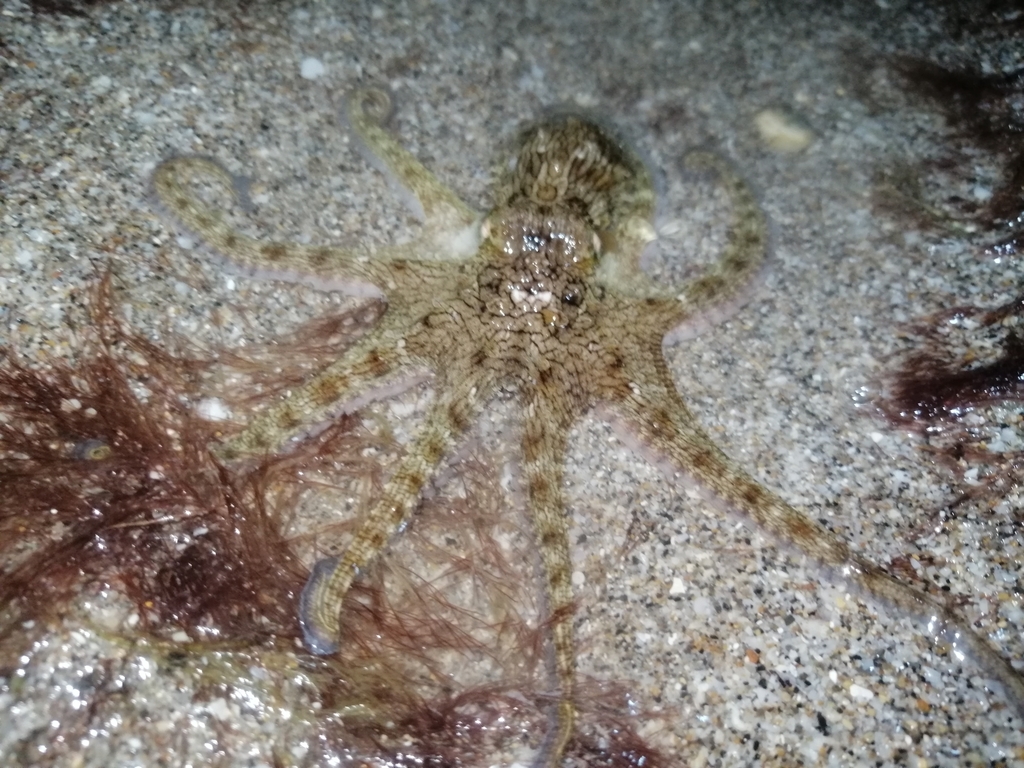
Atlantic Pygmy Octopus
Octopus joubini
The Atlantic pygmy octopus (Octopus joubini), also known as the small-egg Caribbean pygmy octopus, is a small species of octopus in the order Octopoda. Fully grown, this cephalopod reaches a mantle length of 4.5 cm (1.8 inches) with arms up to 9 cm (3.5 inches) long. They are known for being intelligent creatures with keen senses, particularly good sight.
O. joubini often seeks shelter from predators in empty clamshells, cans or small openings, pulling the opening closed with its arms, combining sand and gravel to form a lid. It employs the two defensive mechanisms typical of all octopuses: ink sacs and camouflage. All Cephalopods have chromatophores, special pigmented and light reflecting cells on their skin which allows them to change colour and texture quickly.
From the article Atlantic pygmy octopus on Wikipedia (CC BY-SA), quoted section by section
Range & habitat
O. joubini are found in the warm temperate to tropical waters of the Atlantic, thriving in temperatures ranging from 18 to 25 °C (64 to 77 °F). They are benthic and are typically found on soft, muddy substrates around 10 to 15 m (33 to 49 feet) deep. Many laboratory experiments have shown that O. joubini prefer to remain hidden or, in the case of a tank environment, close to the sides of the enclosure. This behavior is presumably for protection against outside predators, though no literature describes specific predators of the O. joubini. In many instances, O. joubini observed in their natural habitat are found hidden in empty soda cans, and some researchers even obtained them by collecting soda cans from the ocean floor. They prefer to shelter in small cavities on the ocean floor and compete for viable crevices with many other animals, including mantis shrimp such as N. bredini.
Wikipedia: “Habitat”
What it does
O. joubini in captivity exhibit highly varied broods ranging from 140 to over 2,500 eggs. They can reach sexual maturity at a very small size, though most spawning adults were at least 30 mm (1.2 inches). Females typically began to lay a new set of eggs when the oldest eggs began to hatch. The key characteristics that differentiate O. joubini from O. mercatoris, and other unidentified pygmy octopuses, is the size of the eggs and its color. While varying in size, fully developed eggs range from 2.9 to 4.8 mm (0.11 to 0.19 inches), and are overall smaller than other species that were studied, informally referring to them as the "small egg species" that is most representative of the original O. joubini Robson holotype. Additionally, O. joubini appear to have a reddish-orange color that is more distinct than the larger egged species.
Wikipedia: “Reproduction”
Where it lives
Recorded sightings
—
geo-referenced records in GBIF, from museums, herbaria and field observers.
Drag the globe to turn it. Dots are where records exist, not a range map; darker means more records.
In the stacks
Searching the stacks…
Every page naming Octopus joubini in the Biodiversity Heritage Library →
This page is assembled live from iNaturalist, GBIF, Wikipedia, the Source Library and the Internet Archive. It is not yet part of the hand-edited codex. iNaturalist taxon 226202.