- Animals
- ›Arthropods
- ›Chelicerates
- ›Arachnids
- ›Mites and Ticks
- ›Acariformes
- ›Trombidiform Mites
- ›Prostigs
- ›Parasitengona
- ›Velvet Mites, Chiggers, and Relatives
- ›Velvet Mites

Chiggers
Trombiculidae
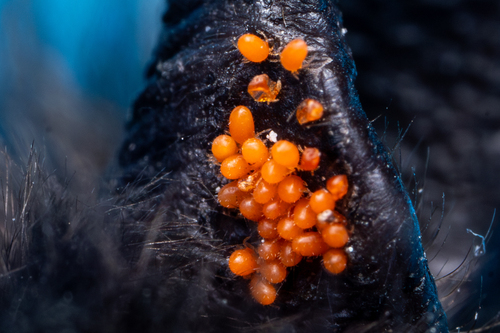
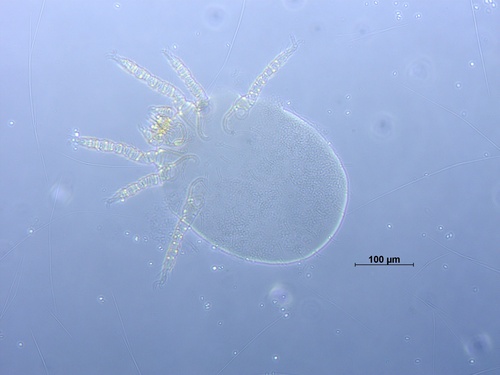
Trombiculidae (), commonly referred to in North America as chiggers and in Britain as harvest mites, and also known as berry bugs, bush-mites, red bugs or scrub-itch mites, are a family of mites. Chiggers are often confused with jiggers, a type of flea. In their larval stage several species of Trombiculidae bite animal hosts to feed on their skin. To do so they embed their mouthparts into the skin, causing irritation. Humans can be hosts.
Trombiculidae live in forests and grasslands and are often found in the vegetation of low, damp areas such as berry bushes, orchards, along lakes and streams, as well as drier places where vegetation is low, such as lawns, golf courses, and parks. They are most numerous in early summer when grass, weeds, and other vegetation is heaviest. They are relatives of ticks and are nearly microscopic, measuring 400 μm (1/60 of an inch) and have a chrome-orange hue. There is a constriction in the front part of the body in the nymph and adult stages. The best known species of chigger in North America is the hard-biting Trombicula alfreddugesi of the Southeastern United States, humid Midwest and Mexico. In the UK, the most prevalent harvest mite is Neotrombicula autumnalis, which is distributed through Western Europe to Eastern Asia.
60 branches of this family, most-observed first

Redjigger-mites
genusEutrombicula

Hannemania
genusHannemania

Trombicula
genusTrombicula
Leptotrombidium
genusLeptotrombidium
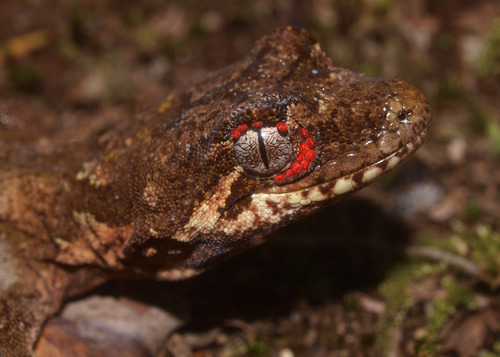
Neotrombicula
genusNeotrombicula
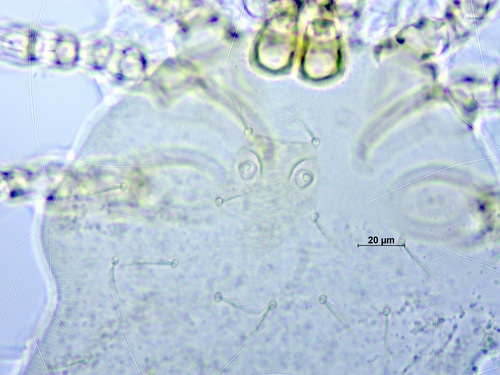
Walchia
genusWalchia

Microtrombicula
genusMicrotrombicula
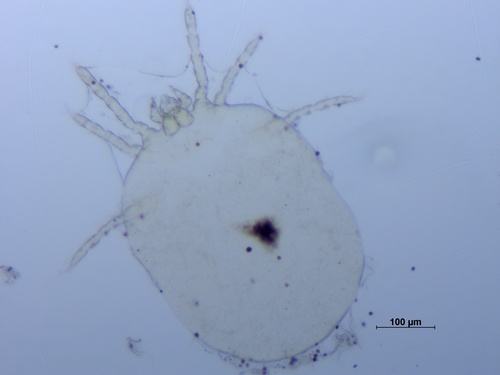
Cheladonta
genusCheladonta

Hirsutiella
genusHirsutiella
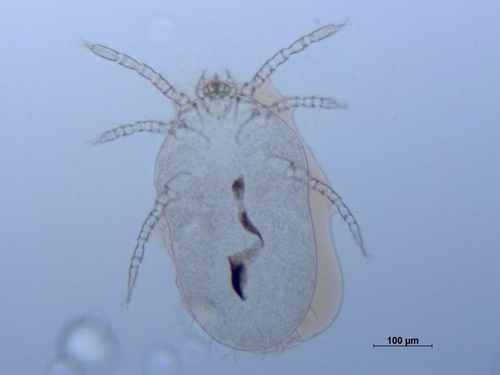
Helenicula
genusHelenicula
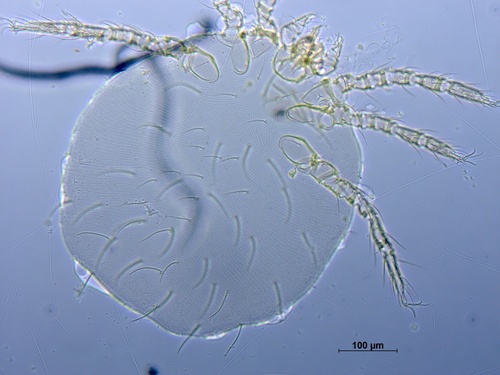
Blankaartia
genusBlankaartia
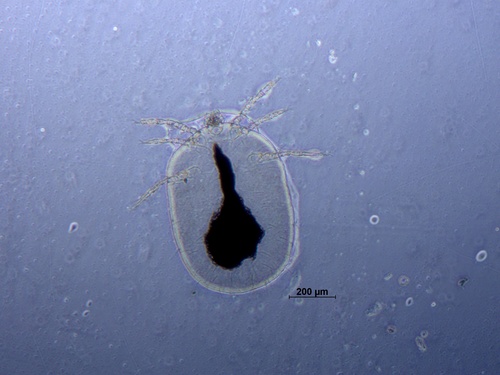
Lorillatum
genusLorillatum
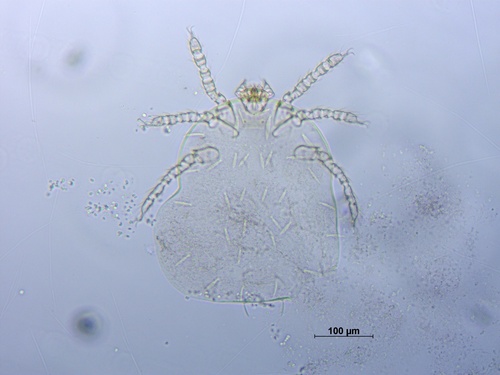
Trombiculindus
genusTrombiculindus
Ascoschoengastia
genusAscoschoengastia
Vatacarus
genusVatacarus
Acomatacarus
genusAcomatacarus
Anahuacia
genusAnahuacia
Axiogastia
genusAxiogastia
Beamerella
genusBeamerella
Cordiseta
genusCordiseta
Crypticula
genusCrypticula
Dermadelema
genusDermadelema
Ectonyx
genusEctonyx
Euschoengastoides
genusEuschoengastoides
Hoffmanniella
genusHoffmanniella
Hoffmannina
genusHoffmannina
Hooperella
genusHooperella
Hyponeocula
genusHyponeocula
Kayella
genusKayella
Loomisia
genusLoomisia
Morelacarus
genusMorelacarus
Neoschoengastia
genusNeoschoengastia
Oaxacurus
genusOaxacurus
Odontacarus
genusOdontacarus
Otorhinophyla
genusOtorhinophyla
Parascoschoengastia
genusParascoschoengastia
Parasecia
genusParasecia
Perates
genusPerates
Wagenaaria
genusWagenaaria
Walchioides
genusWalchioides
Whartonacarus
genusWhartonacarus
Whartonia
genusWhartonia
Xenodontacarus
genusXenodontacarus
Pseudoschoengastia
genusPseudoschoengastia
Sasacarus
genusSasacarus
Speleocola
genusSpeleocola
Tecomatlana
genusTecomatlana
Guntheria
genusGuntheria
Austracarus
genusAustracarus
Euschongastia
genusEuschongastia
Gahrliepia
genusGahrliepia
Hyracarus
genusHyracarus
Zumptrombicula
genusZumptrombicula
Sauriscus
genusSauriscus
Schoengastia
genusSchoengastia
Schoutedenichia
genusSchoutedenichia
Phrynacarus
genusPhrynacarus
Otorhinophila
genusOtorhinophila
Comatacarus
genusComatacarus
Aplodontophila
genusAplodontophila
Where it lives
Recorded sightings
—
geo-referenced records in GBIF, from museums, herbaria and field observers.
Drag the globe to turn it. Dots are where records exist, not a range map; darker means more records.
In the stacks
Searching the stacks…
Every page naming Trombiculidae in the Biodiversity Heritage Library →
This page is assembled live from iNaturalist, GBIF, Wikipedia, the Source Library and the Internet Archive. It is not yet part of the hand-edited codex. iNaturalist taxon 245044.