- Animals
- ›Molluscs
- ›Cephalopods
- ›Octopuses, Squids, and Cuttlefishes
- ›Octopuses and Vampire Squids
- ›Octopuses
- ›Incirrate Octopuses
- ›Typical Octopuses, Giant Octopuses, and Allies
- ›Telescope, Glass, and Pelagic Octopuses
- ›Pelagic Octopuses
- ›Japetella
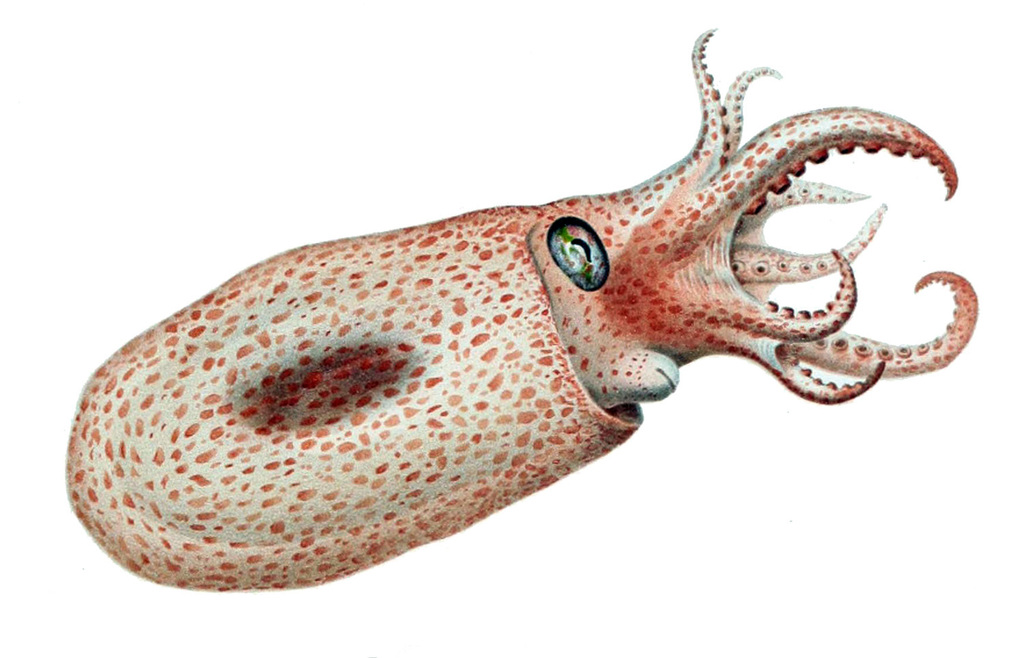
Diaphanous Pelagic Octopus
Japetella diaphana
Japetella diaphana is a species of deep-sea octopus in the phylum Mollusca that inhabits the mesopelagic and bathypelagic zones of the ocean. It is known for its transparent body and bioluminescent camouflage abilities, which help it avoid predators in the deep sea. J. diaphana does not have a set common name but has been referred to as the "Transparent octopus" or "Gelatinous deep-sea octopus". This species is widespread in the deep ocean, having been found by...
From the article Japetella diaphana on Wikipedia (CC BY-SA), quoted section by section
Description
Japetella diaphana is characterized by its small, gelatinous body and distinctive bioluminescence, which play roles in communication and predator avoidance.. Its adaptations, including a luminescent oral ring composed of light-generating photocytes and hypoxic metabolic strategies, are well-suited to deep-sea environments, where visual predator-prey interactions are constrained by light availability.
Specimens of Japetella diaphana collected from the Pacific Ocean near the Hawaiian Islands have displayed mantle lengths of 35–80 mm (1.4–3.1 in), while mature specimens obtained in the northeast Pacific and central and eastern Atlantic have displayed longer mantle lengths of 53–144 mm (2.1–5.7 in), body masses ranging from 18–235 g (0.63–8.29 oz), and a series of growth increments in their beaks ranging from 21 to 207. Each growth increment takes over 24 hours to form. Japetella diaphana displays a longer-than-average lifespan compared to octopus species living in the neritic zone. The species also exhibits physiological traits and plasticity that allow it to tolerate hypoxic conditions at warmer temperatures, unlike most ectotherms.
Wikipedia: “Anatomy and morphology”
Range & habitat
Japetella diaphana is found in tropical and subtropical oceans worldwide, including the Atlantic, Pacific, and Indian Oceans. Unlike most octopuses, which are benthic, Japetella diaphana is pelagic, inhabiting both the mesopelagic and bathypelagic oceanic zones. The species is the most widespread deep-sea cephalopod in the Mexican Pacific, and has been sampled in 11 stations off the west coast of Mexico during the TALUD III-XVI-B research cruises. Its presence has also been recorded in the Gulf of California, Monterey Bay (California), the North Atlantic, and near the Cape Verde archipelago. In the Sargasso Sea, it is primarily found in the southern area, where its distribution is influenced by oceanographic features such as temperature gradients and water currents. Japetella diaphana undergoes diurnal vertical migration (DVM), moving between depths in response to light availability. It is also known for ontogenetic vertical migration, where juveniles start their life at shallower depths (approximately 200 m (660 ft)) and gradually descend to deeper depths as they mature; brooding females are often found at depths exceeding 700–1,000 m (2,300–3,300 ft). Japetella diaphana is particularly abundant in regions with deep-water oxygen minimum zones (OMZs), including the Eastern Tropical North Pacific (ETNP) off the coast of Mexico and Central America. …
Wikipedia: “Distribution and habitat”
What it does
Japetella diaphana is an opportunistic ambush predator, relying on its translucent body to avoid detection and its bioluminescent characteristics (including a photophore surrounding the mouth of mature females) to lure prey such as zooplankton and small crustaceans. Specimens of Japetella diaphana collected off the west coast of Mexico contained crustacean remains in their stomachs, suggesting a diet composed mainly of copepods and amphipods. Japetella's ability to switch between prey types based on availability may be essential for its survival in resource-scarce environments.
Wikipedia: “Diet”
Where it lives
Recorded sightings
—
geo-referenced records in GBIF, from museums, herbaria and field observers.
Drag the globe to turn it. Dots are where records exist, not a range map; darker means more records.
In the stacks
Searching the stacks…
Every page naming Japetella diaphana in the Biodiversity Heritage Library →
This page is assembled live from iNaturalist, GBIF, Wikipedia, the Source Library and the Internet Archive. It is not yet part of the hand-edited codex. iNaturalist taxon 253676.