- Animals
- ›Molluscs
- ›Cephalopods
- ›Octopuses, Squids, and Cuttlefishes
- ›Octopuses and Vampire Squids
- ›Octopuses
- ›Incirrate Octopuses
- ›Typical Octopuses, Giant Octopuses, and Allies
- ›Typical Octopuses
- ›Octopus
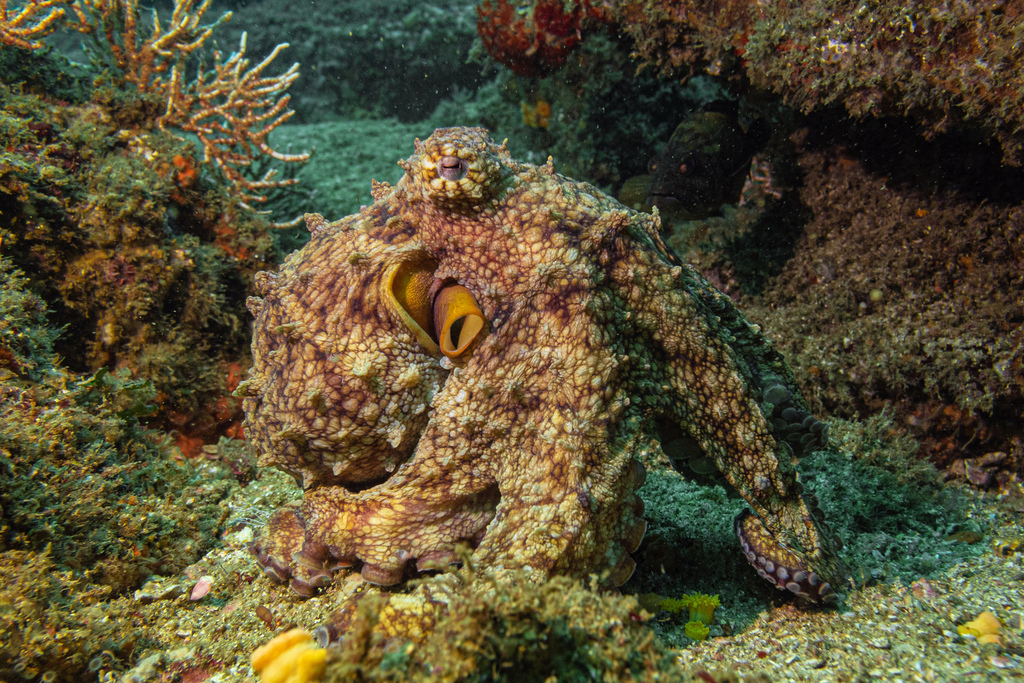
Hubb's Octopus
Octopus hubbsorum
Octopus hubbsorum (also known as Hubb's octopus), is an octopus in the family Octopodidae. It is commonly found along tropical waters along the central Pacific Coast of Mexico. Here, they are one of the most commonly caught cephalopods and are commercially extremely important for the economy.
From the article Octopus hubbsorum on Wikipedia (CC BY-SA), quoted section by section
What it does
O. hubbsorum, like all other octopods, display carnivorous tendencies. Their diet, however, varies throughout their lifespan. The typical diet of mature individuals is rather broad when compared to the diet of juveniles. One study found that O. hubbsorum feeds on 50 different types of prey. There is a notable difference between the diets of mature males and females. This is seen in other species of octopuses and is most likely due to the fact that female octopuses are more metabolically taxed when reproducing. These reproducing females are noticed to ingest organisms that are not frequently ingested by others, most likely due to the need to stay close to the nest and just eating what is available. Senscent females (post reproduction) when monitored, were more likely to have empty stomachs when caught when compared to males of the same age. This similar behaviour is seen in the species O. mimus and is accredited to the fact that females undergo hormonal changes at this point in their lives that ultimately alter their diet. Overall, crustaceans make up the majority of both male and female diets. However, they also have been found to eat mollusks and fishes as well as echinoderms, chaetognaths, siphonophores, and polychaetes. Overall, feeding patterns vary according to time of year, sex, and with maturation. …
Wikipedia: “Diet”
Where it lives
Recorded sightings
—
geo-referenced records in GBIF, from museums, herbaria and field observers.
Drag the globe to turn it. Dots are where records exist, not a range map; darker means more records.
In the stacks
Searching the stacks…
Every page naming Octopus hubbsorum in the Biodiversity Heritage Library →
This page is assembled live from iNaturalist, GBIF, Wikipedia, the Source Library and the Internet Archive. It is not yet part of the hand-edited codex. iNaturalist taxon 253684.